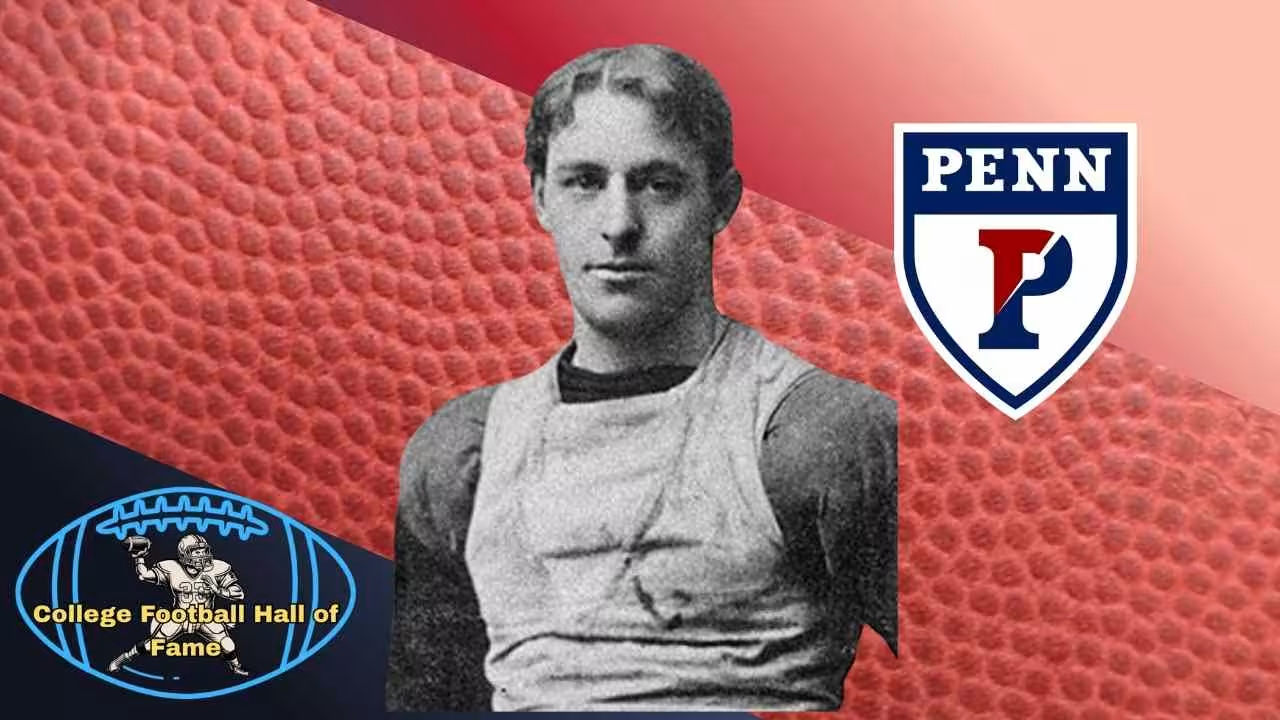
Long before modern linemen became celebrated athletes, there was Charlie Gelbert. Born in Hawley, Pennsylvania, on December 24, 1871, this University of Pennsylvania end earned the nickname “Miracle Man.” At a modest 5’9″ and 170 pounds, Gelbert proved that intelligence and flawless execution could trump size, becoming one of college football’s earliest legends.

Football Bio
December 24, 1871 – Hawley, Pennsylvania – The University of Pennsylvania’s End, Charlie Gelbert was born. The footballfoundation.org says that some folks called Gelbert the “Miracle Man” because he did so much with so little with his 5’-9” frame that weighed 170 pounds, Charlie was an excellent blocker of larger men. Penn’s Coach Georg Woodruff devised a play called “guards back” in which Gelbert would play guard and with a few other linemen would drop back into the backfield at the snap and run interference for the ball carriers. Walter Camp named Charlie to his All-America Team in three straight years from 1894 through 1896. The College Football Hall of Fame welcomed Charlie Gelbert into their group of legends in 1960.
Conclusion:
Charlie Gelbert was a pioneer whose quickness and blocking ability defined the role of the early lineman. His dedication allowed him to master Coach Woodruff’s innovative “guards back” play, turning him into a critical offensive weapon despite his size. Earning three consecutive selections to Walter Camp’s All-America Team, Gelbert’s legacy as the “Miracle Man” was permanently cemented when he was enshrined in the College Football Hall of Fame in 1960, honoring one of the sport’s first truly great ends.
Accolades and Accomplishments
- College Football Hall of Fame: Class of 1960
- Walter Camp All-America Team: 3-time selection (1894, 1895, 1896)
- Pioneer of: The “guards back” formation at Penn
- Nickname: “Miracle Man”
- University: University of Pennsylvania
- Position: End/Guard