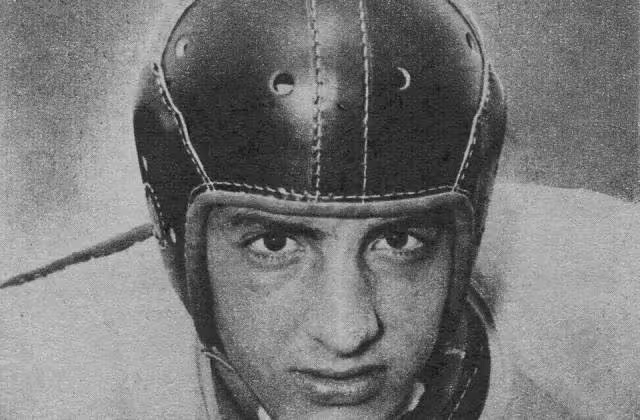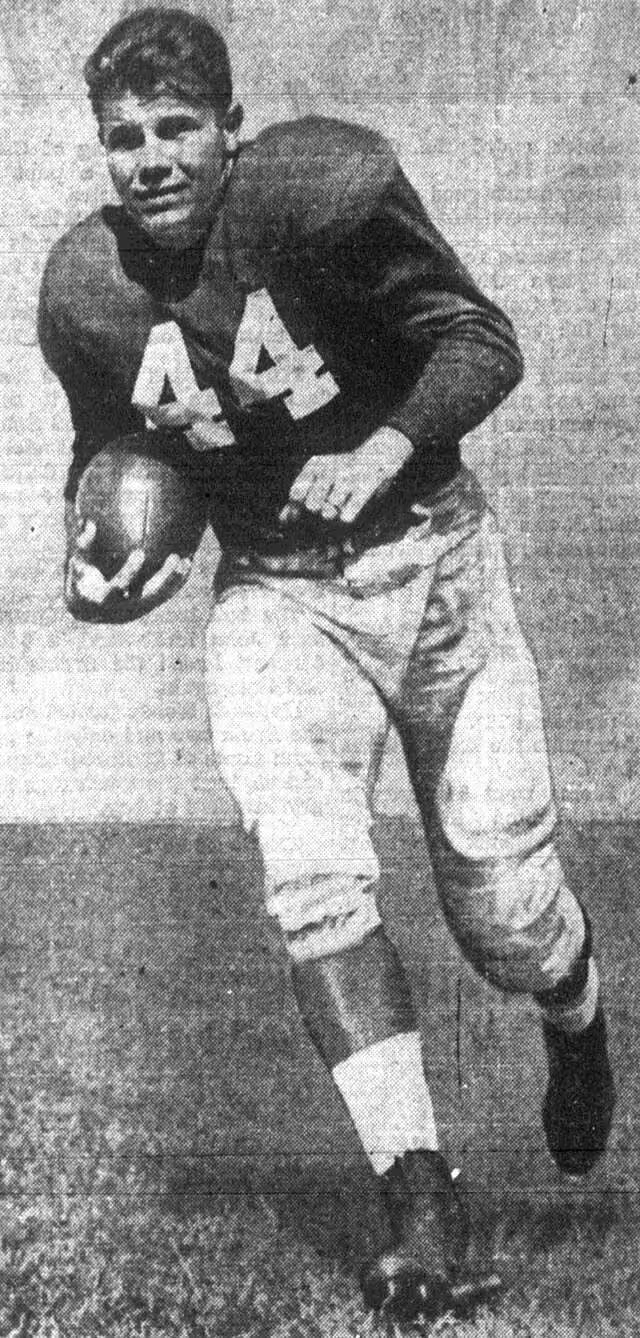
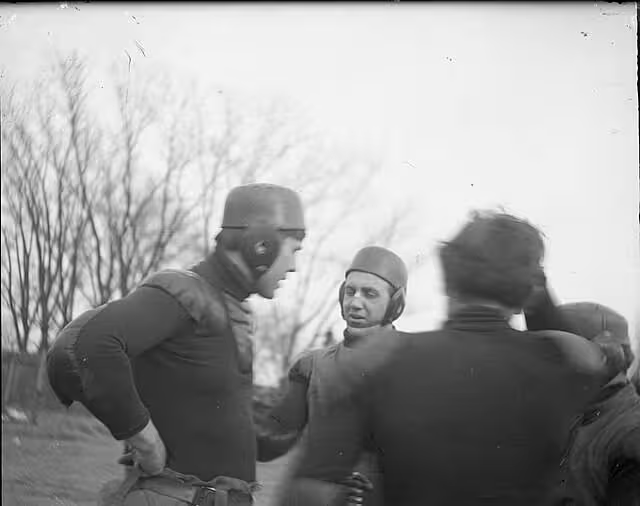
The history of American football is littered with legends, but few figures can claim to have fundamentally changed the game—and none can claim to be the first to be paid for it. Step back to the late 19th century, a time when collegiate powerhouses ruled the sport and amateurism was the creed. Amidst this era, one colossal, athletic star from Yale not only revolutionized the offensive line but also inadvertently ushered in the professional era of football with a single, groundbreaking payment. Discover the life and legacy of William “Pudge” Heffelfinger, the pioneer who was a giant among men and the original professional player.
Football Bio
December 20, 1867 – Minneapolis, Minnesota – William W Pudge Heffelfinger, the legendary Yale Bulldogs guard, was born. The footballfoundation.org website bio describes Hefflefinger as being 6’-3” tall and weighing in at 195 pounds. Let’s put that size into perspective because Cam Newton at quarterback is 6’-5” and weighs 240 pounds, but in 1890, when Pudge played, he was a giant among his peers, and he was extremely athletic too. His size allowed him to destroy the blocks and defenses of opposing lines, where he was said to typically take out two to three players at a time. With his great athleticism and the genius of Walter Camp, he is also credited with introducing the “pulling guard” play. The All-America selections originated in 1889 with Walter Camp, and Pudge was on this initial team. He repeated in 1890-91, his last two seasons at Yale. Yale was a major football power during that era, and Pudge helped lead the Bulldogs to undefeated seasons in 1888 and 1891 and one-loss seasons in 1889 and 1890. The 1888 team amazingly outscored their opponents 698-0 that season! The National Football Foundation welcomed the collegiate career of Pudge Heffelfinger into the College Football Hall of Fame in 1951. As great a collegiate player that Pudge was, that’s not exactly what Pudge is best known for, though. After college, Heffelfinger continued playing for independent teams, and on November 12, 1892, the Allegheny Athletic Association near Pittsburgh paid Pudge Heffelfinger the tidy sum of $500 to play just one game with them against their heated rivals, the Pittsburgh Athletic Club. The AAA with Pudge did win the game that day by the score of 4-0, according to the Pro Football Hall of Fame.
Conclusion
William Heffelfinger’s legacy extends far beyond his massive collegiate success at Yale, where his athleticism and size allowed him to dominate the line of scrimmage and helped pioneer the pulling guard position. His true enduring historical significance rests on a single game played in 1892. By accepting $500 to play for the Allegheny Athletic Association, Heffelfinger crossed the line from amateur athletics to professional sports, making him the officially recognized first professional football player. His singular transaction changed the landscape of the sport forever, launching the trajectory that would eventually lead to the modern NFL.
Verified Accolades and Football Accomplishments
- First Professional Football Player (1892): Paid $500 by the Allegheny Athletic Association (AAA) to play one game, marking the birth of professional football.
- College Football Hall of Fame Inductee (1951): Recognized for his collegiate career at Yale.
- Three-Time All-American (1889, 1890, 1891): Selected as part of the initial All-America team established by Walter Camp in 1889.
- Pioneered the “Pulling Guard” Play: Credited with introducing this foundational offensive strategy.
- Yale Football Powerhouse: Helped lead the Yale Bulldogs to undefeated seasons in 1888 (698-0 scoring margin) and 1891.
Our thanks to Pro-Football-Reference.com and Newspapers.com