The 1937 NFL Draft, held in New York City, was only the second official draft in league history, following the groundbreaking inaugural event in 1936. While the previous year was defined by teams struggling to accept the concept of sharing talent, the 1937 draft focused on establishing the true value of collegiate players in the professional ranks. The primary “drama” was the ongoing struggle between the NFL and rival leagues, which constantly threatened to steal top talent before they could sign a contract. Teams were still highly speculative, but the process was slowly formalizing.
The draft was condensed to 10 rounds, with 100 players selected. The Philadelphia Eagles, holding the top spot for the second year in a row, sought foundational talent to lift their struggling franchise.
| Pick | Tm | Player | Pos |
| 1 | PHI | Sam Francis | FB |
| 2 | BKN | Ed Goddard | B |
| 3 | CRD | Ray Buivid | B |
| 4 | NYG | Ed Widseth | T |
| 5 | PIT | Mike Basrak | C |
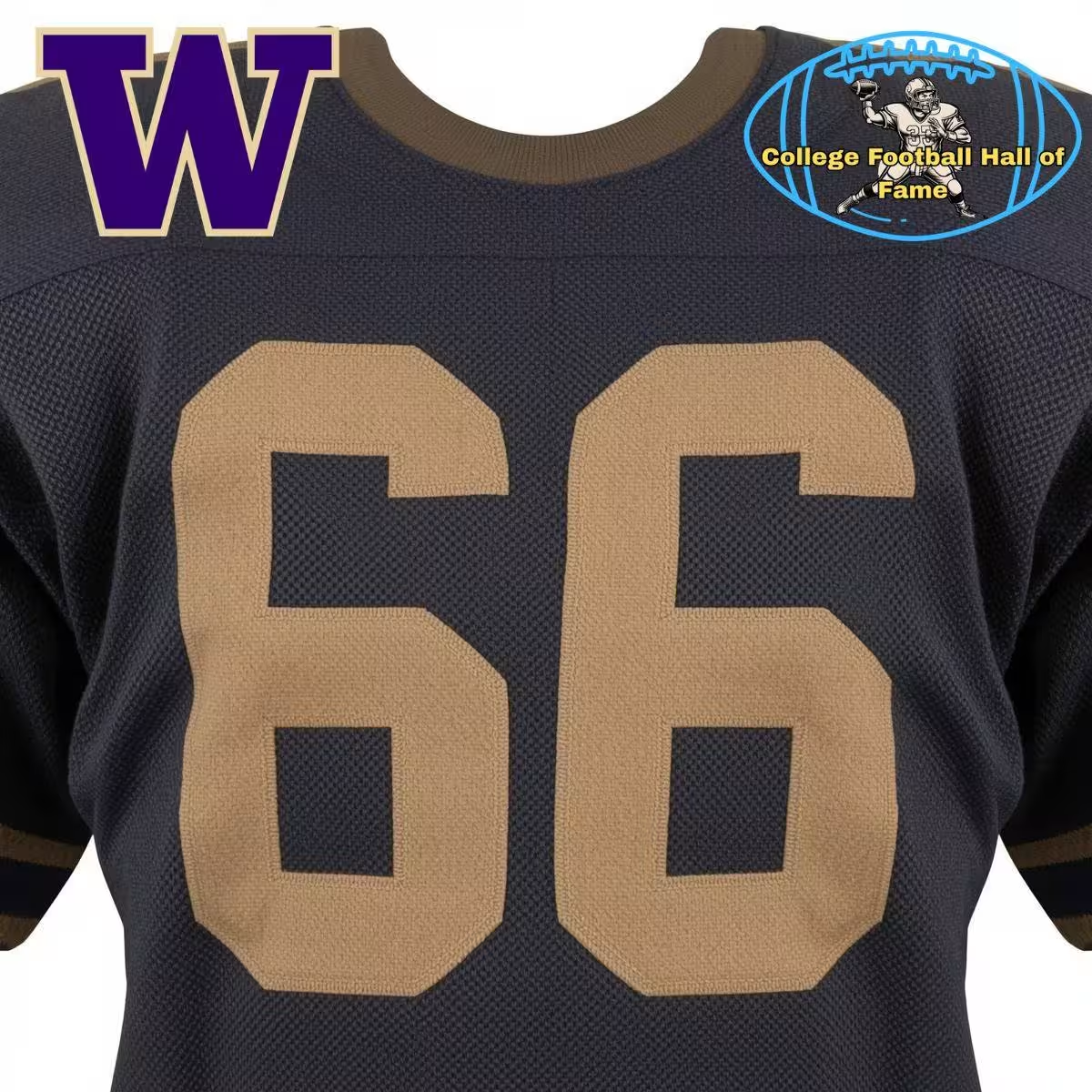
| 6 | WAS | Sammy Baugh HOF | QB |
| 7 | DET | Lloyd Cardwell | WB |
| 8 | CHI | Les McDonald | E |
| 9 | GNB | Ed Jankowski | FB |
| 10 | RAM | Johnny Drake | B |
Special thanks to Pro-Football-Reference.com on the table information above
The first overall pick, Sam Francis of Nebraska, was a major investment for the Eagles. Francis, a versatile fullback, had been a star track and field athlete as well as a football standout. However, he struggled with injuries and inconsistent play during his short NFL career before retiring to coach.
Hall of Fame Talent Emerge
Despite the short tenure of many early picks, the 1937 Draft ultimately yielded significant Pro Football Hall of Fame talent. This demonstrated the scouting departments were slowly improving their ability to identify future legends, even in a primitive draft environment.
- Ed Widseth (Tackle, Minnesota): Selected 2nd overall by the Brooklyn Dodgers. Widseth was known as an absolute stalwart on the line of scrimmage on both offense and defense, playing five seasons before serving in World War II. He was inducted into the College Football Hall of Fame in 1971.
- Sammy Baugh: A revolutionary Washington Redskins quarterback, Baugh is widely credited with establishing the passing game in the NFL; he was a six-time NFL passing champion and the first player to be dominant as a passer, punter, and defensive back.
- Ace Parker: A versatile back for the Brooklyn Dodgers and other early NFL teams, Parker was a true triple threat, excelling as a passer, runner, and defensive back, and was named the NFL’s Most Valuable Player in 1940.
The 1937 Draft solidified the draft process as the primary mechanism for player acquisition, setting the stage for future NFL growth and talent development.