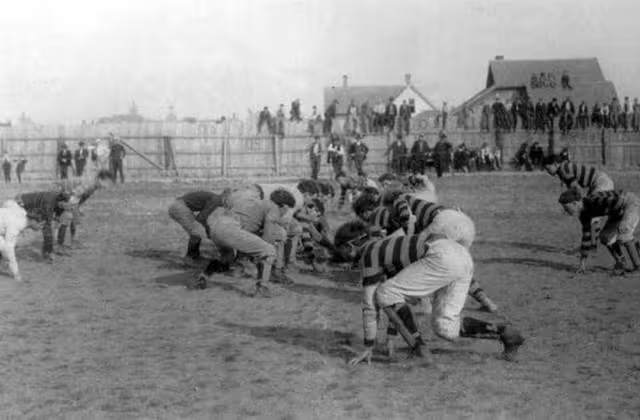
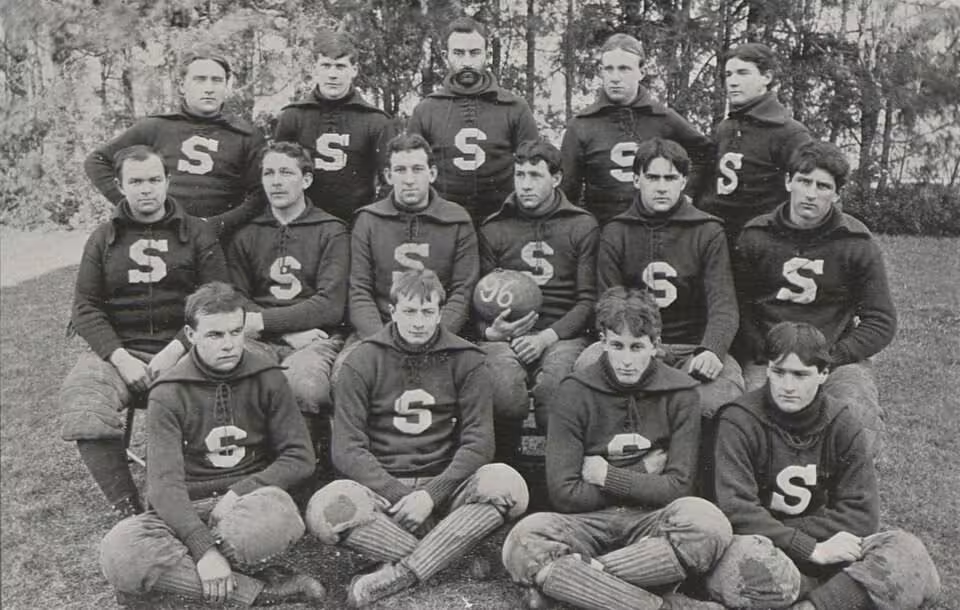
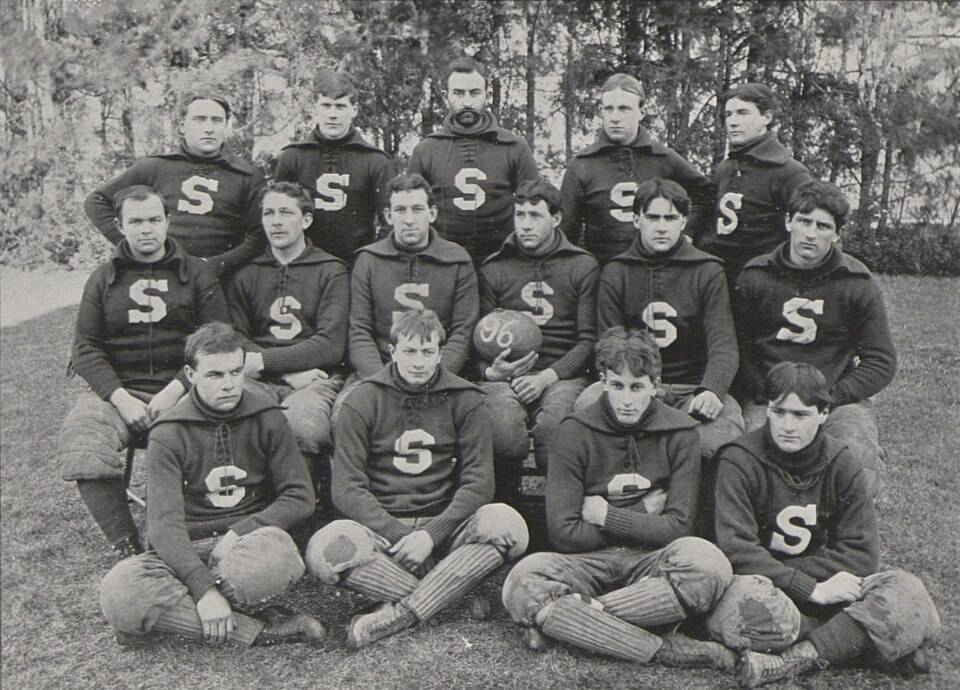
Penn State football began in the late nineteenth century on the front lawns of the Pennsylvania State College. Before multi-tier stadiums and nationwide television broadcasts existed, students informally organized scrub matches using modified rugby rules. As intercollegiate athletics gained traction across the Ivy League and mid-Atlantic schools, the student body formed the Penn State Athletic Association to establish a varsity squad.
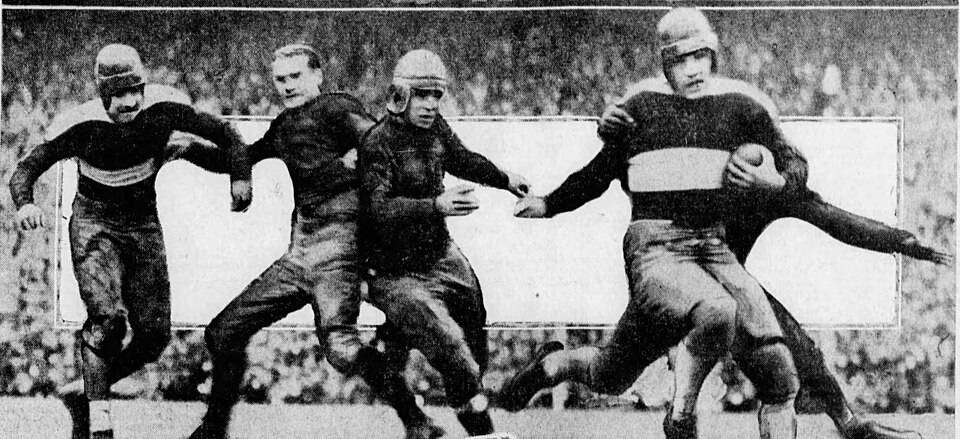
-The Philadelphia Inquirer
The First Game and Inaugural Seasons
Penn State played an informal rugby football match against Lewisburg (later renamed Bucknell University) as early as November 12, 1881. Bucknell denies the game, even though several newspapers covered the contest. Penn State did not field a team for the next handful of seasons (1882-1886). However, the university officially records its varsity football debut on November 5, 1887. Traveling to Lewisburg without a paid coach, uniforms stitched partly by the players themselves, and no formal playbook, the team shocked Bucknell with a 54–0 blowout.
Led on the field by quarterback George H. “Lucy” Linsz, Penn State followed that victory with a 24–0 shutout against Bucknell in a rematch on the lawn in front of Old Main two weeks later. The 1887 squad finished 2–0, completing the only season in program history in which the defense held opponents scoreless in every contest.
Early Coaches: From Club Roots to National Prominence
During its first five years, team captains orchestrated practices and called plays. That changed in 1892 when George “Doc” Hoskins, a trainer and former athlete, became the program’s first official head coach. Over four seasons (1892–1895), Hoskins instilled systematic conditioning, tackling drills, and strategic blocking, finishing with a 17–4–4 record.
Subsequent mentors accelerated Penn State’s development into a regional heavyweight:
- Dr. Samuel B. Newton (1896–1898): Brought modern offensive schemes from Williams College and UPenn, securing winning seasons and signature victories over regional rivals.
- Dick Harlow (1915–1917): A former Penn State lineman who later earned induction into the College Football Hall of Fame, Harlow introduced disciplined defensive alignments and sophisticated scouting.
- Hugo Bezdek (1918–1929): An iconic figure who previously coined the moniker “Fighting Ducks” at Oregon, Bezdek turned Penn State into an undisputed national powerhouse. He guided the team to consecutive undefeated regular seasons in 1920 and 1921, culminating in Penn State’s first postseason appearance at the 1923 Rose Bowl against USC.
Early Stars
Long before modern consensus awards existed, several early athletes elevated the program:
- William T. “Mother” Dunn (Center/Linebacker): In 1906, Dunn became Penn State’s first-ever Walter Camp All-American. A dominant two-way lineman, Dunn anchored both sides of the ball and led the team to an 8–1–1 record, surrendering just 26 total points all season.
- Eugene “Shorty” Miller (Quarterback): Playing from 1910 to 1913, the diminutive 5-foot-5 signal-caller was renowned for elusive open-field running, drop-kicking accuracy, and savvy play-calling. Miller was later inducted into the College Football Hall of Fame.
- Glenn Killinger (Halfback/Quarterback): The catalyst of Bezdek’s powerhouse backfields, Killinger earned consensus All-American honors in 1921. He led Penn State through an undefeated campaign and orchestrated victories over Navy, Georgia Tech, and Pittsburgh.
Origin of the Nittany Lion
Penn State’s athletic teams initially had no official nickname or mascot, occasionally referred to simply as the “Old Cadets” or represented informally by “Old Coaly,” a pack mule that hauled limestone blocks to construct Old Main in the 1850s.
The transition to the Nittany Lion occurred during a baseball trip in the spring of 1904. When Penn State traveled to play Princeton, Princeton players showed off their ferocious mascot, the Bengal Tiger. Quick-witted Penn State third baseman Harrison D. “Joe” Mason refused to be intimidated. Mason bluffed on the spot, proclaiming that Penn State was represented by the fierce mountain lion of Mount Nittany—a beast that could readily vanquish any Princeton tiger.
Mountain lions roamed central Pennsylvania and Mount Nittany until hunters drove them toward regional extinction in the late nineteenth century. A taxidermied specimen shot in 1856 was preserved inside Old Main, keeping the creature fresh in campus lore.
Upon returning to State College, Mason campaigned to make his fictional defender real. In 1907, as editor-in-chief of the student humor publication The Lemon, Mason published poems and articles arguing that every respected institution required a fierce guardian. Students and alums quickly embraced the idea, publishing the lion on the cover of the1908 La Vie yearbook. Soon after, the football team formally adopted the predator as its proud namesake: the Nittany Lion.
Here are More Stories of Penn State Football Legends
- The Mastermind of Gridiron Deception: The Life and Legacy of Dick Harlow
- John Cappelletti: 1973 Heisman Winner & Penn State Icon
- Lighthorse Express: The Legendary Gridiron Run of Harry Wilson
- Pete Mauthe: Penn State’s Legendary Hall of Fame Fullback
- The Gridiron Greatness of Lydell Mitchell
- Mike Reid: Penn State’s Dominant Outland Trophy Virtuoso
- Glenn Ressler: Penn State’s Iron Interior Powerhouse
- Dave Robinson: The Ironman of the Nittany Lions and the “Lombardi” Packers
- Iron Mike Michalske: The Guard Who Revolutionized the Packers’ Line
- Ted Kwalick: The Blueprint for the Modern Tight End
- Riverboat Richie: The Dual-Threat Legend Who Outplayed the Bear
- Curt Warner: The Engine Behind Penn State’s First National Title
- Mike Munchak: The Blue-Collar Anchor of the Oilers’ Dynasty
- Shane Conlan: The Anchor of Penn State’s “Linebacker U”
- The First Legend of Linebacker U: The All-Purpose Brilliance of Dennis Onkotz
- Steve Suhey: Penn State All-American, WWII Veteran, and Hall of Famer
- From Nittany Lion Legend to NFL Pro Bowl QB: The Legacy of Kerry Collins
- ⚡ The Meteoric Midget: Gene “Shorty” Miller and the Fatal Kickoff
- The Catch in Happy Valley: The Day Penn State Stunned Nebraska
- Glenn Killinger Penn State Hall of Fame QB