Timothy Brown of Football Archaeology imparts his expertise regarding the remarkable high-scoring squad of Coe College from the year 1914. This episode delves into the historical significance of this lesser-known team, often overshadowed by more renowned programs. I explore how Coe College, despite not officially achieving the title of a "point-a-minute" team, garnered attention for its prolific scoring during that season. Through meticulous research, we illuminate the narratives surrounding this extraordinary team and the evolution of football during that era. Join us as we traverse the annals of football history to uncover compelling stories that have largely been forgotten.
In this episode, host Darin Hayes is joined by Tim Brown from Football Archaeology to discuss a fascinating piece of gridiron history: the 1914 Coe College football team. Though not technically reaching a 'point-a-minute' scoring average like the famous Michigan teams of that era, the Iowa-based liberal arts college had a highly impressive season that earned them the moniker. Tim shares insights into his process of uncovering these forgotten football stories using historical research and vintage collectibles like football postcards. Listeners can follow Tim's work and subscribe to his newsletter at footballarchaeology.com.
Timothy Brown of Football Archaeology joins us again this week to educate us on another aspect of football. This week we chat about the high-scoring squad of Coe College back in 1914.
Timothy Brown's FootballArchaeology.com has a daily football factoid that he shares that is really quite interesting in a short read. They preserve football history in a very unique way and we are quite happy that Tim has agreed to join us each week to go over some of his Today's Tidbits. Click that link and you can subscribe for free to receive them yourself each evening.
The discourse surrounding the illustrious history of American football is enriched by an exploration of the remarkable achievements of the Cook College football team in the year 1914. This particular discussion, featuring the esteemed guest Timothy Brown from Football Archaeology, delves into the narrative of a team often overshadowed by more prominent institutions such as the University of Michigan. Despite the historical obscurity that may surround Cook College, its players were able to secure a reputation as a formidable squad capable of scoring an impressive number of points during their games, thus earning the moniker of a 'point-a-minute team.' Through a meticulous recounting of their season, we gain insight into the dynamics of early college football, the competitive environment of that era, and the evolution of the game itself. Tim articulates the significance of preserving such stories, emphasizing their contribution to the greater tapestry of football history, which is frequently overlooked in contemporary discourse. In examining the Coe College team's specific encounters, we uncover a series of matches that culminated in both triumphs and defeats. Their season unfolded with notable victories against lesser-known colleges, yet they faced challenges when pitted against more established programs, such as Iowa State. The juxtaposition of their high-scoring capabilities against their overall performance paints a nuanced picture of their legacy. The conversation further underscores the importance of recognizing and valuing the contributions of small college teams, which often serve as the bedrock of the sport's development and evolution. The revelations shared by Tim Brown not only celebrate the achievements of the Coe College football team but also serve as a reminder of the myriad stories that constitute the rich history of American football, inviting listeners to appreciate the depth of the sport's heritage. As the dialogue progresses, it becomes evident that preserving such historical narratives is vital for both aficionados of the sport and casual listeners. We are reminded of the transformative power of storytelling in football, which allows us to connect with the past and understand the game's journey through the lens of those who played it. Tim's passion for football archaeology shines through as he shares anecdotes and insights, enriching our comprehension of how the game has evolved over time. In conclusion, this episode serves not only as a tribute to the Cook College football team but also as a clarion call to celebrate the often-forgotten yet significant figures and moments in football history, fostering a deeper appreciation for the sport as a whole.
Do you want more football history? Test your Gridiron Knowledge, we feed you Daily with our new FREE activity, The Pigskin Trivia Drive.
Grab a copy of our latest book, "Marooned," on the 1925 Pottsville Maroons NFL franchise saga.
*OR* Grab a copy of our book on Western Pennsylvania football history, "World's Greatest Gridiron Team" on the 1903 Franklin All-Stars
Drop us a line at PigskinDispatch@gmail .com and check out and subscribe to the Pigskin Dispatch YouTube channel.
Contact us directly at Pi*************@***il.com
Miss our football by the day of the year podcasts, well, don't because they can still be found at the Pigskin Dispatch website.
Transcript
In just a moment.
Speaker C:This is the Pigskin Daily History Dispatch, a podcast that covers the anniversaries of American football events throughout history on a day to day basis. Your host Darren Hayes is podcasting from America's North Shore to bring you the memories of the gridiron one day at a time.
So as we come out of the tunnel of the Sports History Network, let's take the field and go no huddle through the portal of positive gridiron history with pigskindispatch.com.
Speaker D:This podcast is part of the Sports History Network, your headquarters for the yesteryear of your favorite sport. You can learn more@sportshistorynetwork.com hello my football.
Darin Hayes:Friends, this is Darren Hayes of Pixicandispatch.com welcome once again to the Pig Pen,.
Speaker A:Your portal deposit of football history.
Darin Hayes:And we're going to stare through that portal today and go back into some.
Speaker A:Football archeology because it's Tuesday and we have our friend Timothy Brown from footballarchaeology.com.
Darin Hayes:Tim Brown, welcome back to the Pig Pen.
Timothy Brown:Hey Darin, good to see you once again. Looking forward to talking about Coe College.
Darin Hayes:Yeah, Coe College and I wasn't aware of this that there was another point a minute team. You had a Great post on September 17th about that.
When I think about point a minute teams, you know, of course the famous Michigan teams from the the early 20th century come to mind under fielding age Yost and I did not realize there was another one called a point a minute team.
Timothy Brown:Yeah, so, so you know, if listeners aren't aware Coe College is a small liberal arts college in Iowa and you know they were certainly aware or at least their reporters were certainly aware of fielding Yost point a minute team at Michigan. And so part of what I did in the article is just point out that they didn't score a point a minute.
They were under it, but they scored a lot of points. And so this co college team ends up in having kind of a similar season. They were just scoring all kinds of points.
You know, they played other small colleges in Iowa and they played one game in Illinois. They also played their second game of the season was against Iowa State who they lost to.
But you know they seem to have played respectively or respectively against them. So they, you know they kind of did their non conference season and then they're during conference.
They just started playing teams at, they just were kind of blown out of the water. I mean they won one game. It's like 121 to nothing or you know, some silly thing like that.
But you know, so they, they just ended up just having a, having a phenomenal year. And so then they started, you know, they started being touted as the point a minute team, you know, obviously copying, copying Michigan.
But so it's just kind of a, you know, it's a team that basically few people are aware of or care about. You know, that's, that's kind of the life of small college football.
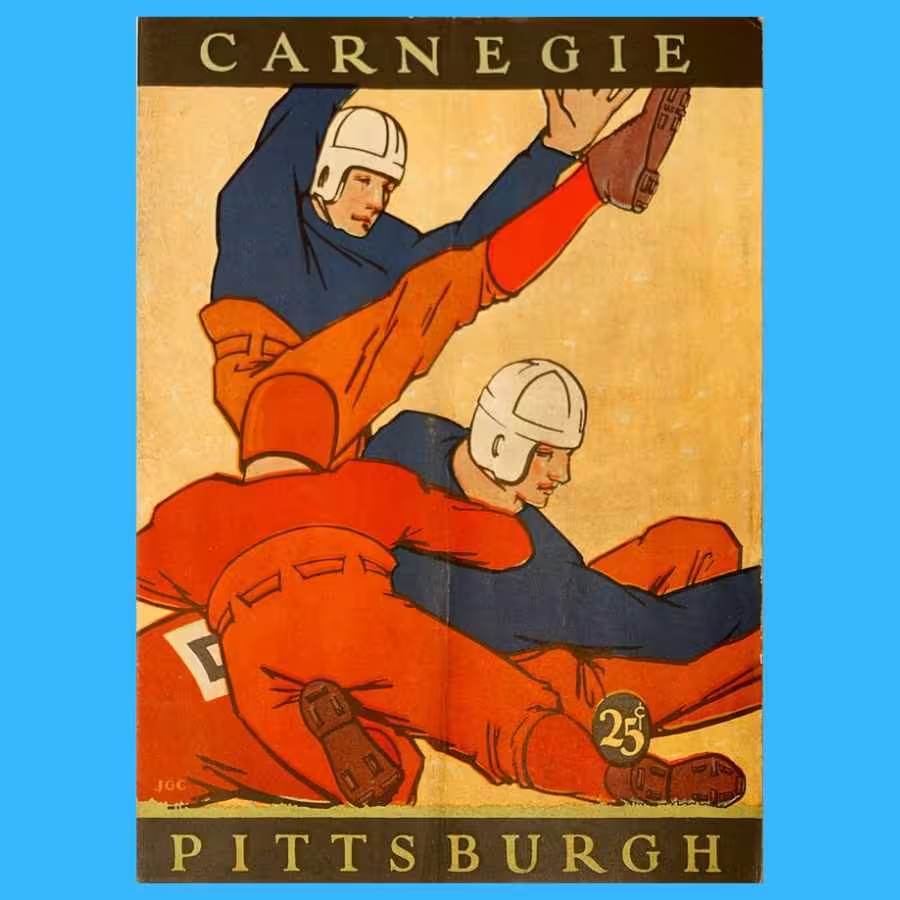
But you know, I love being able to bring those in, you know, here and there where there's something interesting, something compelling about a team like co. You know, I also, I happen to, you know, one of the things that I use as illustrations for the blog and for my books as well as I, I collect old, you know, football related postcards. And so sometime back I had acquired one with CO College, you know, of this CO College season. And then I never really had looked into it very much.
Once I, I said ah, this might be something worthwhile, you know, for a, for a tidbit.
And I got it, you know, started looking into it and there's this whole story about the point a minute and you know, two of the teams that they beat that year, the colleges no longer exist, one merged into, you know, merged with co. They had this kind of incestuous thing going on with some of the Iowa schools.
But anyway, it's just a, you know, I think just kind of a fun story about a team that kind of came out of nowhere and just was kicking everybody's butt, which is always fun.
Darin Hayes:But those are, that's the sweet spot of your tidbits.
These things that many of us that are in the football know are not aware of and you bring it back to the forefront and make us aware of it, preserving the football history.
And that's, I mean that's the magic of what you do with football archeology and we, we really appreciate that and especially sharing somebody like CO College that probably most of us have never heard of.
Timothy Brown:Yeah, no, I, well, I appreciate your, your comments but yeah, I mean I just think it's, you know, it's just interesting to see kind of how they did things back then and again, it's just the whole evolution of the game.
It's just there's, you know, there were bits, you know, there were spurts at times, but A lot of it's just really slow progression and then, you know, the game casts certain elements aside, we don't need this anymore and you know, we end up with the game we have today, which is, you know, as far as I'm concerned, you know, especially offensively, it's, it's the most exciting game we've ever had. Right. I mean it's a. There's just so many different options, so many different things that teams can do now. Back then, you know, not so much the case.
It was, you know, pretty much run it up the gut football. You know, some teams did some other things in passing, but a lot of it was pretty old school.
Darin Hayes:Yeah. Just sure glad that you're sharing that with us and you know, collecting those things that, and recording them for everybody to enjoy.
So now if listeners, if you would like to be aware of what Tim's coming up with, some of these antiquated items from football or teams that are no longer exist or maybe had their day, you know, in the sun and it's no more, you know, Tim is going to share with us right now how you can find him and find his tidbits and subscribe.
Timothy Brown:Yeah, so my, my site is footballarchaeology.com it is on, it's a substack site. So if you happen to be a substack user, then you can find it through that mechanism. Mechanism as well.
But just footballarchaeology.com I'm also, I post everything that's, that's on the site. I posted on Twitter as well. But you know, the advantage of subscribing is that you'll then get a newsletter. Everything that I post becomes an email.
Sent it to your inbox on essentially a nightly basis at 7 o' clock Eastern. And then the long form articles kind of come out in a little bit more random order. But that's the way to find me. If you enjoy it, great.
Whichever way you want to access it, have at it.
Darin Hayes:All right, Tim, thank you very much for sharing the footballarchaeology.com items with us and we'll talk to you again next week.
Timothy Brown:Okay, very good. Thanks, Sarah.
Speaker A:Peeking up at the clock. The time's running down. We're going to go into victory formation. Take a knee and let this baby run out. Thanks for joining us.
We'll see you back tomorrow.
For the next podcast, we invite you to check out our website, pigskindispatch.com not only to see the daily football history, but to experience positive football with our many articles on the good people of the game, as well as our own football comic strip, cleet marks comics.
Pigskindispatch.com is also on social media outlets, Facebook, Twitter, Instagram, and don't forget the Pigskin Dispatch YouTube channel to get all of your positive football news and history. Special thanks to the talents of Mike and Gene Monroe, as well as Jason Neff for letting us use their music during our podcast.
Speaker D:This podcast is part of the Sports History Network, your headquarters for the yesteryear of your favorite sport. You can learn more@sportshistorynetwork.com.