Imagine a world where a football team is entirely disbanded after players are caught eating fudge. Or imagine a player revived on the field with nothing more than a bucket of cold water. These are the incredible, true stories from the sport’s earliest days. On this day in football history, we trace the roots of the game back to May 30, 1879. That was when the University of Michigan and Racine College played the first game “West of the Alleghenies.” Along with these eccentric origins, late May also marks the births of legendary gridiron titans. For example, Pitt’s vocal leader Bob Peck, Yale’s innovative Heisman winner Larry Kelley, and the electric “Kansas Comet” himself, Gale Sayers, were all born during this time.
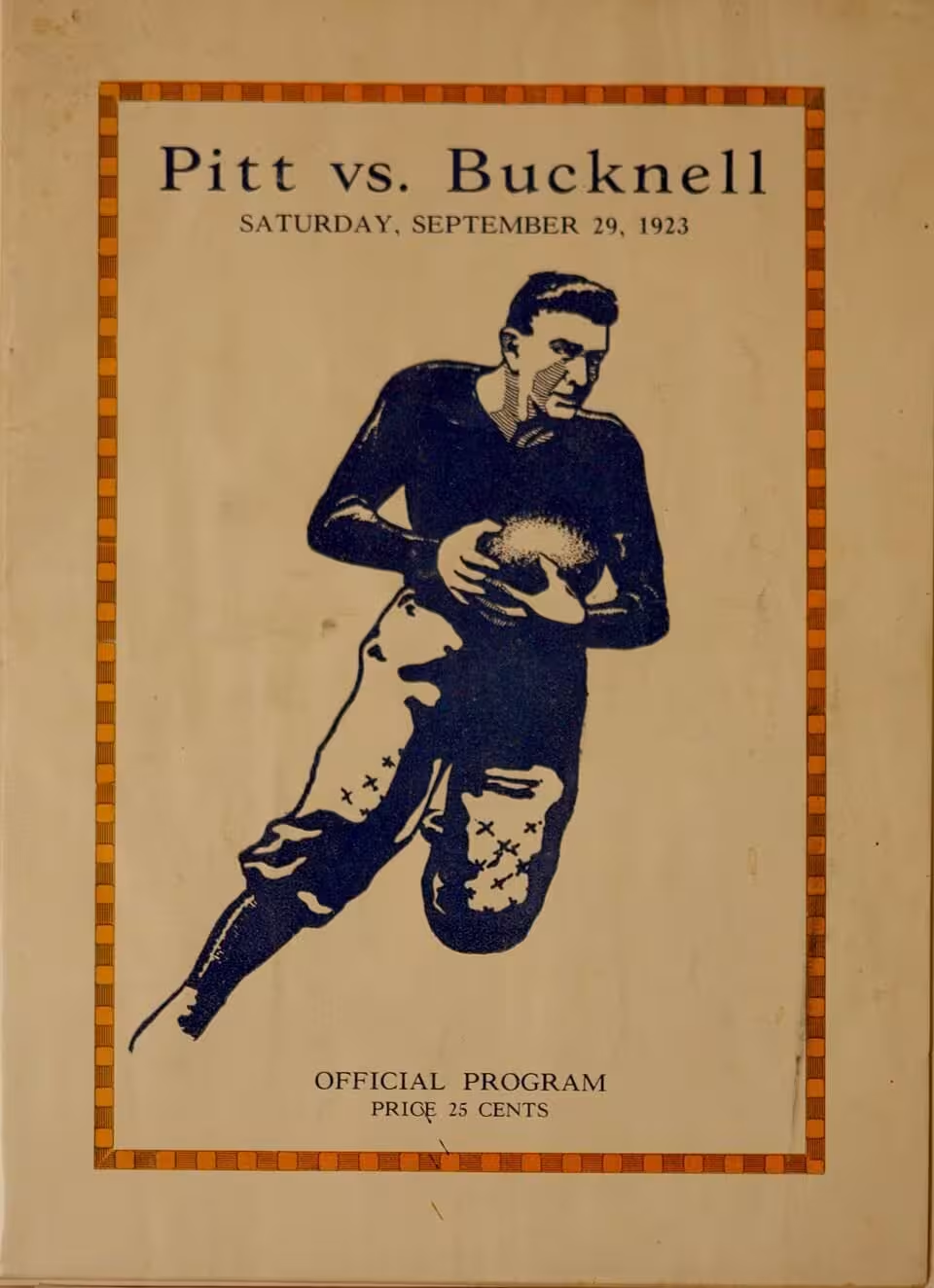
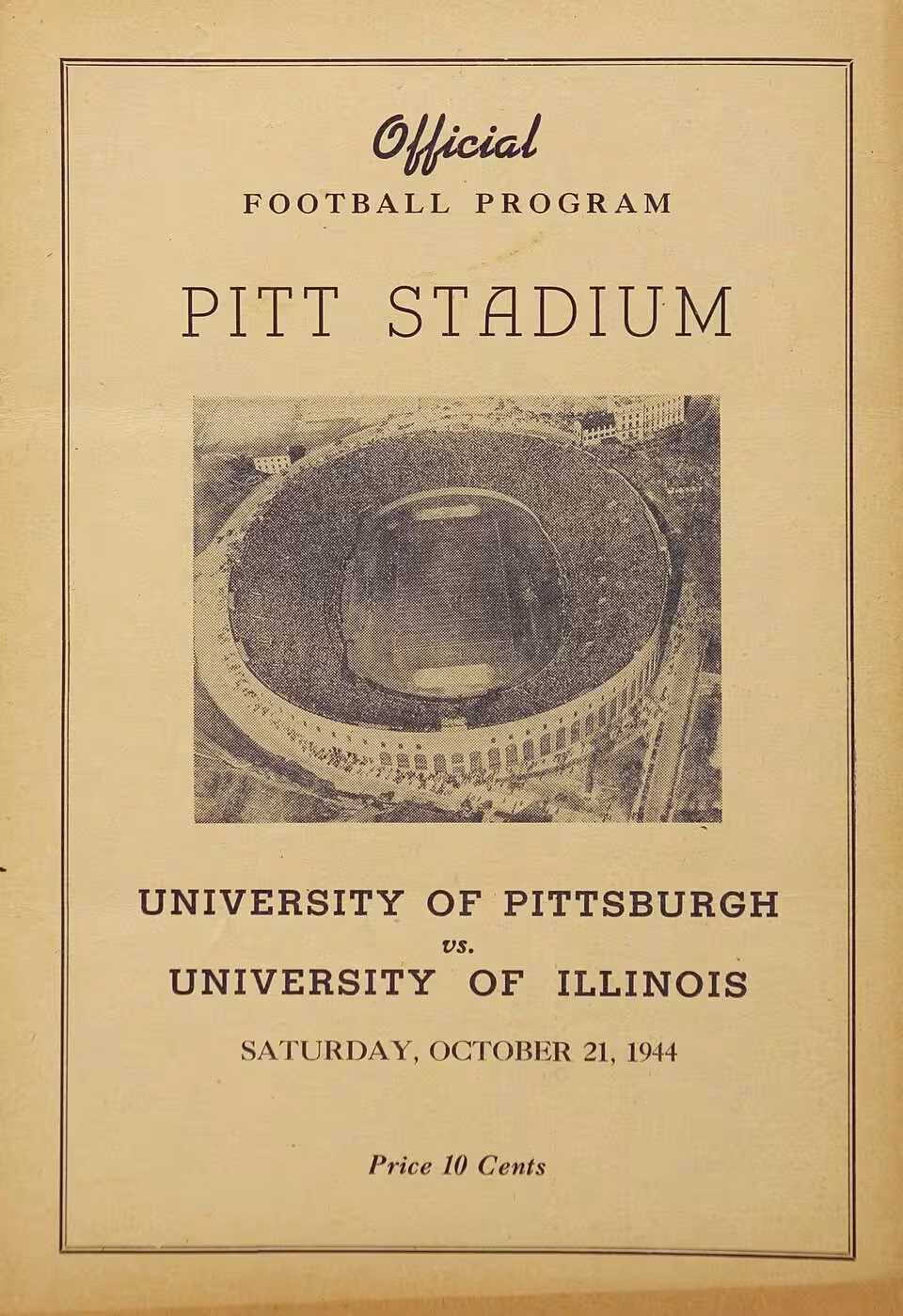
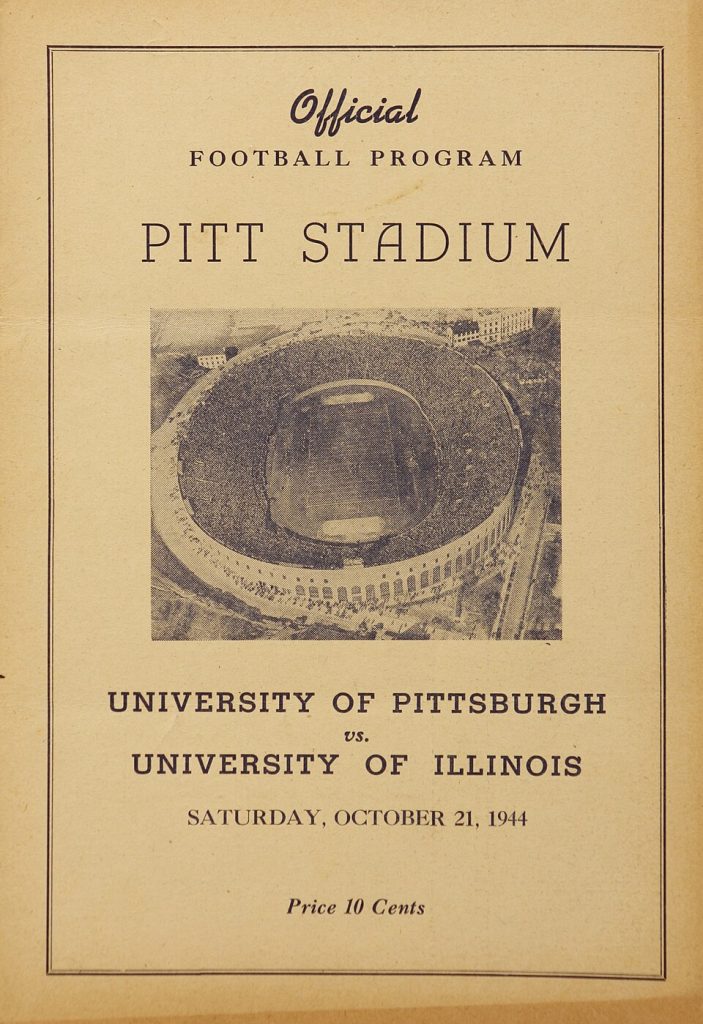
First, a taste of nostalgia with this vintage roster cover page from 1944:
May 30 American Football History Timeline
- May 30, 1879 – The first game ever played “West of the Alleghenies” took place in Chicago. The article starts by saying, “At the White-Stockings Grounds yesterday afternoon, an interesting game of football was played between Racine College and the Michigan University teams. The attendance was good, and enthusiastically cheered the contestants wherever opportunity occurred.”
The report goes on to say that the game lasted nearly two hours and was played under what was described as a modified rugby rule. As a result, we can see that the influence of the 1874 Harvard-McGill games was spreading across the country. It is only about a year away from Walter Camp suggesting major revisions to the game. These revisions would make it a much more recognizable form of American football.
As for the game, the University of Michigan defeated Racine College 1-0. The report in 1879 tells us that, “No bones were broken, but (C.) Tolbert was stretched on the turf once. A bucket of water, however, revived him.”
A fun fact about Racine’s football team is that, in 1903, the program ended under what we would consider today the oddest of circumstances! A November 6, 1903, article in the Champagne, Illinois, Daily Gazette posts the headline:
Bounced for Eating Fudge: Football Team of Racine Gets its Walking Papers
Yes, the entire football team was allegedly dismissed after players were caught eating fudge. In the eyes of the school administration, this was deemed to make them poor students and athletes. Thank God that same criteria isn’t used for your friendly blog writer!
- May 30, 1995 – The Pittsburgh Steelers traded 2-time Pro Bowl and leading rusher for a single season, Barry Foster to the Carolina Panthers. Foster rushed for a Steelers record 1692 yards in 1992. Foster failed to make the Panthers roster after the trade and soon retired.
OTD in 1995….
— Steel City Star (@steelcitystar) May 30, 2026
Steelers trade Barry Foster
The 2x Pro Bowl Steelers RB does not make Carolina’s roster, however. He then retires shortly after signing with Cincy.
Foster still has the most single-season rushing yards in Steelers history (1,690 in 1992). pic.twitter.com/j714Zj4nCa
May 30 Football Hall of Fame Birthdays
Happy Birthday to these historic gridiron icons! Since today is May 30, we celebrate a lineup of absolute legends. This group includes a transformative Hall of Fame “Comet” and a Heisman pioneer.
Here is your list in order of birth:
- Bob Peck [1891] A legendary center and captain for the University of Pittsburgh, Peck was the vocal leader of Pop Warner’s powerhouse teams. He inspired the famous battle cry, “When Peck fights, the team fights!” He was a 1954 College Football Hall of Fame inductee and became Pitt’s first-ever All-American. Additionally, he anchored back-to-back undefeated seasons and the 1916 National Championship.
- Larry Kelley [1935] An extraordinarily crafty and clutch end for Yale, Kelley became a giant of early college football by scoring a touchdown in nearly every career game against rivals Harvard and Princeton. Moreover, his unmatched knack for finding the end zone regardless of the odds led him to capture the 1936 Heisman Trophy. He was the first player to win the award under its official name.
- Gale Sayers [1943] The iconic “Kansas Comet” was one of the most elusive and mesmerizing open-field runners in football history. He broke a 99-yard run in college before taking the NFL by storm. He was a member of both the College and Pro Football Halls of Fame, and the Chicago Bears legend set a rookie record with 22 touchdowns in 1965. Remarkably, that included a historic six-touchdown performance on a muddy afternoon against San Francisco. He still remains the NFL’s all-time leader in kickoff return average.
- Lydell Mitchell [1949] A powerhouse running back for Penn State, Mitchell was a dynamic scoring machine who set an NCAA record with 29 touchdowns during his brilliant 1971 campaign. He went on to achieve greatness in the NFL as a three-time Pro Bowler for the Baltimore Colts. He led the league in receptions in 1974 and also strung together three consecutive 1,000-yard rushing seasons before his induction into the College Football Hall of Fame in 2004.
Conclusion
From the muddy, two-hour rugby-style matches of 1879 to the explosive, record-shattering athleticism of Gale Sayers, this stretch of football history showcases the game’s spectacular evolution. Whether it’s the sheer determination of Bob Peck rallying his Panthers or Larry Kelley outsmarting Ivy League rivals, these stories illustrate the sport’s rich history. Even a bizarre 1903 administrative crackdown on fudge-eating players played a role. These milestones remind us how much the sport has truly transformed. The legends born and the games played on these late-May days laid the essential brickwork for the modern American football spectacle we celebrate today.