The 1983 American football season stands as a watershed moment in the sport’s history. It was a year that defined a generation of professional talent, birthed a collegiate dynasty, and saw the introduction of a major rival professional league.
Here is what football looked like in 1983:
The NFL: A Legendary Draft and Raiders Dominance
The 1983 NFL season is perhaps best remembered before a single snap was even played, thanks to an unprecedented influx of talent.
- The Quarterback Class of ’83: The 1983 NFL Draft is widely regarded as the greatest in league history. Six quarterbacks were selected in the first round, including three future Hall of Famers: John Elway (1st overall), Jim Kelly (14th overall), and Dan Marino (27th overall).
- Rookie Sensations: The draft also introduced running back Eric Dickerson, who set an enduring rookie rushing record with 1,808 yards for the Los Angeles Rams.
- Super Bowl XVIII: The season culminated on January 22, 1984, in Tampa, Florida. The Los Angeles Raiders dismantled the defending champion Washington Redskins by a score of 38-9. Raiders running back Marcus Allen earned Super Bowl MVP honors, highlighted by his iconic, reversed-field 74-yard touchdown run.
College Football: The Birth of the “U”
The 1983 collegiate season delivered one of the most thrilling finishes in the history of the sport, completely shifting the balance of power in college football.
- The 50th Orange Bowl: Top-ranked, undefeated Nebraska entered the championship game heavily favored. However, the #5 Miami Hurricanes shocked the Cornhuskers 31-30 to claim their first National Championship. The game is immortalized by Nebraska coach Tom Osborne‘s gutsy decision to go for a two-point conversion to win the game in the final minute, rather than kicking the extra point for a guaranteed tie. The pass was incomplete, sealing Miami’s victory and launching a dynasty.
- Heisman Trophy: Nebraska running back Mike Rozier won the Heisman Trophy in a runaway vote, finishing the regular season with a staggering 2,148 rushing yards and 29 touchdowns.
Gridiron Milestones of 1983
Beyond the established leagues, 1983 was a year of massive structural shifts and record-breaking individual performances:
- The Birth of the USFL: The spring of 1983 marked the inaugural season of the United States Football League (USFL). The league immediately made waves by successfully luring underclassman Heisman Trophy winner Herschel Walker to the New Jersey Generals, breaking the unwritten rule against drafting players who hadn’t finished their college eligibility. The Michigan Panthers won the league’s first championship.
- Offensive Explosions: Washington Redskins running back John Riggins set a then-NFL record with 24 rushing touchdowns in the regular season, while his team set a league record by scoring 541 points.
- End of an Era: The football world lost one of its founding fathers when George Halas, the legendary founder, owner, and former coach of the Chicago Bears, passed away in October at the age of 88.
A Deep Dive into 1983 Football History and Highlights
- January 1, 1983 – In the Rose Bowl’s 69th game, the UCLA Bruins outlasted the Michigan Wolverines 24-14, with a duo of Bruins as MVPs: Tom Ramsey (QB) and Don Rogers (FS).
- January 1, 1983 – The Sugar Bowl featured the No. 2 Penn State Nittany Lions against the undefeated, top-ranked Georgia Bulldogs, led by Heisman Trophy winner and college football legend Herschel Walker.
- January 2, 1983, Cincinnati Bengals quarterback Ken Anderson completed 20 consecutive passes in a 35-27 win over the Houston Oilers. This game capped a season in which he won his second consecutive passing title with an NFL record 70.55% completion percentage.
- January 3, 1983 – Generally, when the offense runs a play with only ten players on the field from their own one-yard line, it will end up in a disaster. That was not the case when the Cowboys played the Vikings on a cold January day in 1983, according to ESPN.com. When Dallas had a Heisman-winning running back named Tony Dorsett, they had no worries. The Pitt product used his talents to set an NFL record with a 99-yard scamper in the Cowboys’ 31-27 loss to the Minnesota Vikings.
- January 18, 1983, the International Olympic Committee restored Jim Thorpe‘s Olympic medals for winning both the Pentathlon and Decathlon, 70 years after they were taken from him, according to an NDNsports.com article. At the 1912 Olympic Games, Thorpe became the first Native American to win Olympic gold, years before his people were recognized as American citizens. After his performance at the Games, Sweden’s King Gustav V called Jim Thorpe “The World’s Greatest Athlete.” The victory and the world acclaim were soured, though, about six months later, when it was uncovered that in 1909 and 1910, Thorpe had allegedly had his room and board paid for by a semi-pro baseball team he had played for. The IOC almost immediately stripped Thorpe of the medals and took his name out of the record books while refusing to hear Thorpe’s side of the story of allegedly receiving what would amount to be $25 of his expenses being paid for. After decades of petitioning and the release of 1912 IOC documents, the Olympic governing board returned Thorpe’s medals but erroneously listed him as a co-champion of the events. Sorry, there should not be any asterisks next to this great athlete’s name!
- January 22, 1983 –The Washington Redskins defeated the Dallas Cowboys 31-17 in the NFC Championship to reach Super Bowl XVII.
- January 23, 1983 – Miami’s Orange Bowl –The New York Jets in the early 1980s were a team built on speed. The worst thing that could have happened to a team of that nature is to have it rain for days on end on a natural playing surface in southern Florida, and unfortunately for the Jets, it did, according to a Newsday article. The game has gone down in NFL history as the “Mud Bowl.” The wet, muddy field negated the Jets’ significant speed and skill advantage, and the Miami Dolphins benefited, blanking the New York Jets 14-0 in the AFC Championship Game to advance to the Super Bowl.
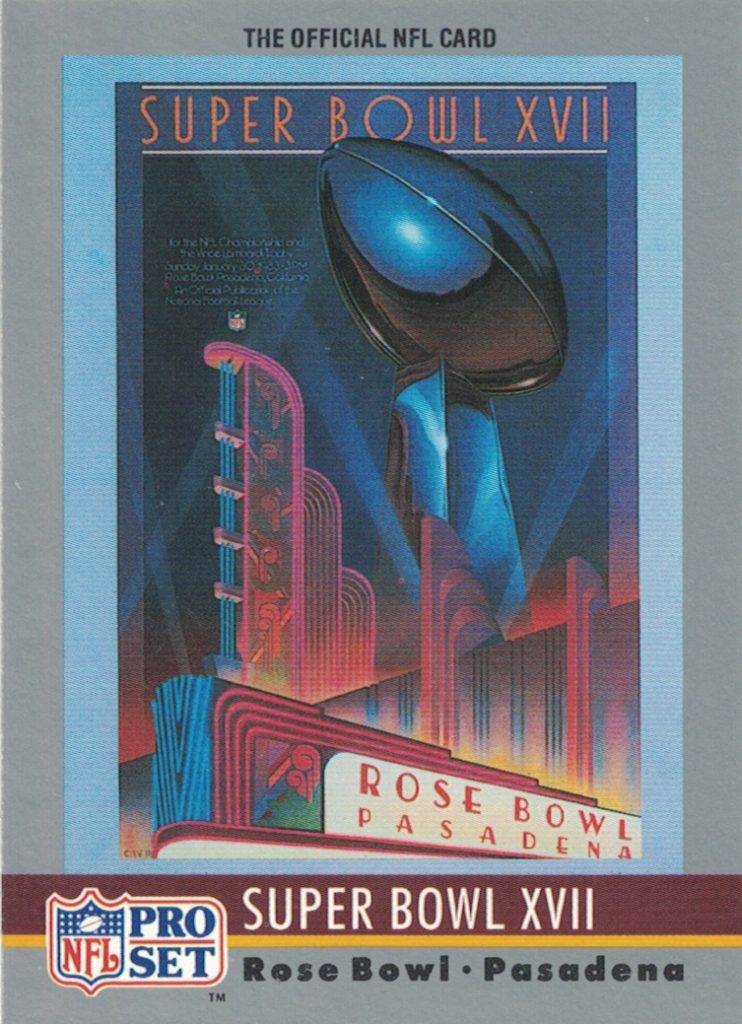
- January 30, 1983 – Rose Bowl, Pasadena, California –Super Bowl XVII was a rematch of Super Bowl VII, which was also played in the LA area, as it pitted the 8-1 Washington Redskins against the Miami Dolphins, who sported a record of 7-2 in the strike-shortened NFL season. The American Football Database provides the game details in its excellent article. The Dolphins held a 17-10 lead at the half with a Fulton Walker 98-yard touchdown return of a kickoff and Jimmy Cefalo’s 76-yard TD reception. The turning point in the game came with 10:10 left in the fourth quarter. Washington was facing a fourth down and 1-yard-to-go situation at the Dolphins’ 43-yard line, and they were still trailing 17-13. That’s when Washington’s veteran running back John Riggins broke through the Dolphin defense and ran all the way to paydirt to take the lead. D.C. Wide receiver Charlie Brown then added an insurance touchdown with his 6-yard scoring catch, and the Washington Redskins outlasted the Miami Dolphins, 27-17. Riggins, with his power running, earned the game’s MVP award.
- February 6, 1983– In a narrow 20-19 Pro Bowl victory at Aloha Stadium, the NFC edged out the AFC. Co-MVPs were awarded to San Diego Chargers QB Dan Fouts and Green Bay Packers WR John J.J. Jefferson.
- March 6, 1983 – The new professional football spring league, the USFL, played its first games.
- April 26, 1983 – The famous 1983 NFL Draft took place, with Stanford University quarterback John Elway selected first by the Baltimore Colts. For more on the 1983 Draft, check out our full coverage.
- May 2, 1983 – Quarterback John Elway was traded from the Baltimore Colts to the Denver Broncos. Here is the full story.
- June 3, 1983 – Super Bowl XVIII Awarded to Tampa – During league meetings on June 3, 1983, NFL owners officially awarded Super Bowl XVIII to Tampa Stadium. Played the following January, it became one of the most famous games of the decade as Marcus Allen and the Los Angeles Raiders dismantled the Washington Redskins, 38–9.
- July 17, 1983 – ABC broadcasts the first USFL Championship: The Michigan Panthers defeat the Philadelphia Stars 24–22 in the league’s inaugural title game.
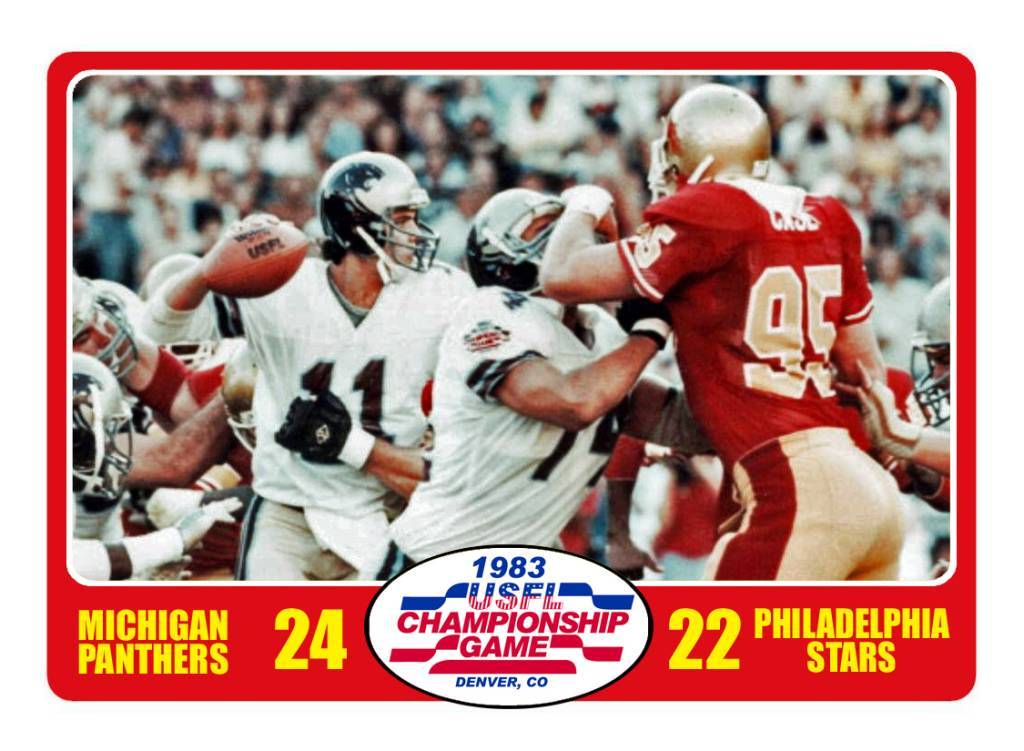
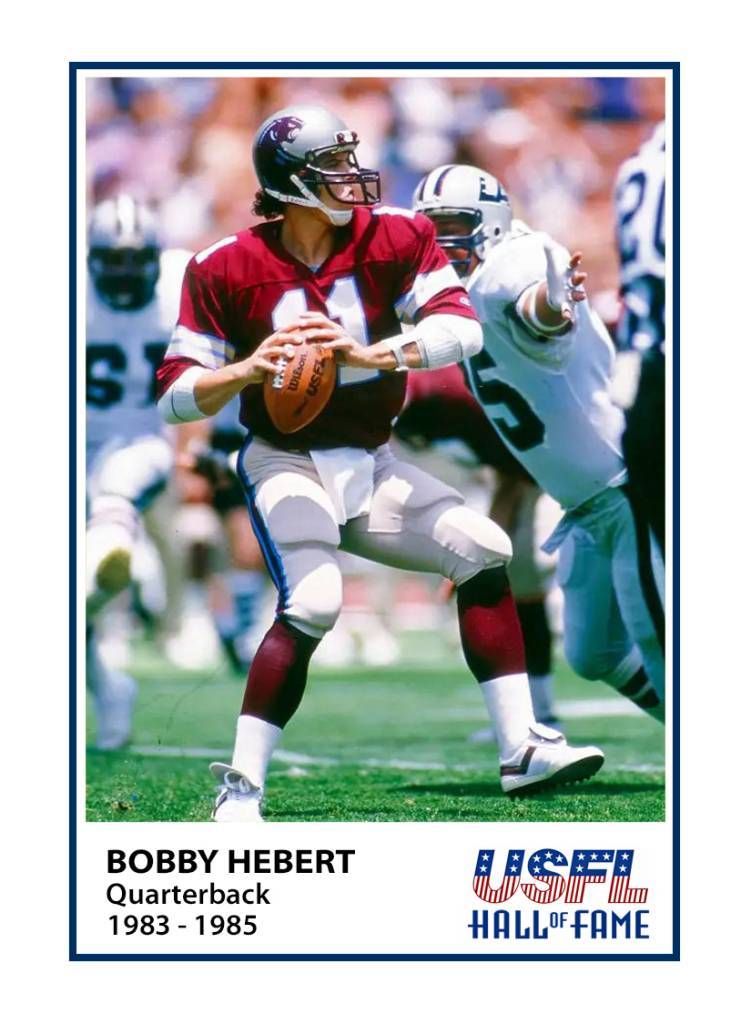
- July 17, 1983 – Bobby Hebert earns MVP honors: The Panthers’ quarterback completes 20 of 39 passes for 314 yards and three touchdowns to secure the victory.
- July 17, 1983 – Anthony Carter seals the Michigan Panthers’ win: Carter catches nine passes for 179 yards, including a 48-yard touchdown strike with 3:01 remaining.
- July 17, 1983 – Michigan Panthers showcase dominant defensive talent: Defensive standout John Corker records 28.5 sacks for a unit that totals 74 sacks on the season.
- July 17, 1983 – Philly Stars feature offensive powerhouses: Running back Calvin Bryant leads the Stars with 1,442 rushing yards, while Chuck Fusina throws for 2,718 yards.
- July 30, 1983 – The Pro Football Hall of Fame conducted the enshrinement of the following NFL legends: Bobby Bell, Sid Gillman, Sonny Jurgensen, Bobby Mitchell, and Paul Warfield.
- August 6, 1983 – The first-ever NFL exhibition game in Europe is played as the Minnesota Vikings defeated the then St. Louis Cardinals at Wembley Stadium in London by the score of 28 to 10—just a thrill for those Londoners over there and everybody in Europe.
- August 19, 1983 – Former Louisiana State University and AFL/NFL football star Billy Cannon was sentenced to five years in prison for counterfeiting after getting involved in some bad real estate investments. After serving two and a half years, he was hired by the correctional facility where he served time as its dentist, a profession he had practiced after his college days.
- September 11, 1983 – Franco Harris becomes the third player in NFL history to rush for over 11,000 career yards. Harris is 118 yards in the Pittsburgh Steelers’ 25-21 victory over the Green Bay Packers. Put him over the distinctive yardage mark.
- September 18, 1983 – The New Orleans Saints posted the franchise’s first overtime win in history, overcoming the Chicago Bears by a field goal in the extra period by the score of 34-31.
- September 24, 1983 – Franklin College’s quarterback Pat Brennan is intercepted a record nine times by a stingy Saginaw Valley State defense. Saginaw Valley’s great day in the secondary led them to a 40-21 victory over the opponent. Interestingly enough, Pat Brennan, eleven days earlier, was selected as the NAIA National Player of the Week for throwing for 392 yards and six touchdowns against the opponent Wisconsin-Eau Claire in the 56-28 Grizzlies win on September 10, 1983.
- October 2, 1983 – The Green Bay Packers put up an NFL record 49 first-half points against the Buccaneers at Tampa Stadium in a 55-14 drubbing of the Bucs. The point tirade was reached with 35 of them being tallied in the second quarter.
- October 2, 1983 – Washington Redskins legendary receiver Art Monk starts the first game of his 183 consecutive streak with a reception. The Washington club used every catch they could get from Monk in a 37-35 nailbiter victory over the LA Raiders.
- October 6, 1983 – The New York Jets franchise announced to the media that they would be leaving the confines of Shea Stadium to play future home games at the Meadowlands, sharing the stadium with their NFC counterparts, the New York Football Giants.
- October 9, 1983 – A career-high passing day for Buffalo Bills QB Joe Ferguson.
- October 17, 1983 –We were able to enjoy this legendary quarterback shootout at Lambeau Field. This game stands as one of the most legendary quarterback shootouts in NFL history. Spearheaded by Packers quarterback Lynn Dickey and Redskins quarterback Joe Theismann, it set the record for the highest-scoring game in Monday Night Football history—a record it held for 35 years until 2018. The Green Bay Packers defeated the Washington Redskins 48-47.
- November 20, 1983 – NY Giants Butch Woolfolk set an NFL record with 43 rushing attempts against the Philadelphia Eagles. The New York Times article from the day says it broke the record of 42 carries earlier in the 1983 season by Tampa Bay Buccaneers running back James Wilder against the Pittsburgh Steelers. Woolfolk turned those 43 carries into 159 yards on the ground as the G-men cruised to a 23-0 shutout by controlling the clock with the ground game.
- November 27, 1983 – CFL Grey Cup, BC Place, Vancouver: Toronto Argonauts defeat BC Lions, 18-17; Argos’ first Grey Cup victory in 31 years.
- December 3, 1983 – Mike Rozier, the powerful running back from Nebraska, earned the 49th Heisman Trophy Award.
- December 3, 1983 – The Auburn Tigers secured a narrow 23-20 victory over Alabama in the 48th Iron Bowl at Legion Field.
- December 10, 1983, Shea Stadium, the home of the New York Jets for 20 seasons, hosted its last NFL game as the Pittsburgh Steelers defeated the Jets 34-7, according to a great Newsday article with more details.
- December 26, 1983 – The Rams defeated the Cowboys 24-17 in the NFC Wild Card game with the help of LA’s LeRoy Irvin’s record-setting 94-yard interception return.
LeRoy Irvin's 94-yard interception return in the #Rams' upset win over Dallas in the 1983 NFC Wild Card Game
— Kevin Gallagher (@KevG163) July 3, 2026
It was then the second-longest postseason interception return in NFL history, and stood for 22 years as NFL history's longest non-scoring postseason interception return.… pic.twitter.com/6cosy8vdpA
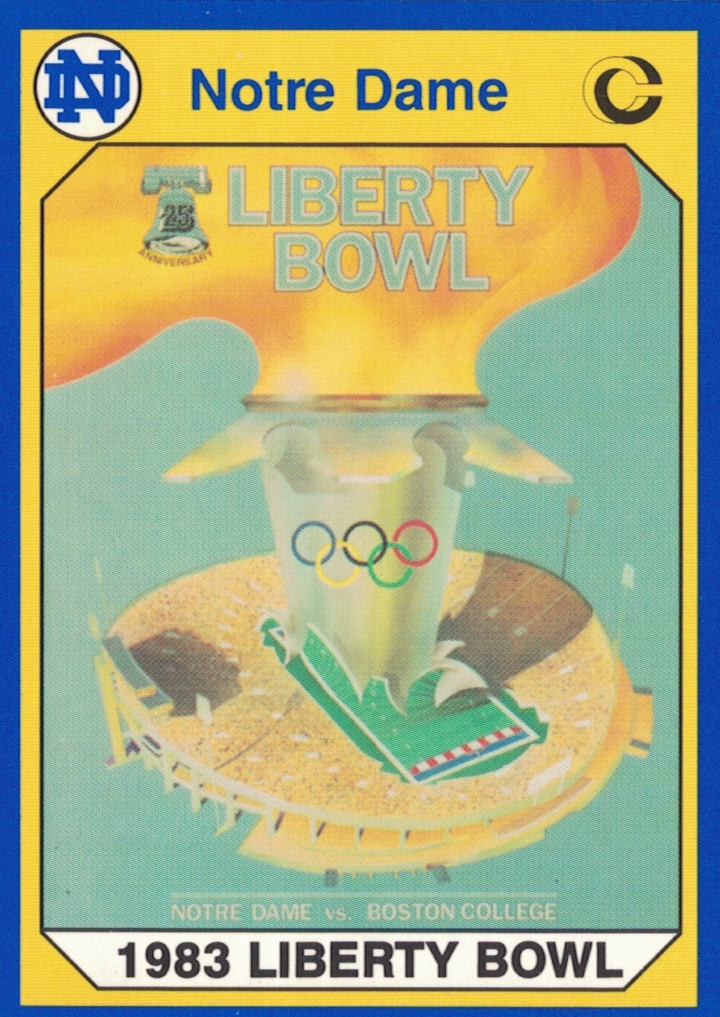
- December 29, 1983 – Memphis, Tennessee –The Liberty Bowl, which is also the 2nd College Football Holy War per the Onthisday.com website. In the contest, Notre Dame defeated Boston College 19-18 in a thriller. The game’s MVP was BC quarterback Doug Flutie, per Sports-Reference.com.