The 1972 American football season is arguably one of the most storied years in the history of the sport. It stands as a benchmark for athletic perfection, dramatic playoff finishes, and significant structural changes in both the professional and collegiate ranks.
Here is what football looked like in 1972:
The Untouchable Miami Dolphins
In the National Football League (NFL), the 1972 season belongs entirely to the Miami Dolphins. Coached by the legendary Don Shula, the Dolphins achieved something no other team had done before or has done since in the modern era: a completely perfect season.
- The Regular Season: Despite losing starting quarterback Bob Griese to an ankle injury in Week 5, backup veteran Earl Morrall seamlessly stepped in. Fueled by a punishing running game led by Larry Csonka and Mercury Morris, and a stifling “No-Name Defense,” Miami finished the regular season 14–0.
- Super Bowl VII: Griese returned for the AFC Championship and started in Super Bowl VII at the Los Angeles Memorial Coliseum. The Dolphins defeated the Washington Redskins 14–7, finishing the year 17–0. The only score for Washington came from a bizarre blocked field goal attempt that Miami kicker Garo Yepremian tried to pass, resulting in a defensive touchdown.
The Immaculate Reception
Beyond Miami’s perfection, 1972 is immortalized by a single play. On December 23, 1972, during the AFC Divisional Playoff game between the Pittsburgh Steelers and the Oakland Raiders, football history was made.
Trailing 7–6 with just 22 seconds left on fourth down, Steelers quarterback Terry Bradshaw threw a desperate pass downfield. The ball ricocheted off a collision between Raiders safety Jack Tatum and Steelers receiver Frenchy Fuqua. Just before the ball hit the turf, Steelers rookie fullback Franco Harris scooped it up and ran it in for the game-winning touchdown. Dubbed the “Immaculate Reception,” it is widely considered the greatest play in NFL history and ignited the Steelers’ dynasty of the 1970s.
1972 College Football Dominance
The collegiate landscape was dominated by the West Coast and a game-changing rule shift.
| 1972 College Highlights | Details |
| National Champions | The USC Trojans finished a perfect 12–0 under coach John McKay, thoroughly dismantling Ohio State 42–17 in the Rose Bowl to secure the consensus national title. |
| Heisman Trophy | Nebraska wide receiver and return specialist Johnny Rodgers won the award, dazzling voters with his explosive playmaking ability. |
| Freshman Eligibility | 1972 marked the first year the NCAA allowed freshmen to play on varsity football teams, permanently changing college recruiting. |
A Deep Dive into 1972 Football History and Highlights
The historic highlights of 1972 were bolstered by crucial changes to how the game was played and officiated. To combat the dominance of defenses in the early 1970s, the NFL instituted a major rule change: the hash marks were moved closer to the center of the field, aligning them with the goalposts (18 feet, 6 inches apart).
This seemingly minor geographical change opened up the playbook. It allowed offenses to run to both the wide and short sides of the field with equal effectiveness, giving receivers more room to operate and fundamentally increasing the strategic complexity of offensive football.
Additionally, the 1972 season saw the final games played in legendary venues like Yankee Stadium (for the New York Giants), marking a transition toward modern, football-specific stadiums.
- January 1, 1972 – The Stanford Indians entered the Rose Bowl against Michigan as 10-1/2 point underdogs, but exitted with a 13-12 victory as Indians QB Don Bunce was selected as the game MVP.
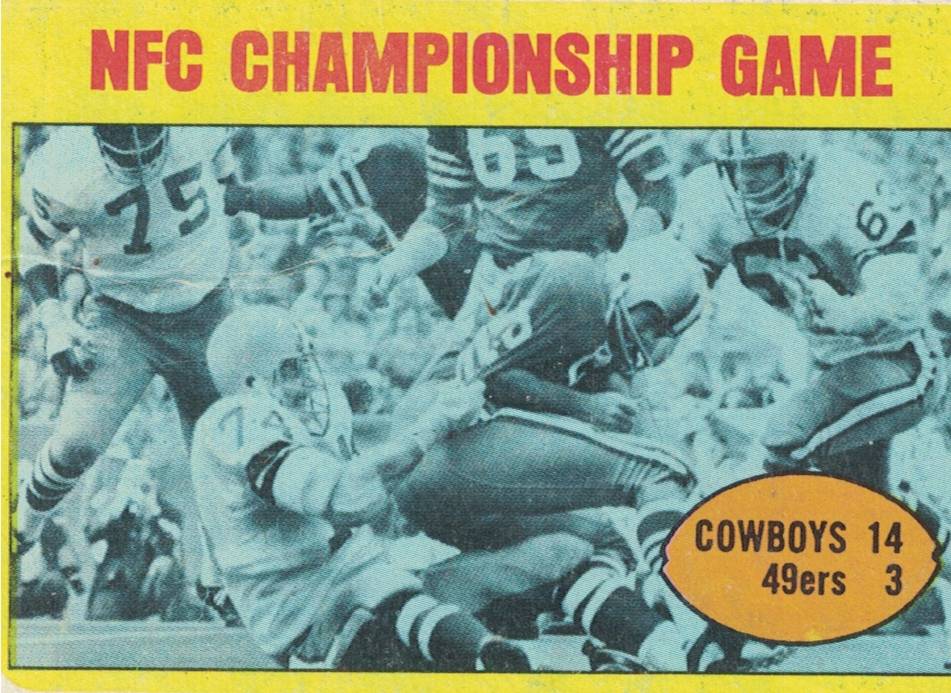
- January 2, 1972 – Texas Stadium – In the 1971–72 NFC Championship Game, the defending conference champion Dallas Cowboys defeated the San Francisco 49ers 14–3. Driven by a dominant performance from the “Doomsday Defense,” Dallas suffocated the 49ers’ attack by forcing three fourth-quarter interceptions and holding San Francisco to just 61 rushing yards. Offensively, the Cowboys relied on a heavy ground attack capped by short touchdown runs from Calvin Hill and Duane Thomas. The victory punched Dallas’s ticket to Super Bowl VI, where they would go on to capture their franchise’s first Super Bowl title.
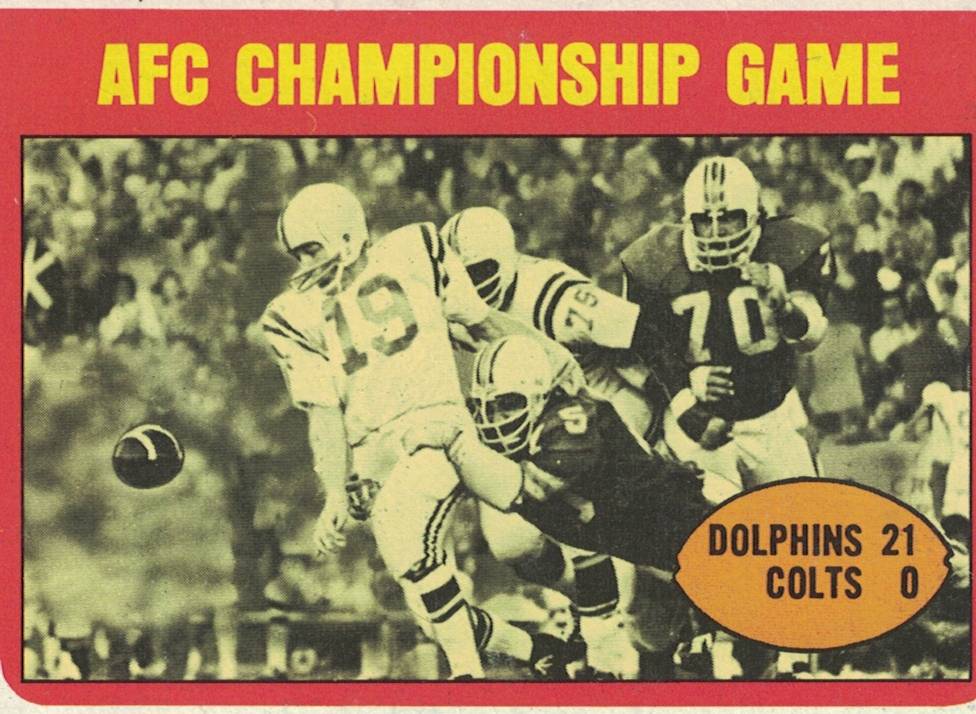
- January 2, 1972 – Miami’s Orange Bowl –The 1971 AFC Championship game matched the Baltimore Colts against the Miami Dolphins, per Pro-Football-Reference.com. The Dolphins showed the League a little of what was to come as they beat the Baltimore Colts, 21-0, as Paul Warfield and Larry Csonka scored offensive TDs for the Fins while defender Dick Anderson added a 62-yard pick-six for good measure.
- January 8, 1972 – The NCAA announced that freshmen could play on teams starting in the fall sports season, according to the Chicago Tribune.
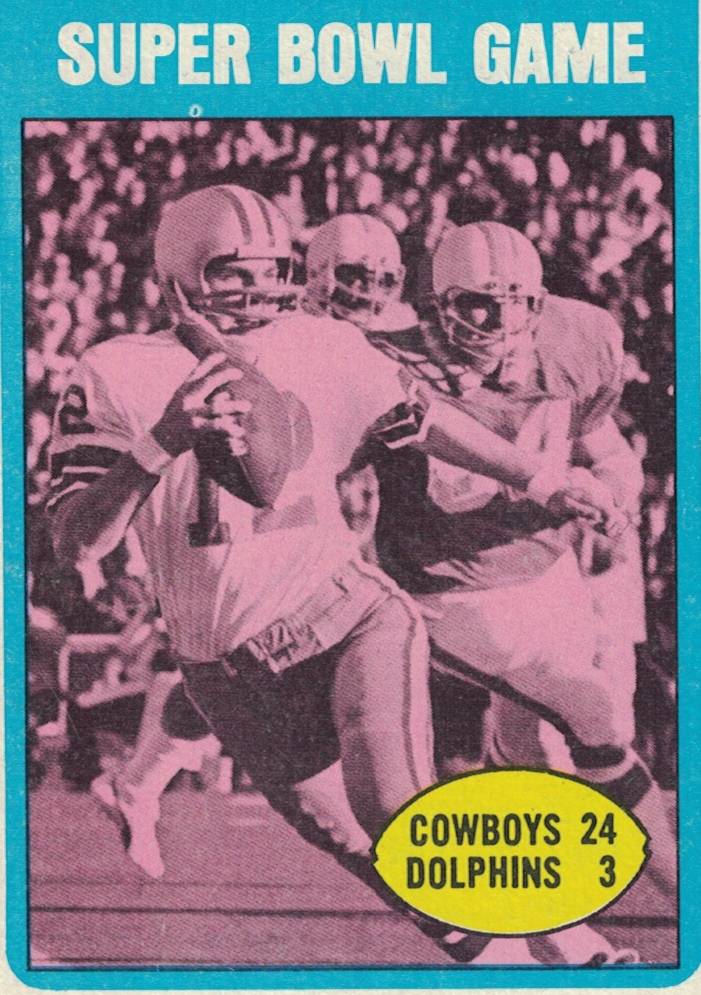
- January 16, 1972 – Tulane Stadium, New Orleans –The NFL title would be decided in Super Bowl VI as the Dallas Cowboys and the Miami Dolphins would clash to see who would take home the Lombardi Trophy. Dallas Running back Duane Thomas pounded out 95 yards on the ground with a touchdown while Roger Staubach tossed scoring passes to Mike Ditka and Lance Alworth to lift the Cowboys over the Miami Dolphins, 24-3. According to Pro-Football-Reference.com, Roger Staubach, with his 12 of 19 for 119 and two scores, was selected as the game’s MVP.
- July 13, 1972 – Owners from the LA Rams, Robert Irsay, and the Baltimore Colts, Carroll Rosenbloom, swapped franchises in a rare NFL owner’s trade.
- July 28, 1972 – The defending Super Bowl champion Dallas Cowboys defeat the College All-Stars 20–7 at Soldier Field, where Auburn quarterback Pat Sullivan earns the game’s MVP award.
- July 29, 1972 – The Pro Football Hall of Fame conducted the enshrinement of the following NFL legends: Lamar Hunt, Gino Marchetti, Ollie Matson, and Ace Parker.
- October 8, 1972 – Philadelphia Eagles great Harold Carmichael starts his torrid streak of 127 consecutive games with a reception. Despite the streak, the Eagles fell to the New Orleans Saints 21-3 at the Superdome.
- November 4, 1972- The Night the Clock Stopped: The SEC clash between No. 6 LSU and unranked Ole Miss remains one of the most disputed finishes in SEC history. Trailing 16-10, LSU quarterback Bert Jones engineered an 80-yard drive starting with just 3:02 left on the clock. In what many call a “friendly home clock Jones and LSU got off an extra play on which the QB found a streaking Brad Davis for the game-winning TD as the Tigers upended the Rebs 17-16.
- December 2, 1972:The 37th Iron Bowl became famous for the “Punt Bama Punt!” game. Auburn defensive back Bill Newton blocked two Alabama punts in the fourth quarter, and David Langner returned both for touchdowns, allowing Auburn to edge the Tide 17-16.
- December 3, 1972 – The Hamilton Tiger-Cats defeated the Saskatchewan Roughriders 13-10 in the Grey Cup at Ivor Wynne Stadium in Hamilton.
- December 5, 1972 – Johnny Rodgers, the flanker from the University of Nebraska, claimed the 38th Heisman Trophy Award.
- December 16, 1972 – The Miami Dolphins closed out the 1972 regular season with a 16-0 blanking of the Baltimore Colts. The significance of the course is that they became the first undefeated NFL team with a perfect 14-0 record per ESPN.com. The Dolphins went on to defeat the Washington Redskins in Super Bowl VII on January 14, 1973, to go undefeated in the postseason.
- December 17, 1972 – Denver Broncos Quarterback Charley Johnson tosses three touchdown passes to help the Broncos more than double up the New England Patriots 45-21.
- December 23, 1972 – Three Rivers Stadium, Pittsburgh –The “Immaculate Reception” remains football’s most talked-about and replayed play. It changed the Pittsburgh franchise, which had never won a postseason game and had played just one playoff game in 38 years. The 1972 AFC Divisional Playoff featured the favored Raiders, expected to face undefeated Miami.
- December 23, 1972 – #15 Arizona State outlasted Missouri, 49-35, in the second Fiesta Bowl.
- December 23, 1972 –Dallas QB Roger Staubach leads his team back in the second half of an NFC playoff game to defeat the San Francisco 49ers, earning the moniker of Captain Comeback.
- December 31, 1972 – Three Rivers Stadium, Pittsburgh – The AFC Championship Game was played as Pittsburgh, a mere week removed from their thrilling Immaculate Reception win over Oakland, faced the undefeated Dolphins. The Miami Dolphins were too much for the Steelers in this one, keeping the loss column clean and knocking off Pittsburgh, 21-7.