Waddy Young dominated the gridiron for the University of Oklahoma before trading his professional football cleats for a pilot’s wings to defend his country in World War II.
Football Bio
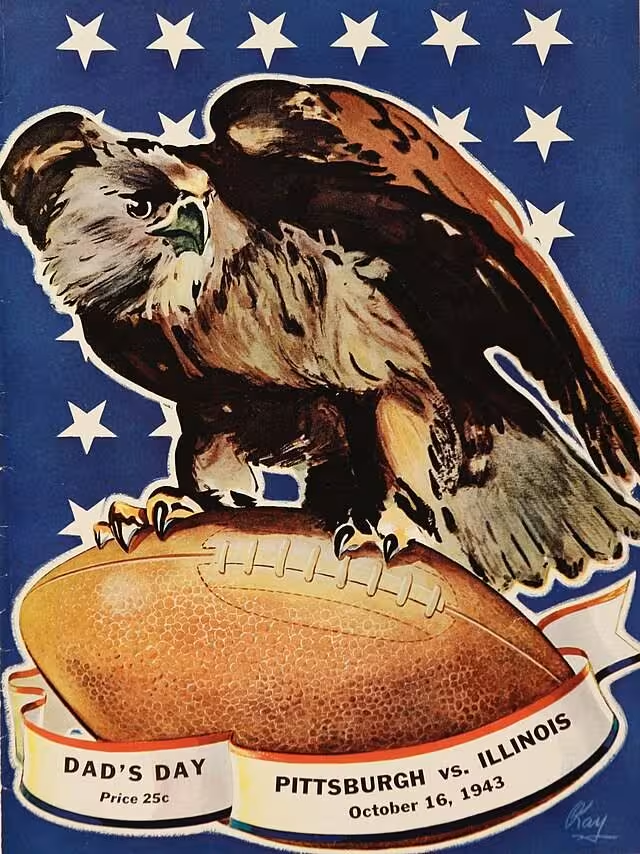
September 14, 1916 – that’s the birthday of Waddy Young, a former end for the University of Oklahoma who played in the late 1930s.
He went pro and played in the NFL for the Brooklyn Dodgers, and he played in the National Football League’s first televised game on October 22, 1939.
This brave man left pro football of his own accord to become a pilot for the United States and flew one of America’s B-24 Liberator bomber planes over the skies of Europe during World War II.
He logged over 9,000 hours in the air fighting the Nazis, and he later volunteered to go to the Pacific theater to fly against the Japanese pilots flying the B-29 Superfortress.
Unfortunately, we lost this hero on January 9, 1945, as his plane crashed over the skies of Tokyo while trying to assist a fellow U.S. pilot whose plane was in distress. The two planes ended up crashing and killing all on board both aircraft.
The National Football Foundation recognized Waddy Young as they placed him in the College Football Hall of Fame in the 1986 induction ceremony.
Waddy Young made the ultimate sacrifice for his country, transforming a remarkable professional football career into an enduring legacy of American heroism. Fans and historians honor his memory not just for his athletic prowess, but for the profound courage he demonstrated in the skies over Europe and the Pacific.
Accolades and Football Accomplishments
- Inducted into the College Football Hall of Fame in 1986.
- Named a Consensus First-Team All-American in 1938.
- Earned First-Team All-Big Six honors in 1938.
- Played in the NFL’s first-ever televised football game on October 22, 1939 (Brooklyn Dodgers vs. Philadelphia Eagles).
- Selected to the College Football All-America Board’s All-Time Team.
- Inducted into the Oklahoma Sports Hall of Fame.
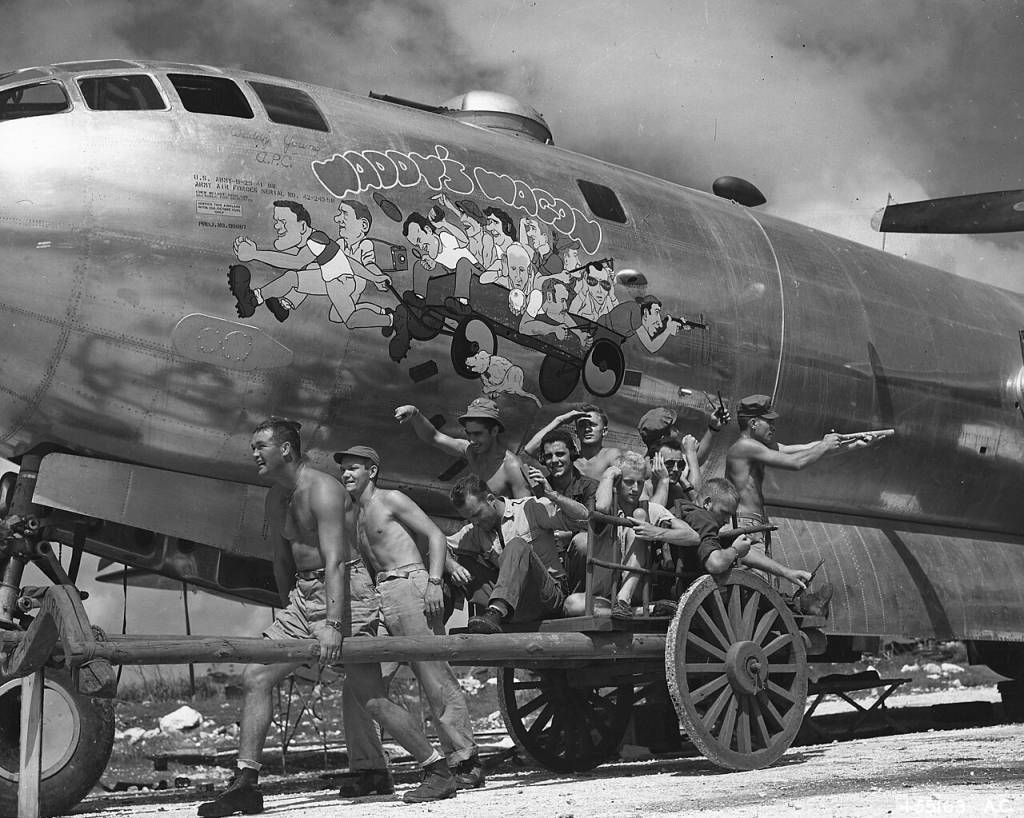
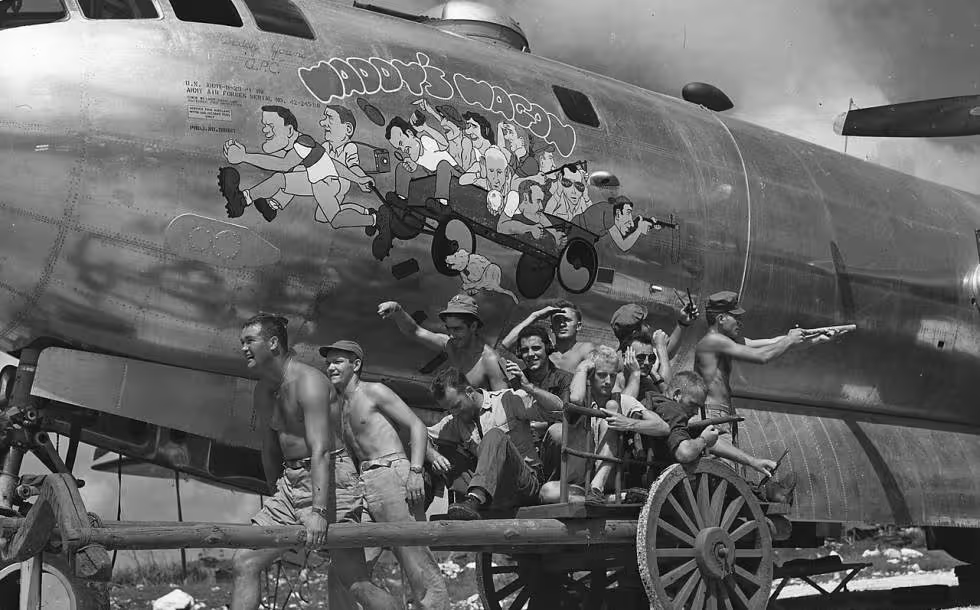
Scope and content: B-29 Men bombed Tokyo. The crew of “Waddy’s Wagon”, fifth B-29 to take off on the initial Tokyo mission from Saipan, and first to land after bombing the target. Crew members, posing here to duplicate their caricatures on the plane, are : Plane C. O., Capt. Walter R. “Waddy” Young, Ponca City, Okla., former All-American end; Lt. Jack H. Vetters, Corpus Christi, Texas, pilot; Lt. John F. Ellis, Moberly, Mo., bombardier; Lt. Paul R. Garrison, Lancaster, Pa., navigator; Sgt. George E. Avon, Syracuse, N.Y., radio operator; Lt. Bernard S. Black, Woodhave, L.I., Flight Engineer; Sgt. Kenneth M. Mansie of Randolph, Me., Tech., and gunners – Sgts. Lawrence L. Lee, Max, N.D.; Wilbur J. Chapman, Panhandle, Texas; Corbett L. Carnegie, Grindstone Island, N.Y.: and Joseph J. Gatto, Falconer, N.Y. General notes: The crew of the USAAF Boeing B-29-40-BW Superfortress (s/n 42-24598) “Waddy’s Wagon”, 20th Air Force, 73rd Bomb Wing, 497th Bomb Group, 869th Bomb Squadron. This aircraft was lost on 9 January 1945.
One comment