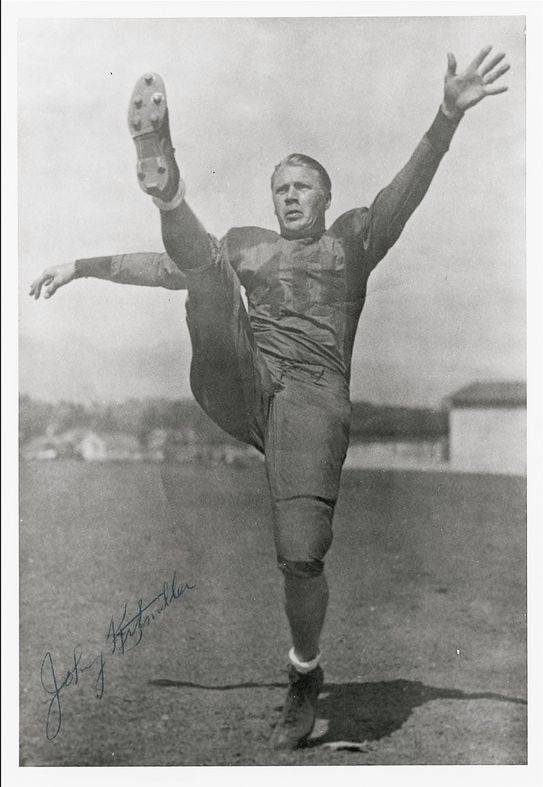
Johnny Kitzmiller established himself as an outstanding halfback for the University of Oregon, earning the fitting nickname “The Flying Dutchman” for his speed and skill on the gridiron. His collegiate dominance was so profound that it paved the way for a brief professional career and culminated in his election to the College Football Hall of Fame.
Legend
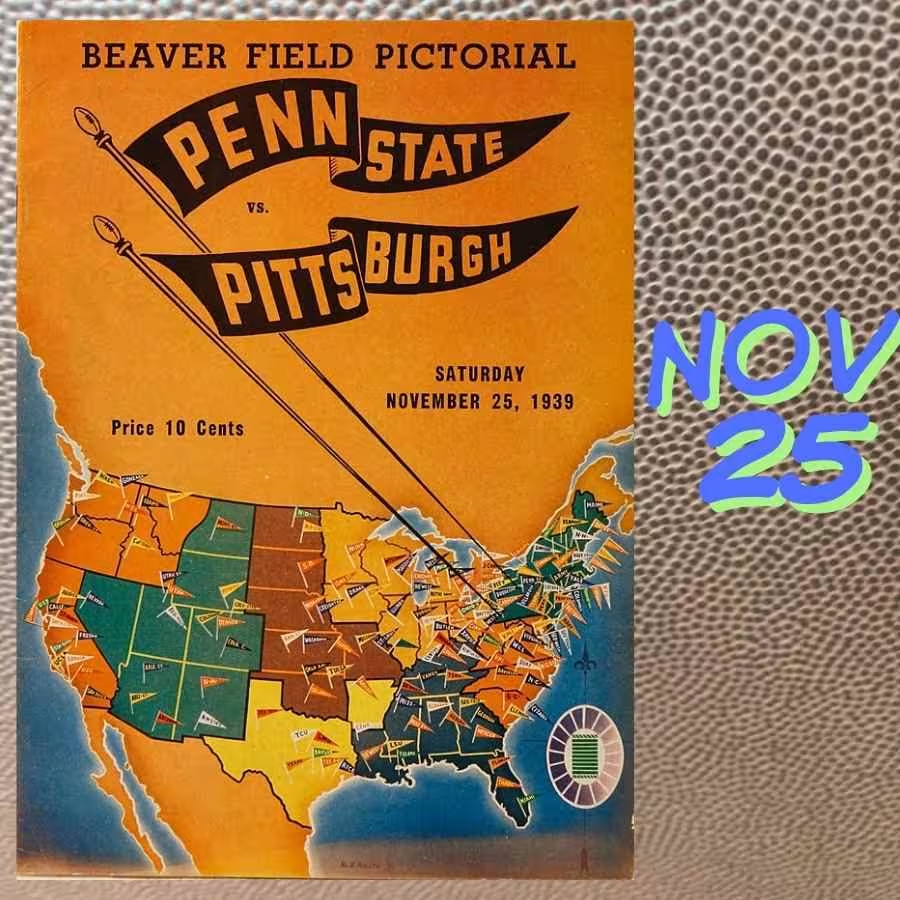
November 25, 1904 – Harrisburg, Pennsylvania – Oregon’s outstanding halfback Johnny “Dutch” Kitzmiller came into this world. According to footballfoundation.org, Kitzmiller had an interesting nickname on the gridiron: the “Flying Dutchman.”
The 165-Pound Cannonball Who Followed His Coach 3,000 Miles West
In the autumn of 1926, a 21-year-old halfback from Harrisburg, Pennsylvania, had his future mapped out along the banks of the Hudson River. John Wesley “Johnny” Kitzmiller—a standout at Harrisburg Tech High School and New York Military Academy—had every intention of playing for Army at West Point. There was just one complication: the man he wanted to play for, legendary former Army All-American lineman and head coach John “Cap” McEwan, abruptly packed his bags and accepted the head coaching job at the University of Oregon.
Rather than stay East, Kitzmiller made a cross-country gamble that altered the trajectory of Pacific Coast football. He followed McEwan nearly 3,000 miles to Eugene, stepping onto the field for the Oregon Webfoots in 1928.
At six feet tall and a wiry 165 pounds, Kitzmiller looked more like a track sprinter than a 1920s iron-man football player. Yet in an era of single-platoon football where stars rarely left the field, the kid from Pennsylvania quickly earned one of the era’s most vivid nicknames: “The Flying Dutchman.” The moniker wasn’t born from his breakaway runs—though he was a dangerous triple-threat runner, passer, and placekicker—but from the reckless, airborne open-field tackles he launched at ball carriers who outweighed him by forty or fifty pounds.
The “Civil War” Break and the Comeback of 1930
By November 1929, Kitzmiller had helped transform Oregon from a conference afterthought into a Pacific Coast Conference powerhouse. On November 16, 1929, Oregon faced archrival Oregon State in the annual showdown that local newspapers had just begun calling the “Civil War.”
Kitzmiller dominated the first half, pinning the Beavers deep with booming punts and slicing through the defense with crisp passes to stake Oregon to an early lead. Then, on the final play of the second quarter, disaster struck in the mud at Hayward Field. Caught beneath a pile of tacklers, Kitzmiller suffered a dislocated ankle and a fracture of the fibula.
He was rushed straight from the stadium to a Eugene hospital, where university physicians moved so quickly that his bone was set and his leg was encased in a plaster cast before the final whistle blew on Oregon’s 16–0 shutout victory. The next morning, the Eugene Register ran a grim front-page headline warning fans that Johnny Kitzmiller might never play football again.
They underestimated the Flying Dutchman.
Rehabilitating through the offseason, Kitzmiller returned for his senior campaign in 1930 without losing a step. In October 1930, he delivered one of the defining moments of his career against rival Washington, hauling in a forward pass and outrunning the Husky secondary for the lone touchdown in a 7–0 Oregon triumph. By season’s end, he had led the Webfoots to a 23–7 record across his three varsity seasons, earned his second All-Pacific Coast Conference selection, and captured Second-Team All-America honors—becoming just the second All-American in Oregon football history.
The National Football Foundation voted Johnny Kitzmiller into its College Football Hall of Fame in 1969. Dutch played one season in the NFL with the New York Giants.
Conclusion
Johnny Kitzmiller’s legacy is preserved in the annals of college football history. His dynamic play at Oregon secured his permanent nickname, “The Flying Dutchman,” and earned him one of the sport’s highest honors. Although his professional career was brief with the New York Giants, his induction into the College Football Hall of Fame in 1969 ensures that his contribution to the game remains celebrated.
Accolades and Football Accomplishments
Honors and Recognition
- College Football Hall of Fame Inductee (1969)
- Nicknames: “The Flying Dutchman,” “Dutch”
Career Milestones
- Position: Outstanding Halfback (University of Oregon)
- Professional Career: Played one season in the NFL with the New York Giants