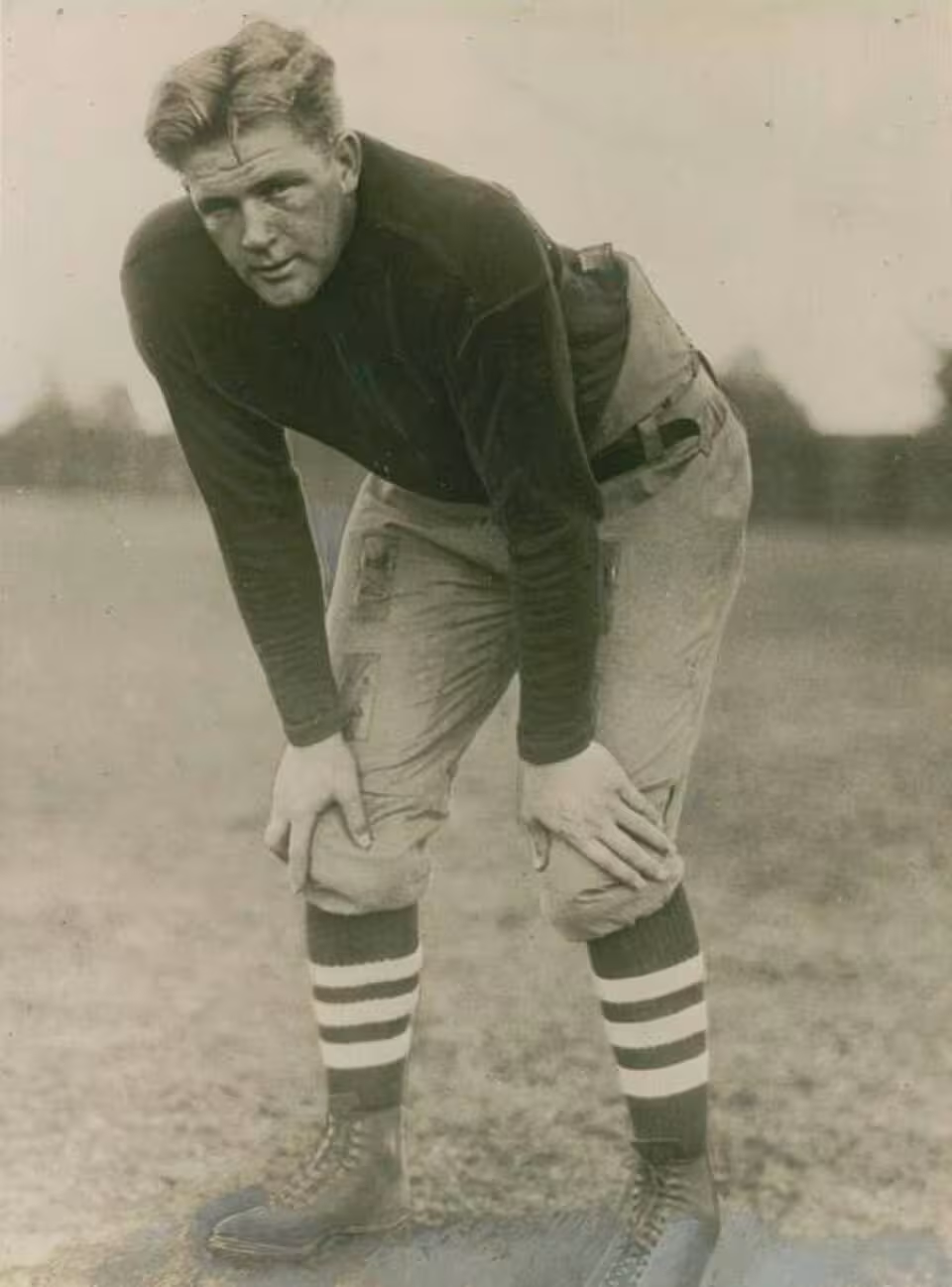
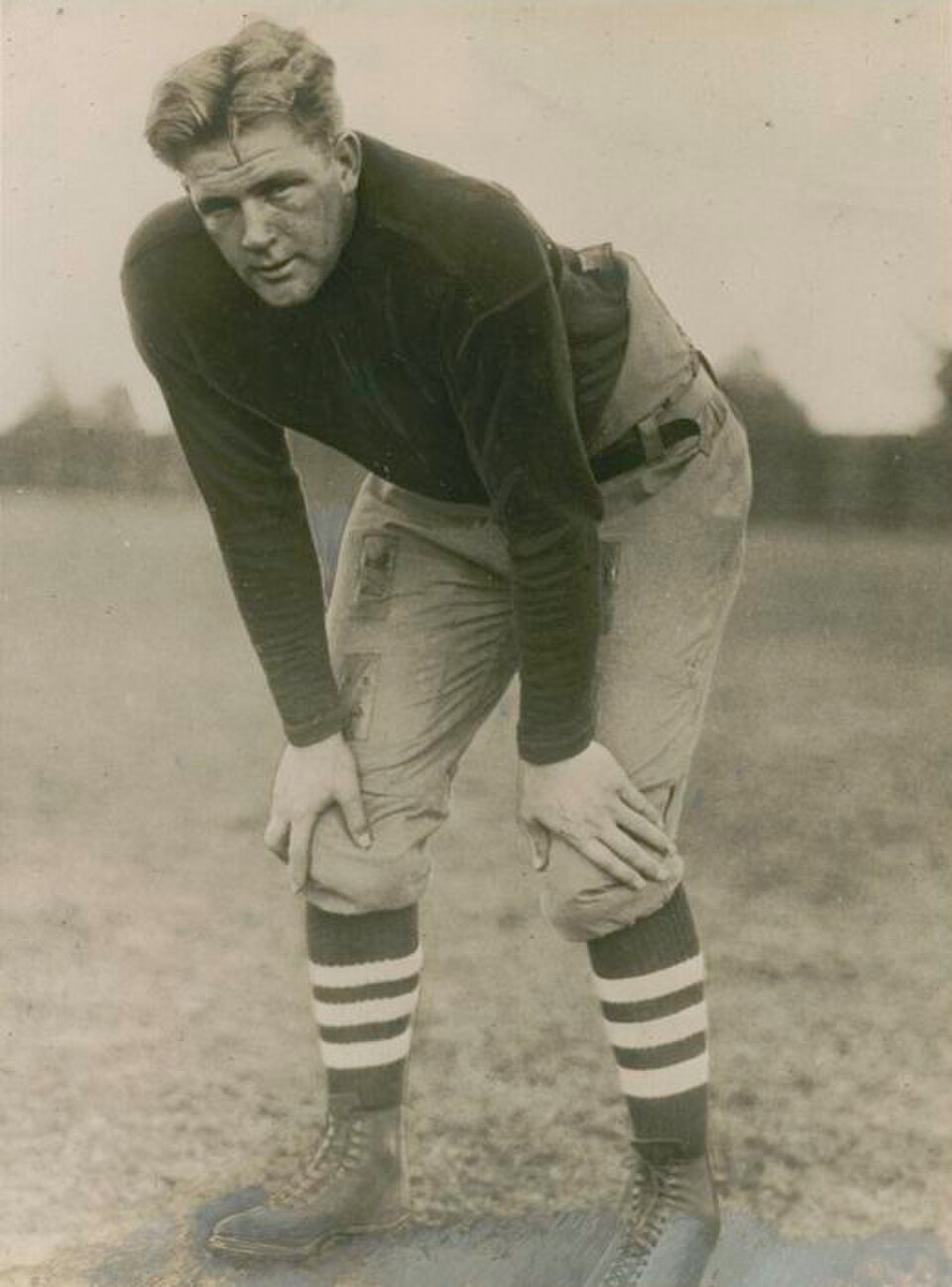
June 11, 1902 – Willow River, Minnesota – Ernie Nevers was Stanford University’s fullback from 1923 to 1925. He was an All-American, according to the Pro Football Hall of Fame, and excelled in basketball, baseball, and football. Nevers gained national attention on New Year’s Day 1925 at the Rose Bowl. Ernie and his Cardinal teammates were matched against the powerful Notre Dame Fighting Irish squad, which featured the Seven Mules, the Four Horsemen backfield, and a legendary coach in Knute Rockne. Ernie’s performance was memorable and courageous, as he was only five days removed from having a cast removed on a broken ankle. With his foot bound tightly in a brace, Ernie dominated the game.
Ernie Nevers: Stanford Star & Pro Football Hall of Famer
Ernie Nevers dominates the gridiron as a versatile triple-threat, leaving an unforgettable legacy at Stanford University and in the early days of professional football. Known affectionately as the “Big Dog,” he shatters scoring records and earns the ultimate praise from legendary coaches, solidifying his status as one of the most remarkable athletes of the 20th century.
Football Bio
June 11, 1902 – Willow River, Minnesota – Ernie Nevers was Stanford University’s fullback from 1923 to 1925. He was an All-American, according to the Pro Football Hall of Fame, and excelled in basketball, baseball, and football.
Nevers gained national attention on New Year’s Day 1925 at the Rose Bowl. Ernie and his Cardinal teammates faced the powerful Notre Dame Fighting Irish squad, featuring the 7 Mules, the Four Horsemen backfield, and a legendary coach in Knute Rockne.
Ernie’s performance was memorable and courageous, as he was only five days removed from having a cast removed from a broken ankle and with his foot tightly bound in a brace, Nevers dominated the game. Nevers established a Rose Bowl record with 34 carries as he gained 114 yards, only 13 less than the combined total for Notre Dame’s legendary backfield. His brilliance in the contest did not stop there, as Nevers averaged 42 yards punting as a bonus. Unfortunately for the Cardinal faithful, the Irish were just a bit too much as Stanford fell 27-10.
The FootballFoundation.org bio of Nevers goes on to say that Hall of Fame coach Glenn “Pop” Warner, who coached Nevers and the legendary Jim Thorpe, picked Nevers over Thorpe as his personal choice as the “greatest football player of all time.” In 1969, Nevers was named to Football’s All-Time Team as part of college football’s Centennial celebration.
Big Dog was Stanford’s captain in 1925 when he led a 24-17 upset of arch-rival California. He handled the ball on all but three offensive plays as Stanford posted its first win over Cal in eight seasons. Ernie Nevers received the great honor of being selected for inclusion into the College Football Hall of Fame in 1971.
His bio on the ProFootballHOF.com explains that after college, Nevers signed pro basketball and baseball contracts and, in fact, was destined to throw two home run pitches to Babe Ruth in his historic 60-home run season in 1927. But pro football also beckoned. In 1926, the Duluth Eskimos convinced Nevers to join their ranks despite lucrative offers from other sports.
The Eskimos had a unique existence, playing all but one of their games on the road during Nevers’ time there. Ernie reportedly played all but 29 of a possible 1,740 minutes in 29 games. He got hurt, which forced him to miss the 1928 season, but he came back with a vengeance in 1929 with a new team, the Chicago Cardinals.
He stayed with the Cards for a few seasons and was even coaching the squad during the 1930 and 1931 seasons. His biggest pro game was with Chicago in 1929, against their crosstown rivals, the Bears, on Thanksgiving Day, when Nevers scored all 40 of the Cardinals’ points in a Red Bird romp, 40-7.
Check out more on Ernie Nevers with our friend Joe Ziemba on the Sports History Network and in his great book, When Football Was Football. The Pro Football Hall of Fame enshrined the Big Dog Ernie Nevers in 1963.
Ernie Nevers sets an unparalleled standard for toughness and athletic versatility across multiple professional sports. By holding unbreakable scoring records and dominating as a multi-sport star, he secures his place as a charter member of both college and professional football’s most elite halls of fame. His extraordinary legacy continues to inspire generations of gridiron warriors today.
Nevers established a Rose Bowl record with 34 carries as he gained 114 yards, only 13 less than the combined total for Notre Dame’s legendary backfield. His brilliance in the contest did not stop there, as Nevers averaged 42 yards punting as a bonus. Unfortunately for the Cardinal faithful, the Irish were too much as Stanford fell 27-10.
The FootballFoundation.org bio of Nevers goes on to say that Hall of Fame coach Glenn “Pop” Warner, who coached Nevers and the legendary Jim Thorpe, chose Nevers as his personal pick for the “greatest football player of all time.” In 1969, Nevers was named to Football’s All-Time Team, which was part of college football’s Centennial celebration. Big Dog was Stanford’s captain in 1925 when he led a 24-17 upset of arch-rival California. He handled the ball on all but three offensive plays as Stanford posted its first win over Cal in eight seasons. Ernie Nevers received the great honor of being selected for inclusion into the College Football Hall of Fame in 1971.
His bio on ProFootballHOF.com explains that after college, Nevers signed pro basketball and baseball contracts and, in fact, was destined to throw two home run pitches to Babe Ruth in his historic 60-home run season in 1927. But pro football also beckoned.
In 1926, the Duluth Eskimos convinced Nevers to join their ranks, despite lucrative offers from other sports. The Eskimos had a unique existence as they played all but one of their games on the road during Never’s time there. Ernie reportedly played all but 29 of a possible 1,740 minutes in 29 games.
He got hurt, and that fact forced him to miss the 1928 season, but he came back with a vengeance in 1929 with a new team, the Chicago Cardinals. He stayed with the Cards for a few seasons and even coached the squad during the 1930 and 1931 seasons.
His biggest pro game was with Chicago in 1929 against their cross-town rivals, the Bears, on Thanksgiving Day, when Nevers scored all 40 of the Cardinals’ points in a Red Bird romp, 40-7.
Check out more on Ernie Nevers with our friend Joe Ziemba on the Sports History Network and in his excellent book, When Football Was Football. The Pro Football Hall of Fame enshrined the Big Dog Ernie Nevers in 1963.
Accolades and Football Accomplishments
- Pro Football Hall of Fame: Inducted as a charter member in 1963.
- College Football Hall of Fame: Inducted in the inaugural class of 1951. (Note: Often mistakenly cited as 1971).
- NFL Single-Game Scoring Record: Holds the all-time NFL record for the most points scored in a single game with 40 points (six rushing touchdowns and four extra points), achieved against the Chicago Bears in 1929.
- All-Pro Honors: Named a First-team All-Pro five times during his career (1926, 1927, 1929–1931).
- NFL 1920s All-Decade Team: Selected to the team honoring the best professional players of the era.
- Consensus All-American: Earned first-team All-American honors in 1925 while playing for Stanford.
- Rose Bowl Standout: Set a Rose Bowl record in 1925 with 34 carries, gaining 114 yards against Notre Dame’s legendary “Four Horsemen” backfield.
- Retired Number: His number 1 jersey was retired by the Stanford Cardinal football program.
One comment