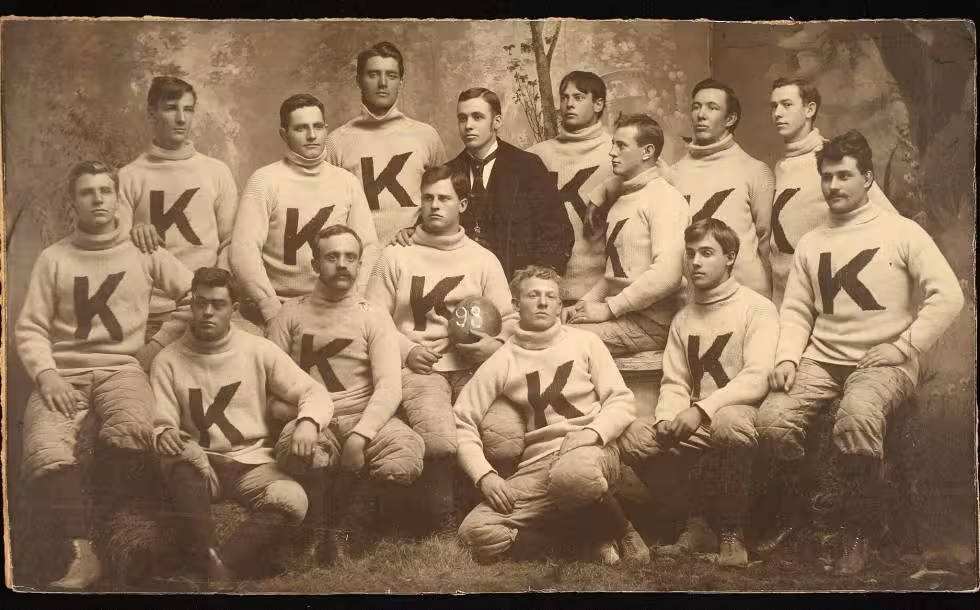
Football traditions at the University of Kansas can be celebrated on November 22, which marks ground zero for Jayhawk football. KU supports one of the country’s oldest programs, and its rich history has an interesting start.
Kansas Gridiron Tradition
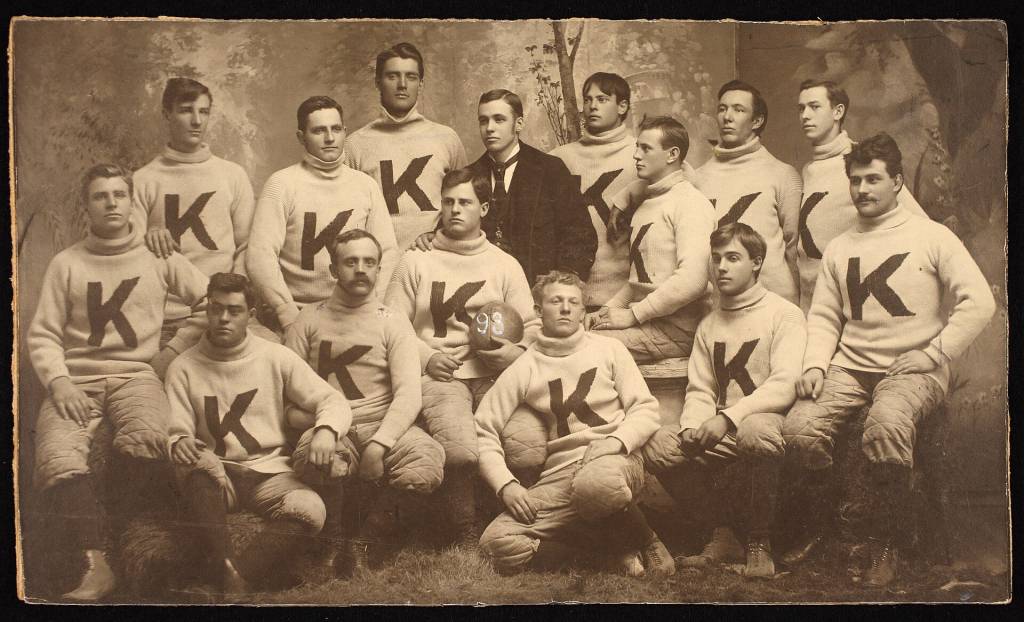
The University of Kansas football program began in 1890, propelled by the formation of the Kansas Intercollegiate Athletic Association and a generous land donation from Colonel John J. McCook that established McCook Field in Lawrence. Captained by Howard Peairs and guided by player-coach Will Coleman, the inaugural squad took the field on November 22, 1890, against Baker University in Baldwin City. That contest, which ended in a 22–9 loss for Kansas, holds the distinction of being the first intercollegiate football game ever played in the state. Kansas secured its first program victory just weeks later on December 8, defeating Baker 14–12 in a Lawrence rematch.
Origin of the “Jayhawks” Nickname
When Kansas football debuted in 1890, players naturally adopted the “Jayhawks” moniker, a name already woven into campus spirit through the 1886 “Rock Chalk” chant. The term originated around 1848 as a mythical combination of two birds: the noisy, quarrelsome blue jay and the stealthy sparrow hawk. During the violent “Bleeding Kansas” territorial conflicts of the 1850s, militant Free-State abolitionists—many centered around Lawrence—became known as Jayhawkers. By the Civil War, regiments like the Independent Mounted Kansas Jayhawkers transformed the name from a label for frontier ruffians into a patriotic symbol of Kansas resilience and independence, making it an enduring emblem for the university’s athletes.
Foundational Coaches
Following Will Coleman’s brief 1890 tenure, KU hired its first official head coach, English professor Edwin Mortimer Hopkins, who led the 1891 squad to an undefeated 7–0–1 mark. That 1891 campaign also featured a 22–8 victory over Missouri in Kansas City, igniting the storied Border War rivalry. Over the next two decades, several prominent figures shaped the program:
- Fielding H. Yost (1899): Before achieving legendary status at Michigan, Yost coached Kansas for a single season, leading the school to its first undefeated, untied campaign at 10–0.
- A. R. Kennedy (1904–1910): Serving seven seasons, Kennedy compiled a 52–9–4 record—still the highest win total in program history—including a 9–0 season and a Missouri Valley Conference title in 1908.
- Forrest “Phog” Allen (1920): Better known as the father of Kansas basketball coaching, Allen led the gridiron team to a 5–2–1 record in 1920.
Early Gridiron Stars
Before the modern era of Gale Sayers and John Riggins, several pioneers established Kansas football’s individual pedigree. In 1895, team captain W.H. Piatt recruited John H. Outland onto the varsity squad. Though Outland later transferred to Penn, became an All-American, and eventually endowed the prestigious Outland Trophy for interior linemen, he returned to Lawrence as KU’s head coach in 1901 and later founded the Kansas Relays.
Decades later, two-way standout Ray Evans (1941–1942, 1946–1947) became an early national sensation. In 1942, Evans became the only player in NCAA history to lead the nation in both passing completions (101) and defensive interceptions (10) in the same season. After serving in World War II, Evans returned alongside fellow two-sport star Otto Schnellbacher to become KU’s first football All-Americans in 1947. Together, they captured the Big Six Conference championship and led the Jayhawks to their first bowl appearance in the 1948 Orange Bowl.
Of course, the Kansas Football story doesn’t end here.