We catalogue more than two dozen erstwhile college football programs that were once national powers but have been discontinued. I recount the principal causes for their dissolution, including fiscal exigencies, wartime suspensions, institutional reallocation of priorities, Title IX compliance, and academic or ethical scandals. We narrate exemplar cases that span a century of change, from the Carlisle Indian Industrial School and its Pop Warner–coached, Jim Thorpe–starred teams to Carnegie Tech, Washington & Jefferson, the University of Chicago, Santa Clara, and the University of San Francisco. I describe pivotal moments such as Washington and Lee’s 1954 academic scandal, Boston University’s 1997 budgetary reallocation, Gonzaga’s suspension after Pearl Harbor, and San Francisco’s 1951 decision grounded in racial integrity. We emphasize the enduring legacy of coaches and players who entered college and professional halls of fame and affirm our commitment to preserving and recounting these histories for contemporary audiences.
Don't forget to check out and subscribe to the Pigskin Dispatch YouTube channel for additional content and the regular Football History Minute Shorts.
Miss our football by the day of the year podcasts, well, don't, because they can still be found at the Pigskin Dispatch website.
Do you want more football history? Test your Gridiron Knowledge, we feed you Daily with our new FREE activity, The Pigskin Trivia Drive.
Grab a copy of our latest book, "Marooned," on the 1925 Pottsville Maroons NFL franchise saga.
*OR* Grab a copy of our book on Western Pennsylvania football history, "World's Greatest Gridiron Team" on the 1903 Franklin All-Stars
Drop us a line at PigskinDispatch@gmail .com and check out and subscribe to the Pigskin Dispatch YouTube channel.
Contact us directly at Pi*************@***il.com
Miss our football by the day of the year podcasts, well, don't because they can still be found at the Pigskin Dispatch website.
We present a careful catalog of twenty-five historic college football programs that were once national powers and are now defunct or reduced in status. I describe programs that won championships, hosted legendary coaches, and produced Hall of Famers. We note examples such as Carlisle Indian Industrial School with Pop Warner and Jim Thorpe, Washington and Jefferson at the Rose Bowl, Carnegie Tech upsetting Notre Dame, and the University of Chicago under Amos Alonzo Stagg. We explain common causes for decline: fiscal pressures, stadium costs, institutional decisions to de-emphasize athletics, wartime suspensions, Title IX requirements, and local competition from professional teams. I emphasize the persistence of these teams in the historical record and we invite reflection on how institutional priorities reshaped college football over time.
Transcript
What if I asked you to name a handful of teams that are no longer in existence that were major college football powers at one time?
Speaker A:How many could you name?
Speaker A:Well, could you get 10?
Speaker A:Could you get 20?
Speaker A:How about 25?
Speaker A:We're going to go through more than a two dozen teams that were major football powers in college football that had no longer with us.
Speaker A:Teams that won national championships, had hall of Fame, legendary coaches of college and pro football hall of fames.
Speaker A:One team was 9 0, and then they disbanded and all the legends and hall of Famers that played on them.
Speaker A:We're covering here in order and we're going to get at it right now.
Speaker A:I guess the first place we want to talk about is maybe a couple teams that get some honorable mention.
Speaker A:How about Oberlin College?
Speaker A:You know, we, we talked about them in a couple of our books and another one that sort of connected with it that we talked in our book When Griesi Met.
Speaker A:The wonder coach is Oberlin College and West Virginia Wesleyan, both teams that Greasy Neil was associated with.
Speaker A:And we're going to talk about him in just a little bit more in detail.
Speaker A:But those are some of our honorable mentions on there.
Speaker A:But number 25 on our list is a really a team that was one of the founding Southern Conference teams.
Speaker A:And in:Speaker A:letics after a big scandal in:Speaker A:Others ended up flunking out.
Speaker A:They didn't have enough players to field a team.
Speaker A:So the president of the school said, okay, let's just disband the whole football program.
Speaker A:And Washington and Lee University lost its status as a football power right there when that happened.
Speaker A:Next on our list is Gettysburg College.
Speaker A:What a great and storied tradition that they had.
Speaker A:State and Pittsburgh through:Speaker A:And you know, that's when things started happening where they ended up having to drop to a Division 3 program where they sit today.
Speaker A:Now Franklin and Marshall is another great historic program, is fascinating.
Speaker A:Founded all the way back in:Speaker A:And then they shifted to small college play and ended up going to Division 3 as well.
Speaker A:But they were once a power as well.
Speaker A:22Nd on our list is a team that we used to call Carnegie Tech.
Speaker A:They're now known as Carnegie Mellon University.
Speaker A:They are also now a Division 3 team, but they were once a very powerful major team.
Speaker A:The Tartans is their nickname.
Speaker A:Major powerhouse in the:Speaker A:to nothing in:Speaker A:They ended up de emphasizing sports altogether, especially football.
Speaker A:Lost some money, dropped a Division 3.
Speaker A:One of my favorites is Washington and Jefferson College, the Presidents in Washington, Pennsylvania.
Speaker A:They were the:Speaker A:National championships.
Speaker A:Played in that:Speaker A:Greasy Neil was their coach that year.
Speaker A:They ended up playing the Cal Wonder teams of Andy Smith.
Speaker A:Had a scoreless tie against them when they weren't even supposed to be in that game.
Speaker A:And they definitely showed that they were more than worthy.
Speaker A:Washington, Jefferson, so many great athletes that came out of that team.
Speaker A:Walter Stephan coached there.
Speaker A:Bill Clausing coach there.
Speaker A:Greasy Neal and John Falwell were both coaches there.
Speaker A:Andy Kerr spent some time in the coaching ranks there.
Speaker A:And we had many great players that we talked about in our other book world.
Speaker A:e Frank Franklin all stars in:Speaker A:Many of them came from W and J.
Speaker A:Now we have a team that we want to talk about in the 20th spot that discontinued football altogether.
Speaker A:A historic New England powerhouse.
Speaker A:Boston University.
Speaker A:The Terriers, as they were known.
Speaker A:They transitioned from major college football to one AA.
Speaker A:And then in:Speaker A:Now they're just playing some of the indoor sports or sports that don't cost quite as much because we know how much football equipment and fields tend to cost.
Speaker A:Xavier is another big college that really played some big powerhouse teams back in the day.
Speaker A:They have also discontinued their football program.
Speaker A:Once upon a time in:Speaker A:Yeah, that was really a thing.
Speaker A:iversity football in December:Speaker A:And programs operating at a deep annual deficits.
Speaker A:Football was one of them.
Speaker A:They couldn't pack the stands, they couldn't pay the coaches.
Speaker A:They ended up dropping that and now they're a basketball powerhouse.
Speaker A:We see them in the tournament quite often in March Madness.
Speaker A:New York University, nyu.
Speaker A:We've seen their name come up in many a big game.
Speaker A:Back in the day of college football, they were, you know, the home games at Yankee Stadium, what a great place to play.
Speaker A:A game there.
Speaker A:The Polo Grounds is another place.
Speaker A:They played some home games.
Speaker A:They dropped football in:Speaker A:Yeah, just didn't have the funding to put a football team out there.
Speaker A:After so many great side play there, they ended up being almost a.500 team in their whole career.
Speaker A:199 Wins, 203 losses, 30 ties for 495 total thing they had coaches like Chick Meehan and Mel Stevens, Ken Strong, Eddie Smith and Bill Polian all were at that school at one time and associated with the football program.
Speaker A:Now Gonzaga University was another great powerhouse in football once upon a time.
Speaker A:Yeah, the Bulldogs used to play on, on the gridiron.
Speaker A:the attack on Pearl harbor in:Speaker A:They had some good, good players associated with Gus Dure, who we've talked about with Newt Rockne's quarterback.
Speaker A:When Rockne played well, he was one of their coaches.
Speaker A:Canadao Ray Flaherty.
Speaker A:Lots of good folks in the hall of Fame of college or pro football are associated with some Gonzaga football.
Speaker A:Creighton University is another one that's just really had a really good upstart program playing some major football.
Speaker A:They're out in Omaha, Nebraska.
Speaker A:The Blue Jays football competed in a Missouri Valley Conference.
Speaker A:ring World War II and, and in:Speaker A:They had some coaches like Ed Hickey, Paul Anderson played there both.
Speaker A:Some, some legends played the game quite a bit.
Speaker A:Well, one of the teams that brought the forward path, at least legendary was St. Louis University.
Speaker A:Yeah, way back just after the:Speaker A:Well, St. Louis University had a quarterback named Brad Barry Robinson and he and his coach, Eddie Kokoms decided to try that forward pass out even though you're heavily penalized playing it.
Speaker A:We've talked about it in some other podcasts.
Speaker A:Well, they were attending St. Louis University.
Speaker A:Playing for them was Bradbury Robinson.
Speaker A:And they were a powerhouse.
Speaker A:And they were pioneering a lot of different innovations besides the legal forward pass.
Speaker A:ropped the football after the:Speaker A:But check this out.
Speaker A:When they stopped play, they had 239 wins, 196 losses, 33 ties.
Speaker A:They were a 546 team back when they were playing football.
Speaker A:Besides Kokums, Hunk Anderson was a coach there as well.
Speaker A:Bradbury Robinson, Jack Schneider and Bob Waterfield played briefly, had a cup of coffee in a football uniform there for St. Louis University, St. Mary's of California, you know, one of those great Catholic schools that played major college football.
Speaker A:You see them coming up on a lot of different team schedules, especially out on the West Coast.
Speaker A:The Gales, as they were known.
Speaker A:G A E L S. They played in:Speaker A:Left major football and in:Speaker A:rogram completely in March of:Speaker A:No longer have a football team there, but their record outstanding.
Speaker A:380 Wins, 295 losses, 22 ties, a 561.
Speaker A:As long as we're.
Speaker A:As long as we're out on the west coast, we got to talk about Santa Clara University and that Broncos football team.
Speaker A:What a great powerhouse they were.
Speaker A:,:Speaker A:In:Speaker A:hey dropped major football in:Speaker A:from:Speaker A:But they had a 352 and 244 win loss record.
Speaker A:Five hundred and eighty seven, three, zero in bowl games.
Speaker A:And coaches like Buck Shaw, who's, you know, the legendary coach was there.
Speaker A:Len Casanova also coached there.
Speaker A:Then some players like Nello Feleschi and Tom Fears and Dan Pastorini and Brent Jones, you know, even some more modern players from the 70s and 80s were playing on those teams back in the day.
Speaker A:So definitely a great program.
Speaker A:Another great California team is the University of San Francisco.
Speaker A:, but they were undefeated in:Speaker A:And they declined on the Orange bowl bid that year.
Speaker A:And rather than exclude black players, they folded due to some travel costs.
Speaker A:Yeah, back in that day they could not take their black players and go to bowl games down south.
Speaker A:So, you know, like we said.
Speaker A:But Joe Kukarik was their coach.
Speaker A:Ollie Matson is the black player in question.
Speaker A:That they wanted him to play in a bowl game.
Speaker A:And all the other guys said, hey, if Ali can't go and had a couple other fellows of color on the team, they can't go.
Speaker A:Well, forget about it.
Speaker A:So Ollie Matson, Gino Marchetti, Bob Sinclair, Dick Stanfill and Pete Roselle was once part of that program as well before he was the NFL commissioner.
Speaker A:George Washington University was another great program back in the day of major college football.
Speaker A:But they no longer have a team now.
Speaker A:They won the:Speaker A:terminated football after the:Speaker A:You know, it's expensive to have those stadiums and co pay those coaches and everything.
Speaker A:Lack of on campus stadium facilities and poor ticket sales.
Speaker A:At RFK Stadium there in the nation's capital, they were a sub.500 team with a.465 winning percentage.1 and oh, in the bowl games, like we said that sun bowl game, Bo Sherman was once their coach, Bill Elias was once their coach.
Speaker A:But they had players like Tuffy Lehmans, Andy Davis, James Dick Drummond and Harry Dowdah, you know, were great players for them during the day.
Speaker A:The University of Denver, they played in a Skyline Conference once upon a time in Denver, Colorado.
Speaker A:The University of Denver Pioneers was their nickname.
Speaker A:They were long time in the Skyline Conference and played.
Speaker A:t right around the end of the:Speaker A:In:Speaker A:Otto was starting to be a rising star in there.
Speaker A:So they sort of lost some of their luster and lost some of their fan base.
Speaker A:liminated football after that:Speaker A:273 And 262 all time.
Speaker A:510 Winning percentage one and two in bowl games.
Speaker A:Alamo bowl and the:Speaker A:Who remembers that one?
Speaker A:Coach Bob Blackman really made a mark there.
Speaker A:CAC Hubbert was a coach and Sam Etchevery and John Wudenberg along with Don Stansock were all great players that played for the University of Denver back in the day.
Speaker A:Next on our list is Marquette University.
Speaker A:-:Speaker A:TCU ended up winning that game 16 to 6.
Speaker A:Sabah was on fire.
Speaker A:But Marquette had made history.
Speaker A:And after the war, Milwaukee changed a bit.
Speaker A:The packers played games there Wisconsin University of Wisconsin.
Speaker A:They dominated in football.
Speaker A:In December:Speaker A:The alumni protested, but really didn't matter.
Speaker A:In:Speaker A:So now they're known as a basketball school and.
Speaker A:And rightfully so.
Speaker A:They had a great time there.
Speaker A:Their overall record, though, in football was 349 and 280 for a.552 winning percentage.0 and 1 in that bowl games, that Cotton bowl loss.
Speaker A:Frank Murray once coached there.
Speaker A:Patty Driscoll, the great NFL legend, he once coached there.
Speaker A:And then some players like Laverne Dillwig, Lavy Dillwig, Ward Cuff, Red Dunn and Gene Rozani.
Speaker A:Ronzani were both.
Speaker A:We're all players there once upon a time for the great Marquette Golden Avalanche.
Speaker A:Next on our list is the University of Detroit.
Speaker A:st,:Speaker A:Gusta Ray through to New Rocky and Notre dame beat army 35 to 13.
Speaker A:We remember it changed football forever.
Speaker A:the University of Detroit in:Speaker A:And in:Speaker A:e Lions won NFL titles in the:Speaker A:In January:Speaker A:Due to some of those reasons and, you know, some, I guess, pretty good reasons in that, yeah, the University of Detroit Titans ended up having a 308, 204 and 24 record, 597, just under.600.
Speaker A:Deray as a coach.
Speaker A:They also had, you know, Dutch Clark who coached there.
Speaker A:You know, we know him from some famous NFL stories.
Speaker A:Then some great players.
Speaker A:Ted Marchobroda, Andy Farkas, Grady Alderman, Vince Bandonis and Lloyd Brazil all played for the University of Detroit once upon a time.
Speaker A:Back in their glory days, Wichita State University.
Speaker A:They had played major football for years and years, but they no longer have a team anymore.
Speaker A:The Shockers was their nickname and they played major college football.
Speaker A:Discontinued it after the:Speaker A:A lot of the same story that some of these other places had left and that stadium refurbishing cost was the thing that really killed them.
Speaker A:Rather than do that, they said, let's just drop football together.
Speaker A:They did that in 86, but they ended up having an outstanding record too.
Speaker A:375 And 402 just under 500 for the the Shockers.
Speaker A:There they were 0 and 3 in bowl games.
Speaker A:They lost the:Speaker A:Bill Parcels was an assistant coach once upon a time there.
Speaker A:Jim Bosh, Jumpy Gethers, Ted Dean, Miller Farr and Bob Long all played there at Wichita State University once upon a time.
Speaker A:Number six on our list is Long Beach State.
Speaker A:In:Speaker A:You know, Pro Football hall of Famer and went 6 and 5 that year.
Speaker A:The players ended up dumping ice water in him after beating UNLV and weeks later on December 31, he had passed away.
Speaker A:ched one year and in December:Speaker A:Running back Terrell Davis, transfer from there, went to Georgia and won two Super Bowls.
Speaker A:Was the league MVP in the NFL too.
Speaker A:Ended up making the Pro Football hall of Fame.
Speaker A:That program that died, it gave the world a legend and definitely one that the 49ers will always remember.
Speaker A:The Long Beach State 49ers, that is with their great record that they had 199 and 183, just over 500 for them.
Speaker A:And who could say any more about that school?
Speaker A:Next on our list was the University of Pacific.
Speaker A:At age 70, Amos Alonzo Stagg refused to retire after he was sort of ousted and asked to leave the University of Chicago.
Speaker A:He moved to Stockton and took the College of the Pacific over that program.
Speaker A:years old, his:Speaker A:team that year in:Speaker A:And Tom Flores and Pete Carroll, two Super bowl winning head coaches played there.
Speaker A:Not under Stag, but played there in later years.
Speaker A:In December:Speaker A:Cost too much money to run it, too much for the stadium costs and refurbishments.
Speaker A:Just easier to play some of those sports that don't cost quite as much.
Speaker A:And that's what the University of Pacific did.
Speaker A:But they had an outstanding record as well.347 and 401 for a.465 winning percentage.
Speaker A:Did the University of Pacific.
Speaker A:Number four on our list is Cal State Fullerton.
Speaker A:And the titans started in:Speaker A:They borrowed high school fields.
Speaker A:The Seagulls were the ticket holders it seemed like for many times.
Speaker A:bowl champion Mark Collins in:Speaker A:And after:Speaker A:The university just pulled the plug.
Speaker A:Today students know baseball titles and have no idea really that football ever existed.
Speaker A:Gene Murphy was a legendary coach along with Dick Curry.
Speaker A:We talked about Damon Allen and Mark Collins.
Speaker A:Also Mark, Mike Pringle, Bobby Kemp and Jim Thornton were all legends there.
Speaker A:A 107, 153.
Speaker A:417 Record.
Speaker A:That program is completely dismantled, discontinued and no longer there.
Speaker A:We have for the Cal State Fullerton team now the University of the south is our next one.
Speaker A:Number three on our list, the Sewanee Tigers.
Speaker A:The Iron Tigers, some great football was played at Sewanee.
Speaker A:They were a major college team.
Speaker A:SEC members of that legendary:Speaker A:They ended up withdrawing from the SEC.
Speaker A:heir athletic scholarships in:Speaker A:Chancellor Gurry end up dropping down to Division 3 where they play today.
Speaker A:But the program has a major college.
Speaker A:record all the way through:Speaker A:Billy Suter and Shirley Majors were the.
Speaker A:The great coaches they had there along with Harvey Harmon and Henry Diddy Sables and Wild Bill Claiborne are the legends that played for the Iron Tigers.
Speaker A:You know, what a, what a road trip that was.
Speaker A:ed five games all by train in:Speaker A:And they were major college teams that they played as well.
Speaker A:So Sawanee definitely on our list here.
Speaker A:Another one on our list is the University of Chicago.
Speaker A:The Chicago Maroons, most famously.
Speaker A:The program was sort of spearheaded in its early first few decades by Amos Alonzo Stagg there.
Speaker A:Stagg, who came from, he played at Yale, ended up, you know, being in Springfield University where they were with Naismith when he invented basketball.
Speaker A:You know, Stag was there.
Speaker A:He was like the Forrest Gump of sports, I guess, in the muscular Christianity era.
Speaker A:But Stagg ends up at the University of Chicago, takes that football program from nothing, builds it up into a powerhouse.
Speaker A:Chicago Maroons, they had two national titles.
Speaker A:Some great players like Walter Eckersall, Walter Stephan, you know, and then, you know, the very first Heisman Trophy winner, Burwanger was there as well.
Speaker A:But that program ended up not being existence for very much longer after that.
Speaker A:They ended up, you know they were a founding member of the Big Ten Conference.
Speaker A:The I had that first Heisman Trophy winner like we said in BURWANGER.
Speaker A:And in:Speaker A:assigned a few Years later in:Speaker A:But a 416 and 368 and 34 ties 529 record for the Chicago Maroons.
Speaker A:Fritz Chrysler was also a member of that besides Burwanger, er, you know and others there.
Speaker A:Coach Stag.
Speaker A:So, so just some great football play there.
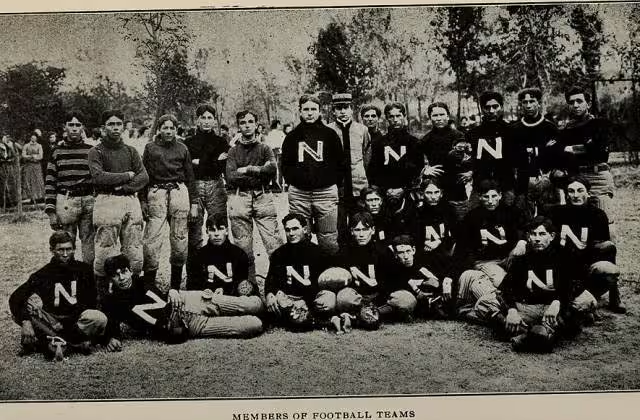
Speaker A:But number one on our list is the Carlisle Indian Industrial School.
Speaker A:Now this, this school was founded by the and run by the United States government to put Native Americans and try to put some western culture into them.
Speaker A:You know, sort of taming the Wild Indians was their motto.
Speaker A:They were a national power coach by Pop Warner.
Speaker A:know, a powerful army team in:Speaker A:We've covered that many times here on the program.
Speaker A:Besides Thorpe there was Joe Guy and Albert Ecksundine, Bemis Pierce, Gus Welsh.
Speaker A:Just a wide array of some great players.
Speaker A:Players that played in all Native Americans.
Speaker A:The amazing record of the Carlisle Indians 173.91 at 13 during their career.
Speaker A:The program ended in:Speaker A:They dispersed all of that.
Speaker A:I believe the building still stands.
Speaker A:I'm, I'm not sure what it is now.
Speaker A:It might just be vacant or some senior housing or something.
Speaker A:I'm not sure exactly what it is but yeah, that is just a powerhouse team.
Speaker A:And number one on our list, Carlisle Industrial Indian School.
Speaker A:So we just want to preserve the history and cover these football teams.
Speaker A:We're glad that you could join us here.
Speaker A:You'll want to keep talking about them.
Speaker A:We're talking about teams like Carlisle that hasn't played in over a century and they're still talked by many historians.
Speaker A:We've talked about it here probably at least once or twice a month since this program's been on the air.
Speaker A:And we appreciate them.
Speaker A:We appreciate guys like Jim Thorpe, Amos Alonzo, Stag and the many others that we talk to in these 25 top defunct schools.
Speaker A:If you have any others that we missed or maybe have some comments or memories of some of these great teams, why don't you make sure you go down in the comments section here.
Speaker A:On the YouTube channel or on your favorite podcast provider.
Speaker A:Or email us at pigskind dispatch gmail.com or join us@pigskind dispatch.com Leave a comment there.
Speaker A:We love to hear from you and we appreciate you and your love for football history, and we'll try to bring it to you as much as we can multiple times a week.
Speaker A:So until next time, everybody have a great grid on your day.