
Few college football programs can boast as many legendary players, coaches, and games as the University of Southern Cal. Its tradition and history run back quite a ways.
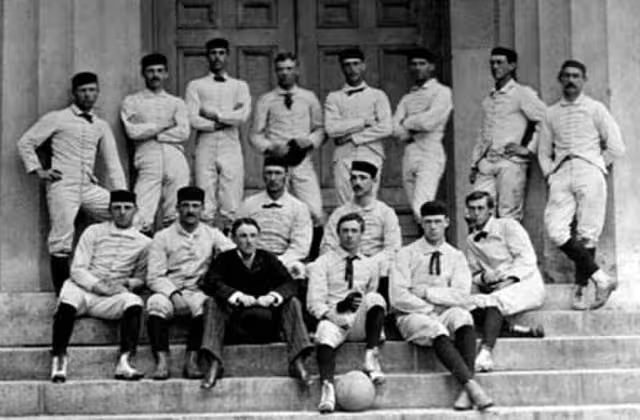
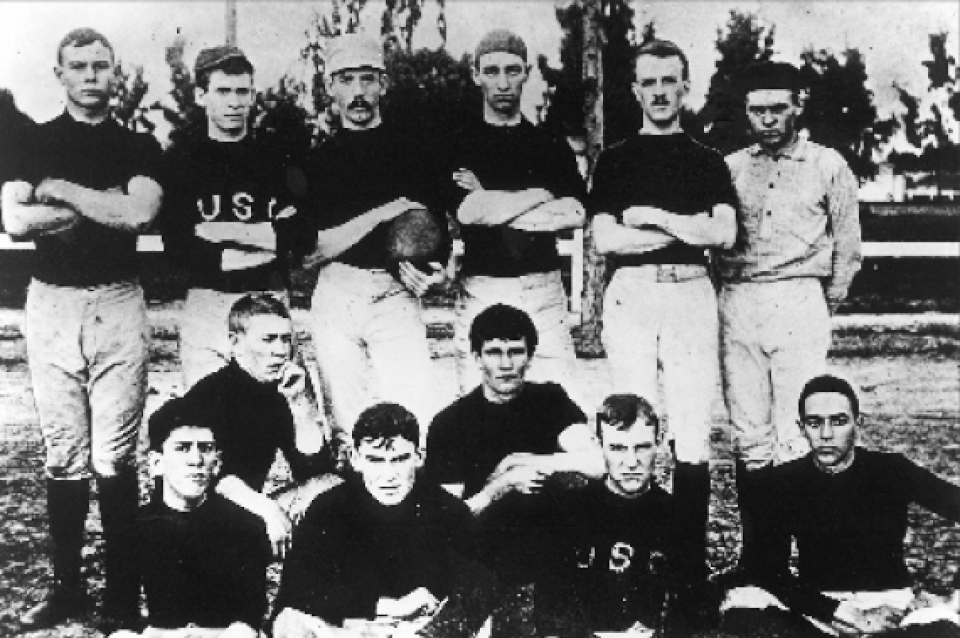
The University of Southern California football program began in 1888, just eight years after the small Methodist institution opened its doors in Los Angeles. What is now one of college football’s most decorated dynasties started as a scrappy, student-organized club operating without a budget, formal uniforms, or a dedicated stadium.
The 1888 Founding and First Game
In the autumn of 1888, USC quarterback Arthur Carroll took the initiative to assemble the university’s first football squad. Resources were so scarce that Carroll personally sewed canvas pants for his teammates—foreshadowing his eventual career as a tailor in Riverside, California. Because few colleges in Southern California fielded teams at the time, USC scheduled local athletic clubs.
USC played its inaugural game on November 14, 1888, on campus against the Alliance Athletic Club. Under the scoring rules of the era—where touchdowns counted for four points and conversions for two—USC shut out Alliance, 16–0. Two months later, on January 19, 1889, USC defeated Alliance again, 4–0, on a vacant lot in downtown Los Angeles, finishing its debut season undefeated. Later that fall, the squad faced its first collegiate opponent, thrashing St. Vincent’s College (now Loyola Marymount University) 40–0. Financial strain and student apathy temporarily halted the program in 1890, though it returned permanently in 1891.
Origin of the “Trojans” Nickname
For more than two decades, USC athletic teams were informally known as the Methodists or Wesleyans, reflecting the school’s religious affiliation—monikers that university officials disliked. The “Trojans” nickname was born on February 24, 1912, courtesy of Los Angeles Times sports editor Owen R. Bird.
At the time, USC was enduring severe financial constraints and athletic growing pains, having temporarily dropped American football between 1911 and 1913 to play rugby alongside Stanford and California. Previewing a track meet against Occidental College, Bird dubbed the underdog USC athletes “Trojans”. He later explained that, because the athletes, coaches, and managers labored under tremendous handicaps against larger, better-equipped rivals, the name captured their spirit of fighting on against overwhelming odds. Athletic Director Warren Bovard promptly approved the moniker, making it official.
Early Coaches and Pioneers
USC’s earliest squads relied on playing coaches and unpaid volunteers:
- Henry H. Goddard and Frank H. Suffel (1888): Served as playing coaches for the inaugural 2–0 team. Goddard later became a renowned psychologist.
- Lewis R. Freeman (1897): Became the first non-playing head coach, guiding USC to a 5–1 record.
- Dean Cromwell (1909–1910, 1916–1918): Best known as USC’s legendary track and field coach (“Maker of Champions”), Cromwell also coached football during two stints, compiling a 21–8–6 record and helping transition the program back from rugby to football.
- Elmer “Gloomy Gus” Henderson (1919–1924): Put USC on the national map, posting a 45–7 record, leading the school into the Pacific Coast Conference in 1922, and winning USC’s first Rose Bowl (14–3 over Penn State) in 1923.
- Howard Jones (1925–1940): Known as “The Headman,” Jones turned USC into a national powerhouse, capturing four national championships and five Rose Bowl victories with his dominant single-wing offense.
Early Stars
As USC moved into the Los Angeles Memorial Coliseum in 1923 and began competing nationally, its first wave of iconic players emerged:
- Brice Taylor: A one-handed offensive guard who became USC’s first consensus All-American in 1925, anchoring the line under both Henderson and Jones.
- Morley Drury: Dubbed “The Noblest Trojan of Them All,” Drury was an All-American quarterback/halfback who became USC’s first 1,000-yard rusher in 1927 (1,163 yards).
- Mort Kaer: A versatile All-American back in 1926 who starred alongside Drury.
- Marion Morrison: A starting offensive tackle in 1925 and 1926 whose career was cut short by a bodysurfing injury—leading him to Hollywood, where he became world-famous as John Wayne.
Here Are More Stories of Southern Cal Football Legends
- Celebrating USC Legend and Oscar Winner Irvine “Cotton” Warburton
- The Notre Dame Nightmare: The Gridiron Legacy of Anthony Davis
- Mort Kaer: USC Trojans Halfback, Olympian & Hall of Famer
- Marvin Powell: USC Trojans Legend & NY Jets Star Tackle
- Harry Smith: Hall of Fame Guard Who Anchored USC’s Line
- Aaron Rosenberg: USC Football Star & Hollywood Producer
- Anthony Muñoz: Hall of Fame Tackle & Bengals Legend
- Frank Gifford: Hall of Fame Legend & Monday Night Star
- Sam Cunningham: USC Football Legend & Patriots Star
- Johnny Baker: USC Legend & College Football Hall of Famer
- Bruce Matthews: The NFL’s Ironman Hall of Fame Lineman
- The Iron Block: The Legendary Journey of Ron Yary
- Dan McMillan: College Football Legend & Hall of Famer
- Richard Wood: The Three-Time USC All-American Legend
- Matt Leinart: The Architect of the USC Dynasty and Heisman Legend
- Brad Budde: The Powerhouse Behind USC’s “Student Body Right”
- Ronnie Lott: The Hard-Hitting Architect of Championship Defenses
- Erny Pinckert: The “Iron Trojan” and the Master of the Double Reverse
- “Jaguar” Jon Arnett: The Most Electrifying All-Purpose Threat in Trojan History
- Troy Polamalu: The “Tasmanian Devil” of the Gridiron
- Tony Boselli: The Cornerstone of the USC Line and Jacksonville Jags
- Mike Garrett: The Multi-Dimensional Legend Who Ignited USC’s Heisman Dynasty
- Ricky Bell: The USC “Bell Cow” and the Heart of Trojan Dominance
- Marcus Allen: The Multi-Dimensional Legend of the Gridiron
- Lynn Swann: The Elegant Icon of USC and the Super Steelers
- Charles White: The Toughest Trojan and the Pride of “Tailback U”
- Tay Brown: The Two-Time National Champion Who Defined USC Football
- Hal Bedsole: The Terrific USC End Inducted into the College Football Hall of Fame
- The Vow Boy Fulfilled: Bobby Grayson, Stanford’s Fullback Who Broke Records and Kept a Promise
- Red Badgro: The Three-Sport Star Who Mastered the NFL End Position
- The Texas Terror: Ernie Smith, USC All-American and Green Bay Lineman
- 🏈 Peete’s Flu Game: How Measles-Stricken Rodney Peete Led USC Past Troy Aikman’s UCLA
- The Game of the Century: How O.J. Simpson’s 64-Yard Run Sealed the 1967 National Title
- The Bear Bryant 1977 Upset That Launched an Alabama Dynasty
- USC Trojans Inducted Into the College Football Hall of Fame
- Tide Stuns Trojans 1971