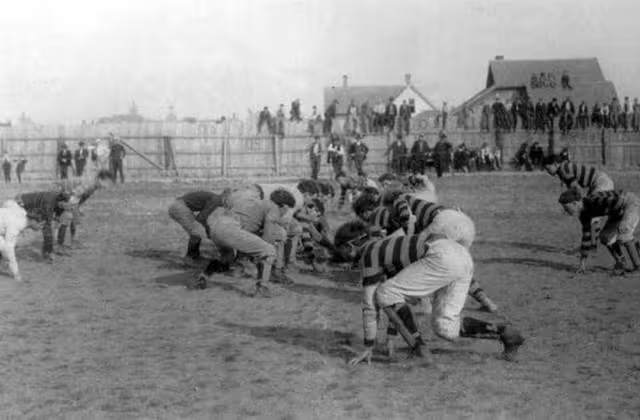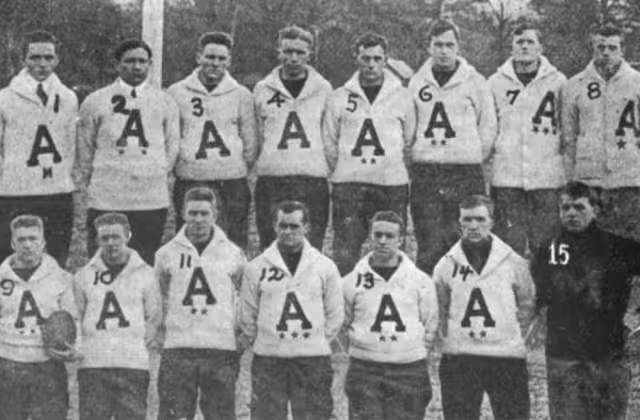
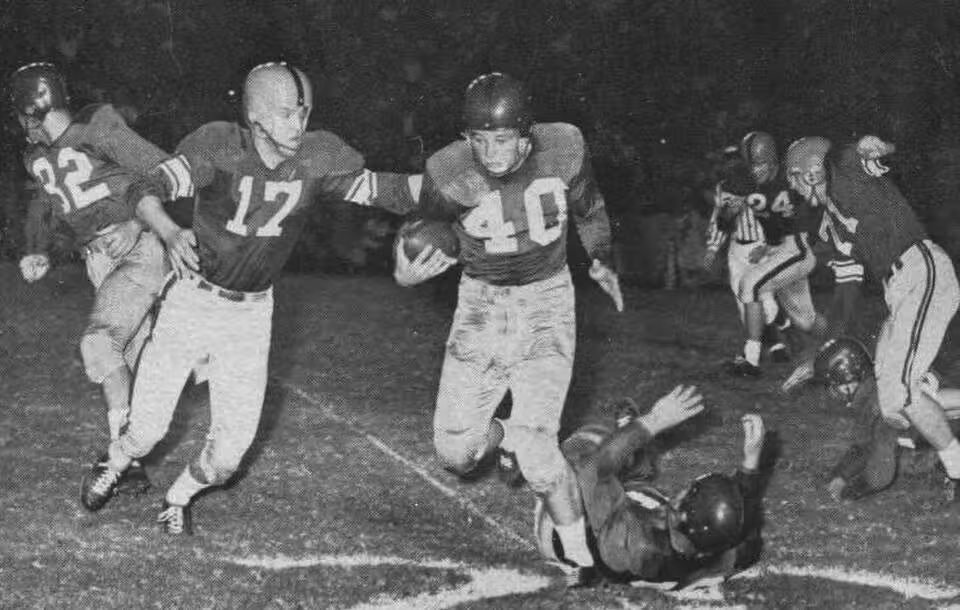
The Ole Miss football history stretches back to 1890, when Dr. Alexander Lee Bondurant, an associate professor of Latin and Greek (and later dean of the Graduate School), organized students to establish an athletic association for football, baseball, and tennis. By the autumn of 1893, Bondurant had successfully assembled the university’s first varsity football squad, serving simultaneously as manager and head coach. Before taking the field, the team chose Harvard Crimson and Yale Navy Blue for its uniforms—a harmonious blend meant to capture the athletic prestige and spirit of both Ivy League powerhouses.
The First Game and Early Coaches
Ole Miss played its first intercollegiate football game on November 11, 1893, in Oxford, Mississippi, routing Southwest Baptist University (now Union University) 56–0. The inaugural squad finished 4–1, suffering its only defeat to Tulane.
Bondurant stepped down after the 1893 season. In 1894, C.D. Clark of Tufts arrived as the program’s first paid coach, leading the team to a 6–1 finish and initiating storied rivalries against Alabama and LSU. A rotating cast of part-time leaders followed, including former Virginia player William Shibley—who coached the 1901 inaugural Egg Bowl clash against Mississippi A&M—and Frank A. Mason, whose tenure famously unraveled in 1907 after he served whiskey-laced coffee to cold players at halftime against Mississippi A&M, resulting in a 15–0 loss. Stability finally arrived under Homer Hazel in the 1920s and Ed Walker in the 1930s, the latter guiding Ole Miss to its first major postseason appearance at the 1936 Orange Bowl.
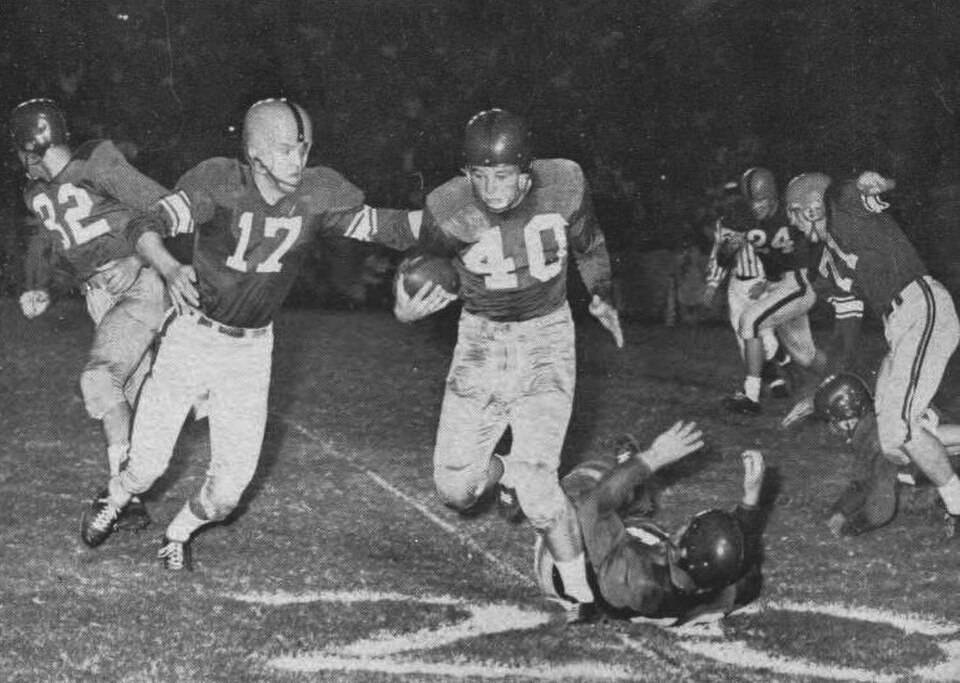
Kappa Alpha Mu fraternity at the University of Houston.
Early Stars
The team’s earliest standout was William Dudley Gatewood, the tackle and team captain who anchored the 1893 squad and scored several touchdowns in the opening rout. A decade later, James C. Elmer emerged as an All-Southern two-way lineman and placekicker; in the 1906 rivalry game against Mississippi A&M, Elmer caught the first completed forward pass in Egg Bowl history and accounted for 13 points in a 29–5 victory. In the 1920s, tackle Homer Hazel became the program’s first national superstar, earning consensus All-American honors and subsequent induction into the College Football Hall of Fame.
Origin of the “Rebels” Nickname
For over four decades, Mississippi athletic squads had no formal mascot, frequently bearing moniker variants such as the “Red and Blue,” the “Mighty Mississippians,” or the “Mississippi Flood”. Following the 1935–36 season, The Mississippian student newspaper launched a statewide contest to establish a permanent nickname, gathering over 200 submissions.
Vicksburg judge Ben Guider submitted “Rebels.” A campus committee whittled the list down to five finalists—Rebels, Raiders, Confederates, Stonewalls, and Ole Miss—and polled 42 prominent Southern sports editors. Of the 21 who responded, 18 selected “Rebels.” University Athletic Committee Chairman Judge William Hemingway formally ratified the choice, remarking, “If 18 sports writers wish to use ‘Rebels,’ I shall not rebel, so let it go ‘Ole Miss Rebels.'”
Here Are More Stories on Ole Miss Football Legends
- The Seven-Season Wonder: Barney Poole’s Unprecedented College Career 🏈
- Bruiser Kinard
- Football History of September 24
- Charlie Conerly: Ole Miss Legend & NY Giants Quarterback
- Charlie Flowers: Ole Miss Fullback & Hall of Fame Legend
- Archie Manning: Foundation of a QB Dynasty
- The Two-Way Titan: The Journey of Wesley Walls
- The Fourth-and-25 Miracle: How Arkansas Stole an Upset from Ole Miss
- All-American QB to Yankees Catcher: Jake Gibbs
- An Instant Classic: The 1969 Ole Miss vs. Alabama Shootout