As of 2026, the Auburn Tigers football program has nine National titles, three Heisman winners, and many College and Pro Football Hall of Fame legends. How did this Alabama school rise to national prominence, and what early milestones did the Tigers reach?
From John Heisman, War Eagle, the Tigers’ nickname, all the way to Cam Newton and the significant people and events in between, we are exploring the remarkable football history of the Auburn Tigers.
The Vision of Dr. George Petrie
Auburn football traces its existence to Dr. George Petrie, a young history and Latin professor at the Agricultural and Mechanical College of Alabama (now Auburn University). While completing his graduate studies at Johns Hopkins University in Baltimore, Petrie watched the emerging sport of American college football take hold along the East Coast. When he arrived on the Auburn Plains, he recognized the sport’s potential to unify the student body and raise the institution’s regional profile.
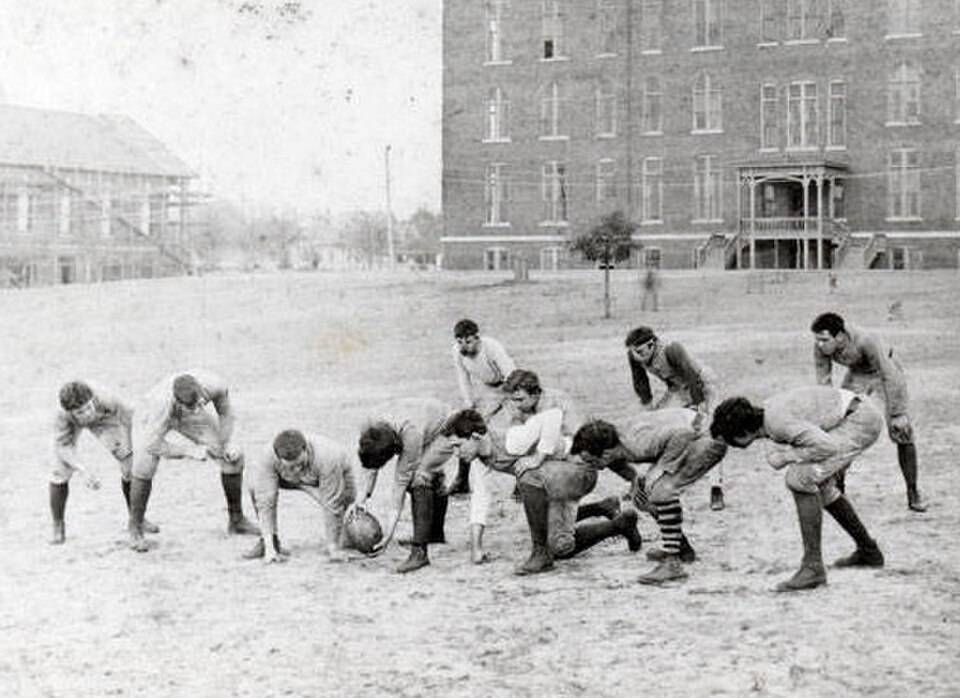
In the late autumn of 1891, Petrie organized Auburn’s inaugural varsity squad, serving as the team’s recruiter, trainer, strategist, and head coach. Lacking institutional funding, Petrie personally purchased the team’s first footballs and uniforms. Drawing inspiration from his undergraduate alma mater, the University of Virginia, Petrie chose navy blue and burnt orange as the team’s official colors. This color scheme remains Auburn’s identity today.
The First Game: February 20, 1892
Auburn’s competitive debut established what is celebrated today as the “Deep South’s Oldest Rivalry”. Petrie coordinated with Dr. Charles Herty, a chemistry professor at the University of Georgia and a fellow Johns Hopkins alumnus who had similarly launched a football program in Athens.
On February 20, 1892, the two schools met at Piedmont Park in Atlanta, Georgia. Between 2,000 and 5,000 spectators gathered along the sidelines, paying 50 cents for adult admission. Both teams relied on the brutal, close-contact Flying V formation. After a scoreless opening half (then called a “first inning”), Auburn broke through in the second half. Team captain Frank Lupton kicked a field goal, and Auburn punched in a touchdown, sealing a 10–0 shutout victory. Following the win, the Auburn players and their supporters paraded three miles back to their downtown Atlanta hotel in celebration.
Early Stars and Formative Coaches
In the beginning stages of organization, Auburn’s program rotated through several faculty trainers and part-time coaches, but quickly attracted visionary leaders and tenacious athletes:
- Frank M. “Dutch” Lupton: Auburn’s first star and field general. Lupton had previously attended Vanderbilt and offered vital tactical leadership, kicking the first points in school history and offering the first documented opponent scouting reports in the region.
- John Heisman (Head Coach, 1895–1899): Before lending his name to college football’s most coveted trophy, Heisman led Auburn to a 12–4–2 record. A brilliant tactical innovator, Heisman introduced the center snap between the quarterback’s legs at Auburn (replacing the rolling boot) and famously pioneered the “hidden-ball trick” during an 1895 contest against Vanderbilt.
- Michael “Iron Mike” Donahue (Head Coach, 1904–1906, 1908–1922): A former Yale halfback, Donahue turned Auburn into a national powerhouse, amassing a 99–35–5 record. He guided Auburn to three undefeated Southern Intercollegiate Athletic Association (SIAA) titles, including the legendary 1913 season where Auburn went 8–0 and outscored opponents 222–13.
- Kirk Newell: The centerpiece halfback of Donahue’s 1913 squad. Newell earned consensus All-Southern honors and later earned induction into the College Football Hall of Fame for his defensive skills and open-field running.
The Poetic Origin of the “Tigers” Nickname
Auburn’s official athletic moniker, the Tigers, stems from 18th-century English literature rather than local fauna.
In 1770, Irish poet Oliver Goldsmith published The Deserted Village, a pastoral elegy that opens with the famous line:
“Sweet Auburn! loveliest village of the plain…”
Because the town of Auburn, Alabama, was nicknamed the “Loveliest Village on the Plains” directly after Goldsmith’s poem, the college community frequently turned to the text for inspiration. Later in the poem, Goldsmith describes dangerous, untamed lands:
“Where crouching tigers wait their hapless prey…”
When regional newspapers such as The Atlanta Constitution began reporting on Auburn athletic events in the early 1890s, reporters and students adopted “Tigers” as a natural literary extension of Auburn’s poetic identity.
The “War Eagle” Origin: Legend vs. Record
While the Tiger is the official mascot, “War Eagle” serves as Auburn’s universal battle cry and greeting. Its origins are split between a famous piece of campus mythology and historically documented usage:
- The 1892 Civil War Veteran Myth: The most popular legend claims that during the inaugural 1892 game against Georgia, an elderly Confederate veteran was in the stands with a pet eagle he had rescued as an injured fledgling at the Battle of the Wilderness. According to the tale, the eagle broke free during the game and soared majestically over Piedmont Park as Auburn launched its winning drive, prompting students to yell “War Eagle!” When the game finished and the dust cleared, the bird allegedly plummeted to the turf and died. This dramatic story was actually created in 1959 by Auburn Plainsman student editor Jim Phillips to capture campus folklore, which he later admitted was a prophetic tall tale.
- The Real War Eagle Probability: Documented accounts show that the term “War Eagle” evolved somewhat organically around the turn of the 20th century. Many sports historians trace it to early Native American battle yells popularized by cheerleaders, while others note its similarity to popular regional chants and late-19th-century military slang. By 1930, the phrase was so ingrained that when a live golden eagle was rescued in a nearby pea patch and brought to a game against South Carolina, the student body officially dubbed it “War Eagle II,” cementing the tradition of keeping a living eagle mascot on the Plains.
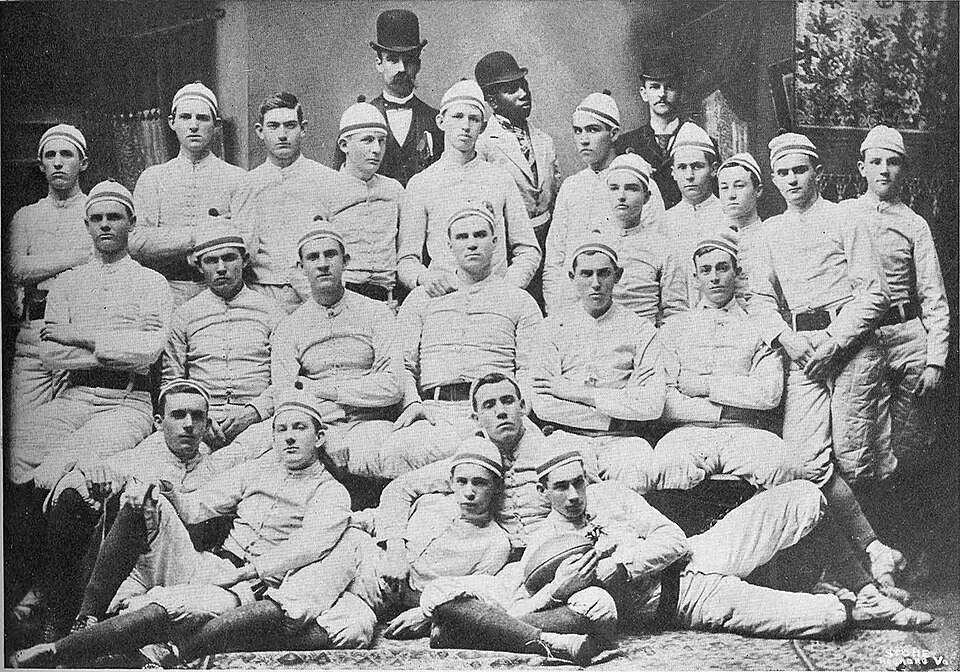
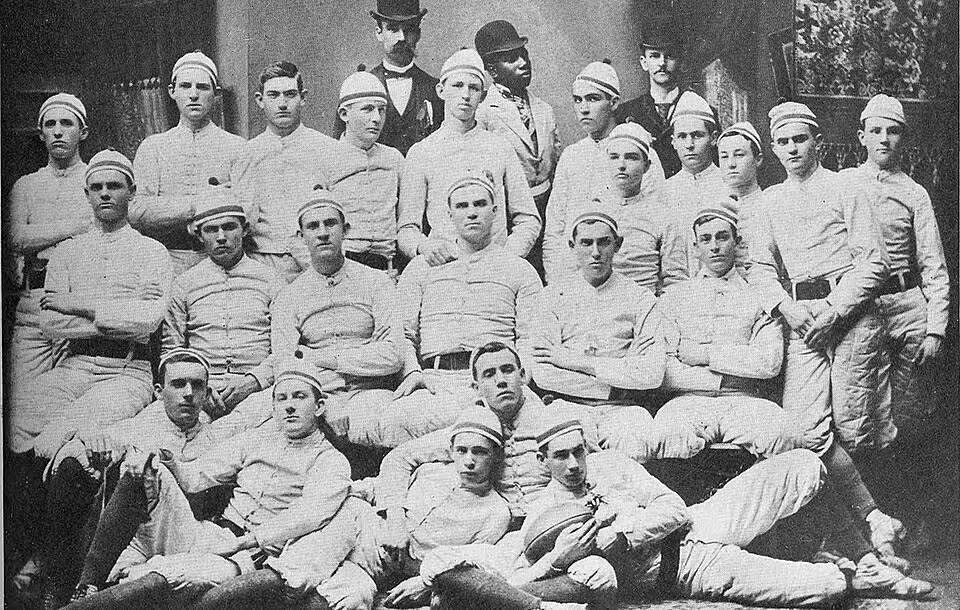
Pictured are, left to right, front row: Clifford LeRoy Hare, Professor Charles H. Barnwell, Rufus Thomas “Dutch” Dorsey, Jr., Richard Billup Going, Captain F. A. Lupton. Second row: Robert Mailard Stevens, H. H. Smith, Henry T. Debardeleben, Professor Anthony Foster McKissick, Culver, Alexander Downling McLendon. Third row: Walter Evan Richards, Arnold Whitfield Herren, Seaborn Jesse Buckalew, Francis Marshall Boykin, George William Dantzler, Union Anderson Cullbreath, George Y. McRae, Eugene Hamilton Graves, Raleigh Williams Greene, David Edwin Wilson, Charles Henry Smith. Back row: Professor George F. Atkinson, Bob “Sponsor” Frazier (mascot), Coach Dr. George Petrie.[1][2][3]
Auburn University digital scan of a photograph by an unknown author (perhaps by Stone, Roanoke, VA), via Wikimedia Commons.
Here Are More Stories of Auburn Tigers Football Legends
- Pat Dye: The Legendary Coach Who Resurrected Auburn Football History
- Kevin Greene: Hall of Fame Linebacker & Sack Legend
- Jimmy Hitchcock: Auburn’s First Dual-Sport All-American
- Super Cam: The Dual-Threat Titan of the Gridiron
- Tracy Rocker: The Auburn Powerhouse Who Swept the Trenches
- Pat Sullivan: The Auburn Legend and 1971 Heisman Trophy Winner
- The Play That Froze Time: Revisiting the 2011 BCS National Championship Thriller
- Football History of December 4
- Miracle in Birmingham: How Auburn’s One-Win Tigers Stunned Alabama in the 1949 Iron Bowl
- The Crumbling of the Berlin Wall: Auburn Stuns No. 2 Alabama in Historic First Home Game
- The Kick Six: How Chris Davis’s 109-Yard Miracle Stunned No. 1 Alabama
- Football History of November 15
- From Fullback to Field Goal Phenom: Ed Dyas’s Unmatched Auburn Legacy
- The Kick: How Steve Spurrier’s Golden Toe Won a Game and the Heisman
- History Behind The First Iron Bowl Game