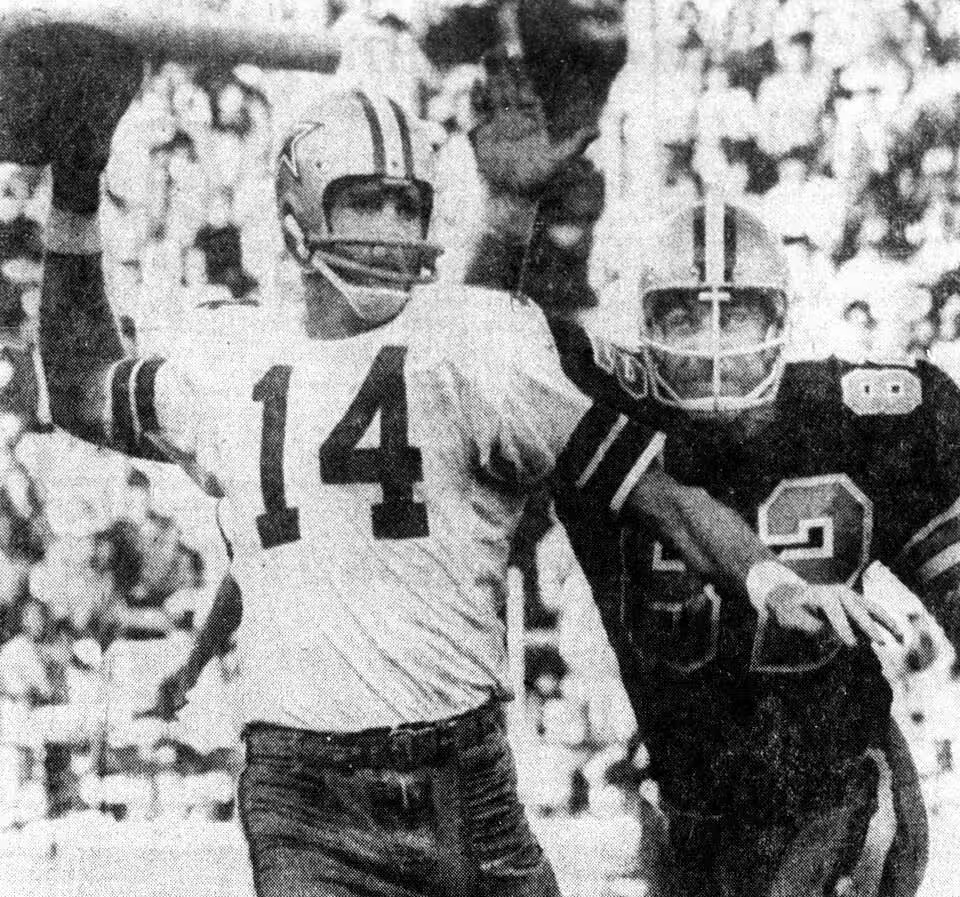
The 1969 American football season stands as a magnificent threshold in sports history. It marked the final year of a divided professional landscape before the historic AFL-NFL merger, while college football celebrated its centennial anniversary with one of the most dramatic games ever played.
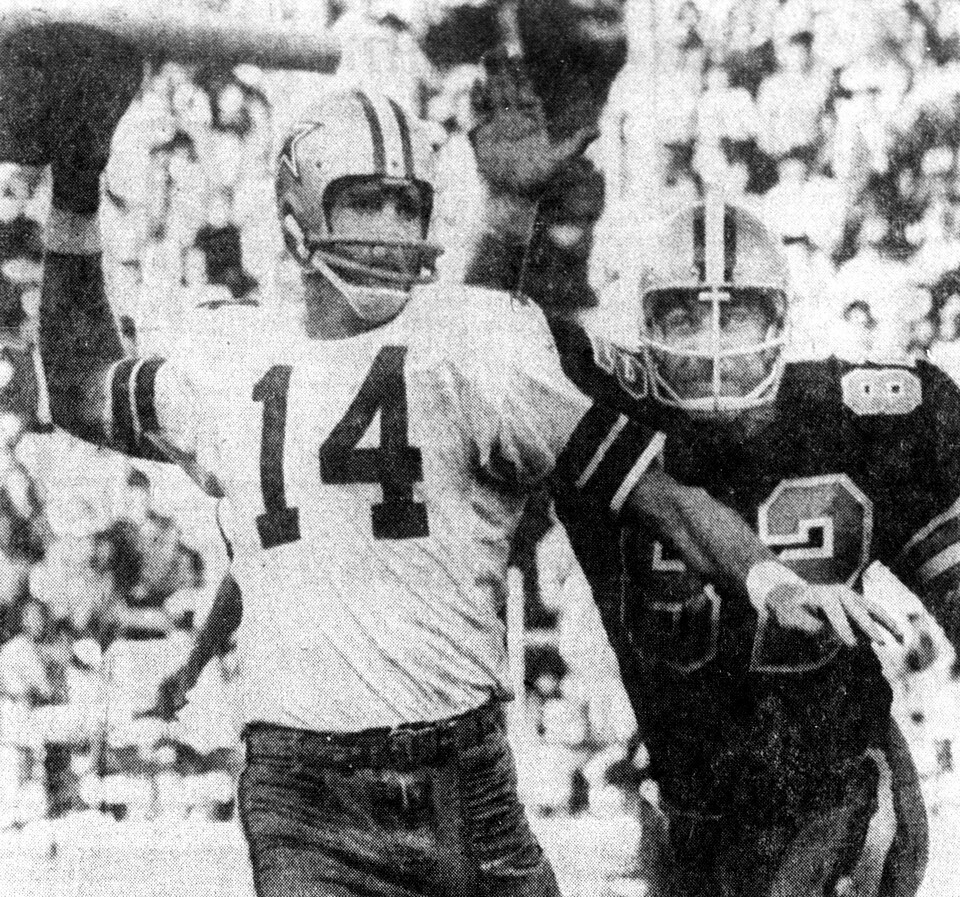
The End of an Era: The Final AFL and NFL Seasons
The 1969 season was the last time the National Football League (NFL) and the American Football League (AFL) operated as distinct, regular-season entities.
In the NFL, the Minnesota Vikings dominated with their legendary “Purple People Eaters” defense, finishing 12–2 and defeating the Cleveland Browns 27–7 in the final NFL Championship Game. Over in the AFL, the Kansas City Chiefs finished second in their division but caught fire in the postseason, upsetting the Oakland Raiders 17–7 to capture the final AFL Championship.
This set up a highly anticipated Super Bowl IV on January 11, 1970:
- The Matchup: The NFL’s Minnesota Vikings entered the game as heavily favored 14-point titans against Hank Stram’s Kansas City Chiefs.
- The Mic’d Up Moment: Chiefs head coach Hank Stram became an icon during this game, becoming the first coach to wear a microphone during a Super Bowl, famously exhorting his team to keep “just matriculating the ball down the field.”
- The Result: The Chiefs dismantled the Vikings 23–7 behind quarterback Len Dawson’s steady leadership and a stifling defense. The victory tied the interleague Super Bowl series at 2–2, proving once and for all that the AFL was the NFL’s absolute equal right as they officially merged into a 26-team powerhouse for 1970.
- The Rise of “O.J. and the Electric Company”: The Buffalo Bills selected Heisman winner O.J. Simpson as the #1 overall pick in the 1969 common draft, setting the stage for one of the most dominant running games of the 1970s.
- Gale Sayers’ Miracle Return: After a devastating knee injury in 1968, Chicago Bears running back Gale Sayers made a miraculous comeback in 1969, rushing for 1,032 yards to win the NFL Comeback Player of the Year award.
- The Steeler Foundation: A quiet but monumental shift happened in Pittsburgh. The Steelers hired a young head coach named Chuck Noll and drafted a defensive tackle named Joe Greene. Add into the mix QB Terry Hanratty, Tackle John Kolb, and DL L. C. Greenwood, and one can see the steel foundation being laid. While they went 1–13 in 1969, this season marked the exact birth of the “Steel Curtain” dynasty.
College Football’s Centennial and the “Game of the Century”
College football celebrated its 100th anniversary in 1969, a milestone commemorated by a special logo worn on player helmets across the country. The season culminated in a legendary showdown dubbed the “Game of the Century.”
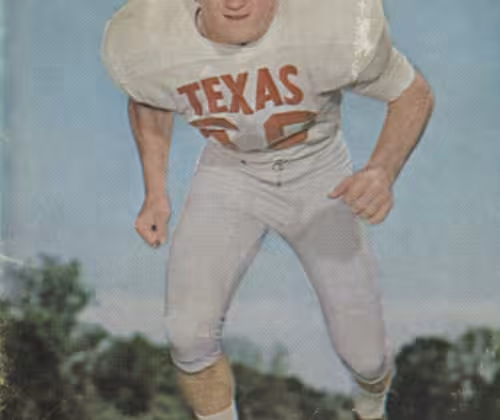
- The Texas vs. Arkansas Showdown: On December 6, 1969, the #1-ranked Texas Longhorns traveled to face the #2-ranked Arkansas Razorbacks in Fayetteville. The game was so massive that President Richard Nixon attended, planning to personally award a plaque to the winner declaring them national champions.
- The Miraculous Comeback: Down 14–0 in the fourth quarter, Texas head coach Darrell Royal engineered a daring comeback. On a critical 4th-and-3, quarterback James Street threw a legendary 44-yard pass to Randy Peschel to set up the winning touchdown. Texas won 15–14.
- The National Title: Texas secured the Consensus National Championship, though Ohio State and an undefeated Penn State squad (led by Joe Paterno) also put up legendary campaigns.
- Heisman Trophy: Oklahoma running back Steve Owens claimed the Heisman Trophy after a bruising season where he rushed for 1,523 yards and 23 touchdowns.
A Deep Dive into 1969 Football History and Highlights
The 1969 season was packed with spectacular individual performances and cultural milestones that laid the foundation for modern football.
- January 1, 1969 – It was a marquee matchup in the 54th Rose Bowl game. The Ohio State Buckeyes of Coach Woody Hayes would square off against John McKay’s USC Trojans. OSU’S Rex Kern was the game MVP in the contest which saw his Buckeyes overwhelm the Trojans 27-16.
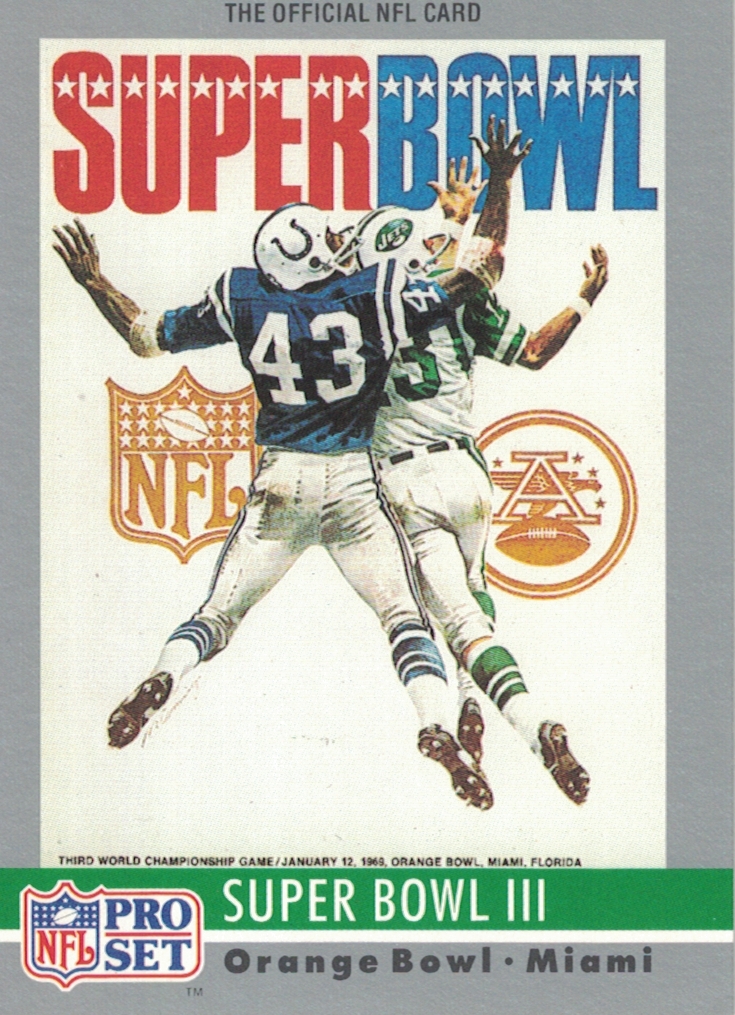
- January 12, 1969 – Orange Bowl, Miami, Florida -Super Bowl III, the day the AFL gained some respect. Super Bowl III pitted the AFL Champions, the New York Jets, against the NFL’s heavily favored Baltimore Colts. The most famous art of this game may have been the confident promise of the ever-trend-setting Jets Quarterback Joe Namath, who declared in pre-game interviews that the Jets would win the game, according to the Bleacher Report. In fact, he gave it as a guarantee! It was almost a laughable joke at the time as the Colts were loaded with Johnny Unitas at quarterback, and his backup was the legendary Earl Morrall. The Colts’ head coach was Don Shula. How could they lose to this team from what many considered an inferior league? Well, Namath backed up his claim of victory by setting the football world on its ear as the New York Jets upset the Baltimore Colts, 16-7. The MVP of the game was one Joe Willie Namath of the NY Jets; how appropriate that was!
- January 19, 1969 – Gator Bowl, Jacksonville –The 8th AFL All-Star Game was moved to Jacksonville. In the game, it was the Western Division Stars who vanquished their Eastern Division rivals 38-25. According to the RemembertheAFL.com website, the MVPs were Len Dawson, the great quarterback of the Kansas City Chiefs, and Houston Oilers linebacker George Webster. This game took place one week after the AFL had what may have been its greatest triumph ever, when the Jets defeated the Colts in what later became known as Super Bowl III.
- January 19, 1969 – LA Memorial Coliseum –The 19th NFL Pro Bowl had the West edging out the East, 10-7, according to Onthisday.com. The Most Valuable Players were appropriate for the home crowd, both Los Angeles Rams, as Merlin Olsen, the defensive tackle, and Quarterback Roman Gabriel took home the honors.
- January 27, 1969 –Chuck Noll is named head coach of the Pittsburgh Steelers.
- January 28, 1969, the top pick of the 1969 NFL Draft was O.J. Simpson from Southern Cal by the Buffalo Bills.
- February 4, 1969 – The Oakland Raiders made history by naming John Madden their head coach. At the time of his hiring, Madden was the youngest head man in the AFL. He led the Silver and Black through the 1978 season, never suffering a losing record and compiling an incredible 103-32-7 mark. He reached his crowning achievement in Super Bowl XI and secured his renown by winning five straight AFC West titles (1972-1976) before becoming the most iconic color analyst in broadcasting history.
- February 5, 1969 –Vince Lombardi became a part-owner, a Vice President, General Manager, head coach, a grilled cheese sandwich, and whatever else it would take to get him to leave Green Bay and join the Washington Redskins franchise.
- April 14, 1969 – The NFL and AFL were in the final stages of finalizing the details for their first post-merger season. This date was a deadline for several “inter-league” paperwork filings that officially consolidated the scouting reports for the upcoming 1970 transition.
- May 1, 1969 – Truck magnate Leonard Tose purchased the Philadelphia Eagles franchise.
- May 17, 1969 – Three NFL clubs, the Cleveland Browns, Baltimore Colts, and Pittsburgh Steelers, joined the AFL clubs to form the new NFL American Conference.
- August 1, 1969 – (College All-Star Game): The New York Jets beat the College All-Stars 26–24 in the 36th annual Chicago Charities game before 74,208 fans, with Cincinnati quarterback Greg Cook earning MVP honors.
- August 11, 1969 – The NFL went into Canadian territory once again as the Pittsburgh Steelers defeated the New York Giants, another NFL team, 17 to 13 in Montreal in a preseason exhibition game.
- August 17, 1969 – Yale Bowl, New Haven, Connecticut – The New York Jets get their first-ever game with their crosstown rival the New York Giants in a preseason game.
- August 23, 1969 – Rare Interleague AFL-NFL Preseason Clashes – As the countdown continued toward the full 1970 AFL-NFL merger, the football world witnessed several heated interleague exhibition matchups. In San Diego, the AFL’s San Diego Chargers and the NFL’s Cleveland Browns battled to a thrilling 19–19 tie in front of 36,005 fans at San Diego Stadium. That same night featured a slate of cross-league battles—including the Baltimore Colts facing the Buffalo Bills and the San Francisco 49ers taking on the Denver Broncos—further proving that AFL franchises could go toe-to-toe with established NFL powerhouses.
- September 21, 1969 –A special teamer booted a 98-yard punt in a professional NFL football game. Yes, you read that correctly: 98 green-grass yards! Please check out the video clip here (https://www.youtube.com/watch?v=gI1ZAgbM_I). New York Jets punter Steve O’Neal took the snap from the two-yard line and caught and punted the ball from deep in his own end zone. The ball sailed past a Denver Bronco punt return man, who had his arms outstretched, and landed at the Denver 33-yard line. The impact with the ground sent the kick screaming towards the Denver goal line and apparently into the end zone. WOW! Needless to say, it is a record that will probably stand the test of time!
- September 28, 1969 – Minnesota Vikings Quarterback Joe Kapp throws 7 touchdown passes against the Baltimore Colts in a 52-14 victory for the purple-clad Norsemen.
- November 22, 1969 –The Famous ‘Ten Year War” was on full display when Coach Woody Hayes’ Ohio State Buckeyes renewed their rivalry with Bo Schembechler’s Michigan Wolverines in a thriller.
- November 26, 1969 –In the 35th Heisman Trophy selection, Steve Owens, the senior running back from Oklahoma, was the winner of the nation’s top college football individual award.
- November 29, 1969 – Legion Field, Birmingham –Auburn beats Alabama 49-26 in the 34th Iron Bowl game.
- November 30, 1969 – Autostade, Montreal – It was the first CFL Grey Cup played on a Sunday and a matchup between the Roughriders and the Rough Riders. The Montreal Gazette gives us the details in this 57th version of the Cup, which had the Ottawa Rough Riders come out on top as they knocked off the Saskatchewan Roughriders, 29-11.
- Decmber 6, 1969 – Fayetteville, Arkansas – It was one of many dubbed “Game of the Century” but one of the few that lived up to the billing. Number 1-ranked Texas traveled to play Number 2 Arkansas. The Razorbacks led 14-0 in the final stanza, but the Longhorns rallied and escaped with a 15-14 victory,
- December 13, 1969 –The Continental Football League held its final game before closing in 1970. According to Fun While it Lasted, the league began in 1965 and, in five seasons, included 44 teams by combining several second-tier leagues, such as the Texas Football League, creating a broad and varied group.
- December 21, 1969 – Washington, D.C. –Legendary Coach Vince Lombardi coached his last football game. The final game was very unceremonious, as the great coach, six months in the future, would learn that he had colon cancer and would pass away from the terminal condition on September 3, 1970, at the age of 57, according to a Washington Post story. It is almost forgotten, too, that in what would be the final season Lombardi would see, he was on the sidelines of the Washington Redskins, not the Green Bay Packers, where he spent 9 seasons winning 5 NFL titles, including the first two Super Bowls. By the way, the Redskins lost that day to their rivals, the Dallas Cowboys, 20-10. Lombardi, in his one season, turned the Washington franchise around, though after 14 years of dismal finishes, to a 7-5-2 record and put the franchise on a course to be successful in the next decade of play.