The 1989 American football season was a landmark year marked by one of the most dominant teams in NFL history, groundbreaking league changes, and an unforgettable college football landscape defined by high-powered offenses and dramatic rivalries.
The NFL: 49ers Dominance and the Herschel Walker Trade
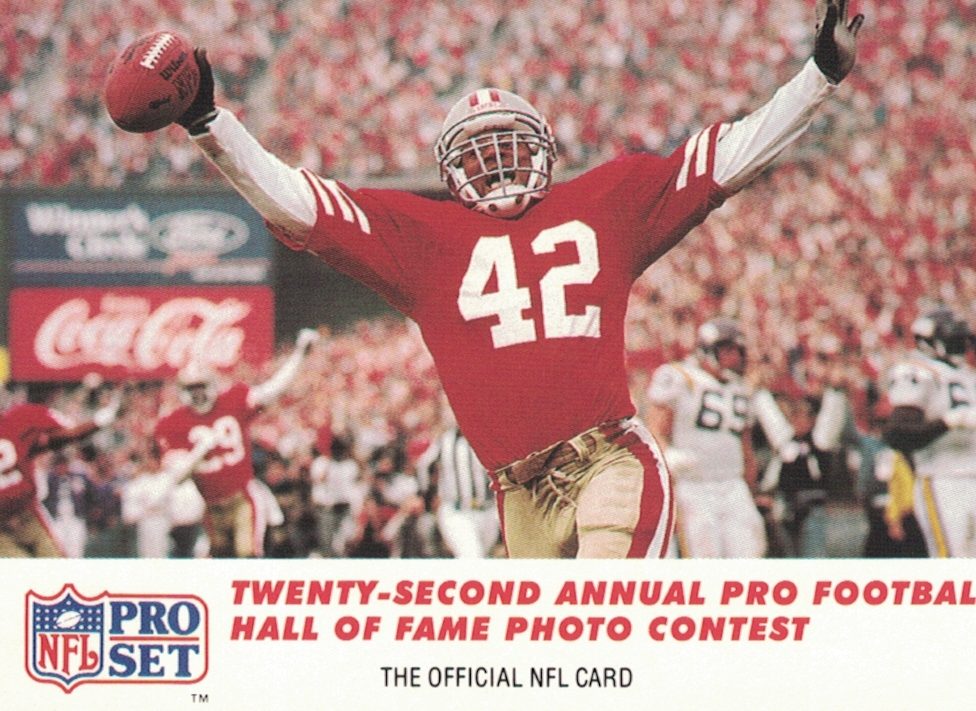
In the NFL, the season belonged to the San Francisco 49ers. Navigating a transition from legendary head coach Bill Walsh to first-year coach George Seifert, the 49ers did not miss a beat. Quarterback Joe Montana orchestrated a masterful regular season, culminating in a playoff run where the 49ers outscored their opponents 126–26. In Super Bowl XXIV, played on January 28, 1990, San Francisco dismantled the Denver Broncos 55–10, setting a record for the most points scored by a team in Super Bowl history.
Off the field, 1989 was a year of massive historical shifts:
- The Herschel Walker Trade: In October, the Dallas Cowboys traded star running back Herschel Walker to the Minnesota Vikings in exchange for a massive haul of players and draft picks. This blockbuster move is widely credited with laying the foundation for the Cowboys’ 1990s dynasty.
- Breaking Barriers: Art Shell was hired by the Los Angeles Raiders, becoming the NFL’s first African American head coach of the modern era.
- The Draft Class of a Lifetime: The 1989 NFL Draft is considered one of the greatest ever, with four of the top five picks—Troy Aikman, Barry Sanders, Derrick Thomas, and Deion Sanders—eventually being inducted into the Pro Football Hall of Fame.
College Football: Miami Returns to the Mountaintop
The 1989 collegiate season was a chaotic and thrilling race to the top, ultimately won by the Miami Hurricanes. Under first-year head coach Dennis Erickson, the Hurricanes rebounded from a mid-season loss to Florida State to capture the National Championship. Their path was cleared when they defeated the previously top-ranked Notre Dame Fighting Irish in the regular season, snapping Notre Dame’s 23-game winning streak.
Miami sealed their third national title of the decade by defeating the Alabama Crimson Tide 33–25 in the Sugar Bowl. Meanwhile, the Colorado Buffaloes, who finished the regular season undefeated, fell to Notre Dame in the Orange Bowl, cementing Miami’s claim to the number one AP ranking.
- Heisman Trophy: Houston Cougars quarterback Andre Ware won the Heisman Trophy, using his team’s innovative run-and-shoot offense to shatter numerous passing records. Ware became the first Black quarterback to win the prestigious award.
A Deep Dive into 1989 Football History and Highlights
The 1989 season featured several moments and innovations that changed the way the game was played and managed. The NFL introduced “Plan B” free agency, giving teams the right to protect 37 players while allowing the rest to negotiate freely—a crucial stepping stone toward the modern free agency system.
The year was also famous for its fierce rivalries and controversial games. The infamous “Bounty Bowl” between the Dallas Cowboys and the Philadelphia Eagles on Thanksgiving Day grabbed national headlines, setting the tone for one of the most bitter divisional feuds of the era. On the broadcasting side, Notre Dame signed a groundbreaking, exclusive television contract with NBC, forever altering the financial landscape of college football television rights.
- January 2, 1989 – The Rose Bowl held its75th edition as the Michigan Wolverines dispatched the USC Trojans 24-17. Michigan Full Back Kerot Hoard carried the load and took home MVP honors.
- January 2, 1989 – At the 18th Fiesta Bowl, #1 Notre Dame defeated #3 West Virginia, 34-21, to claim the national title.
- January 8, 1989 – Riverfront Stadium, Cincinnati – The AFC Championship had Boomer Esiason leading the Cincinnati Bengals, knocking off the Buffalo Bills, 21-10, for the right to play in the Super Bowl.
- January 8, 1989 – Soldier Field, Chicago –At the NFC Championship, it was the San Francisco 49ers taking care of business as they defeated the Chicago Bears, 28-3.
- January 22, 1989, Joe Robbie Stadium, Miami – Super Bowl XXIII, according to 49erswebzone.com, featured Bill Walsh’s San Francisco 49ers against the Cincinnati Bengals and their Head Coach, Sam Wyche. Joe Montana huddled the 49ers near their own 8-yard line with just over 3 minutes left in the game and down by 3. The Niners had barely moved the ball all game. Still, they traveled 92 yards, and with just 34 seconds left, Montana found Mike Cofer in the end zone for the go-ahead score. The Defense did the rest as the San Francisco 49ers defeated the Cincinnati Bengals, 20-16. The game’s MVP was Jerry Rice, catching 11 balls for 215 yards and a score. After winning his third Super Bowl as head coach of the San Francisco 49ers, Bill Walsh retired.
- January 29, 1989, Aloha Stadium, Honolulu –It seems that the NFC squad just could not lose in the NFL Pro Bowls played on this day. Once again, the NFC defeated the AFC in a big way, with a score of 34-3. The MVP was Randall Cunningham, the Philadelphia Eagles’ mobile quarterback.
- February 24, 1989 –Harold E. Ballard sold the CFL’s Hamilton Tiger-Cats to David Braley per OnThisDay.com. Braley was the owner of three Canadian Football League teams over the years and was once the Canadian League’s interim commissioner. His other former teams were the B.C. Lions and the Toronto Argonauts. According to an ESPN.com article, “His teams won four CFL titles, among them Toronto’s.
- February 26, 1989 –The Dallas Cowboys fired coach Tom Landry after 29 years. Tom Landry received his first glimpse of coaching as a Giant when Head Coach Steve Owen asked the young Landry to explain the 6-1-4 defense to his teammates when he was still a player in New York. In 1954 and 1955, with Steve Owen out as coach, Landry served as a player/assistant coach under the new head man, Jim Lee Howell. Landry was the defensive coordinator, while Vince Lombardi was in charge of the Giants’ offense. Early in 1960, before they even officially existed, Tom Landry was hired as the Dallas Cowboys’ Head Coach. The first-year coach had some tough sledding as his team went 0-11-1. The Cowboys’ owner, Clint Murchison Jr., had faith in Landry, though, as he promptly signed him to a 10-year extension. The patience paid off as the team improved, and in 1966, it won 10 games and earned the right to play Lombardi’s Packers in the NFL Championship game. Landry coached teams in Dallas that made the Super Bowl 5 times, winning 2 of them, and he was a Bart Starr QB sneak in the Ice Bowl away from a sixth. In 1990, Coach Landry was selected for induction into the Pro Football Hall of Fame.
- March 22, 1989 – Pete Rozelle announced his retirement as NFL commissioner after 29 years. Rozelle, a surprise pick to replace the legendary Bert Bell—who passed away suddenly during a Steelers-Eagles game—was then working in the Los Angeles Rams’ front office. He had just completed major deals, like bringing back Ollie Matson to the Rams from the Cardinals for 11 players. Rozelle was succeeded by Paul Tagliabue.
- March 25, 1989 – The “Supplemental Draft” Landmark: The NFL officially moved the Supplemental Draft to the summer months, a process that famously allowed teams to land stars like Bernie Kosar, Cris Carter, and Brian Bosworth.
- April 23, 1989 – This was a big day for the League, as the 1989 NFL Draft began. The Dallas Cowboys had the opening pick and chose future Pro Football Hall of Fame player, UCLA quarterback Troy Aikman. For more on this historic event, go to our 1989 NFL Draft post.
- June 5, 1989 – The NFL “No-Spike” Rule Refinement – During the league meetings, NFL owners formally codified adjustments to unsportsmanlike conduct, tightening penalties for “excessive celebration” and clarifying restrictions on spiking the ball in an opponent’s face. This laid the early groundwork for the modern rules governing taunting and post-play celebrations.
- June 7, 1989 – The Plan B Free Agency Test: A group of NFL players filed a landmark antitrust lawsuit against the league, challenging the strict limitations of the “Plan B” free agency system. This legal battle served as a major stepping stone toward the implementation of the modern unrestricted free-agent system we know today.
- July 21, 1989 – The NFL Puts Teeth into Its Original “Steroid Policy” Deadlines: In a significant regulatory milestone for player health and competitive integrity, Commissioner Pete Rozelle announced a strict expansion of the league’s drug-testing policies in July 1989 ( these started in 1987). For the very first time, the NFL mandated that random testing for anabolic steroids would take place during training camps, establishing strict multi-game suspension deadlines for violations. This blueprint fundamentally shifted how teams managed strength conditioning as camps opened across the country.
- August 6, 1989 – The Los Angeles Rams played the San Francisco 49ers in an exhibition game played at the Tokyo Dome. Yes, that’s in Japan. The second time in history that an NFL game was played in Japan. And for the final score, it was the Rams edging the Niners 11 by the tune of 16 to 13, according to a Yahoo.com article.
- August 18, 1989 – Arena Bowl III is played as the Detroit Drive knocks off the Pittsburgh Gladiators 39-26 at Detroit’s home track at Joe Louis Arena.
- October 1, 1989 – Legendary Dallas Cowboys defensive end Ed “Too Tall” Jones registers his 1000th career NFL tackle as the Boys defeated the NY Giants 30-13 at Texas Stadium in Irving, Texas.
- October 3, 1987 – Number 3 Miami vs. Number 4 Florida State Showdown. Coach Bobby Bowden faced the famous gut-wrenching decision: kick the extra point for a tie, or go for two and the win. Fearing an inconsistent kicker, Bowden chose to go for the victory, but quarterback Danny McManus’s pass was knocked down by Miami defensive back Bubba McDowell, sealing the Hurricanes’ dramatic 26-25 win. We have the full story here.
- October 12, 1989 – In what could be the most impactful and most significant player trade in the history of the NFL, the Dallas Cowboys traded running back Herschel Walker to the Minnesota Vikings for five players and six future draft picks. The Cowboys were winless at this point in the 1989 season, after five games. The franchise was a laughingstock of the league as their new Owner/GM, Jerry Jones, and Rookie head Coach Jimmy Johnson looked like they had gotten into something they couldn’t handle. They really looked foolish when they traded their star player, but the compensation of basically 11 players for one? That seemed like an offer too good to pass on. According to an ESPN article on the trade, the deal went something like this: the Cowboys would give the Vikings Walker, their third- and 10th-round picks in 1990, and their third-round pick in 1991. In return, the Vikings would send linebackers Jesse Solomon and David Howard, defensive end Alex Stewart, running back Darrin Nelson, cornerback Issiac Holt, and Minnesota’s first-, second, and sixth-round picks in 1990. Then the real craftiness started. Nelson refused to report with Dallas, so he was traded to the San Diego Chargers and became two draft picks: a sixth-rounder in 1990 and a second-rounder in ’91. The Cowboys took Emmitt Smith of Florida in the first round of the 1990 draft; defensive tackle Russell Maryland of Miami in the first round in ’91; cornerback Kevin Smith of Texas A&M in the first round in ’92; safety Darren Woodson of Arizona State in the second round in ’92; and cornerback Clayton Holmes of Carson-Newman in the third round in ’92. A dynasty had been born in Dallas with the jump start of trading one star player and the clever draft maneuvering of the Cowboys’ brass. The Vikings made the playoffs in 1989 with Walker running the ball, but an excellent San Francisco team knocked them out.
- October 14, 1989 – Texas A&I, Johnny Bailey sets NCAA season rushing record. According to the Twitter account @TXSports History, Bailey set a record with 6,085 yards, surpassing Pittsburgh University’s Tony Dorsett’s previous NCAA record. Bailey went on to become the only player to win the Harlon Hill Trophy for being the top player in Division II football three times. He was later drafted into the NFL and played for the Chicago Bears, Arizona Cardinals, and the St. Lois/LA Rams, scoring 9 NFL career touchdowns in 81 games played.
- October 29, 1989 – Ozzie Newsome had his NFL streak of 150 consecutive games with a reception come to an end. In a UPI article by Thomas M. Burnettrich dated October 29, 1989, Newsome was injured after the first Cleveland offensive play in the second half and had not had a reception in the first half against the Oilers. Newsome, by his own choice, decided not to go back into the game to try to preserve the streak with a short reception. The Browns prevailed without their star receiver contributing on the stat line as they cruised to a 28-17 victory over the Houston Oilers. The streak started on October 21, 1979.
- November 4, 1989 – Big 12 Has Showdown with National Implications as No. 2 Colorado 27, beat No. 3 Nebraska 21.
- November 23, 1989 – Texas Stadium, Irving, Texas –After the Thanksgiving Day contest between the Dallas Cowboys and the visiting Philadelphia Eagles, Coach Jimmy Johnson accused the Eagles’ head man, Buddy Ryan, of issuing “bounties” on Cowboy players. I am not sure if he did or not, but the Philadelphia Eagles rolled their longtime foes on national television, 27-0.
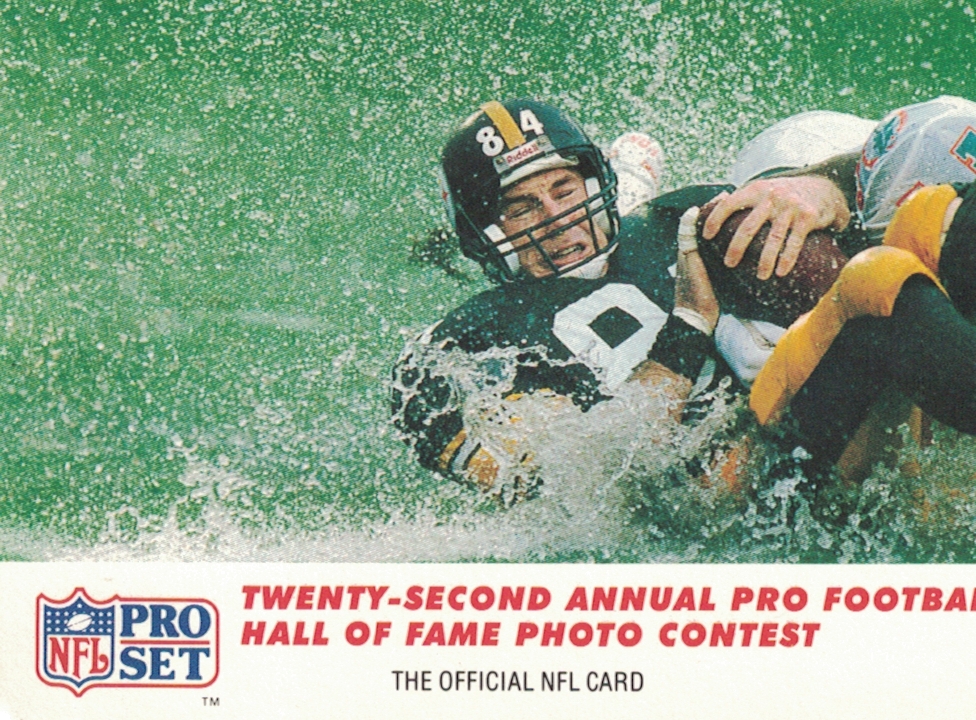
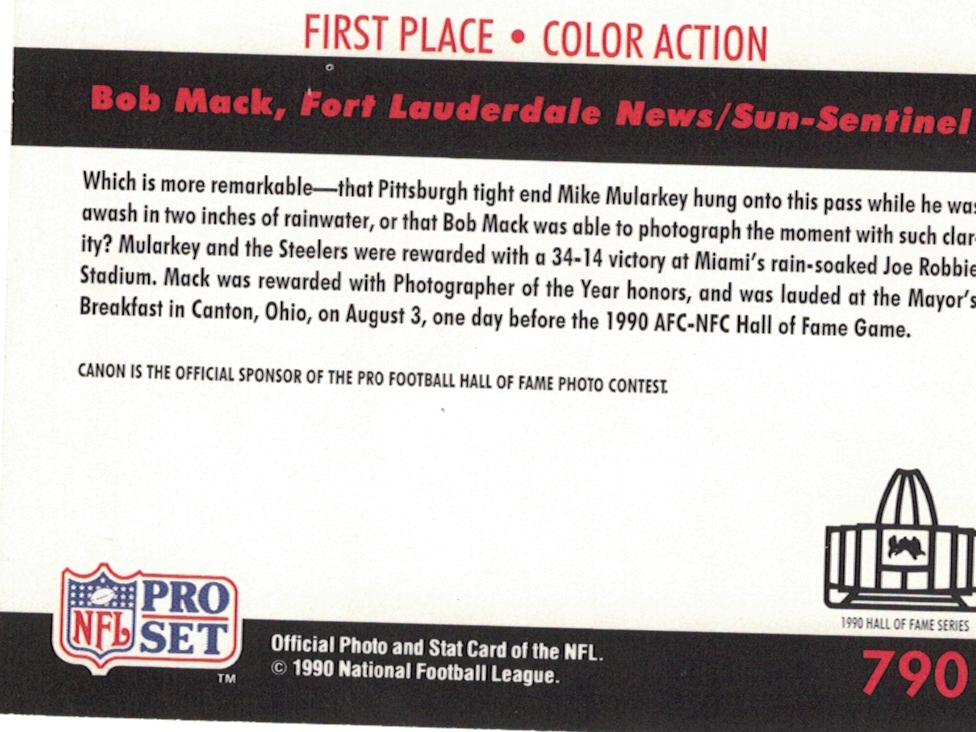
- November 26, 1989 – The Pittsburgh Steelers were not the only visitors the Miami Dolphins hosted; a South Florida rainstorm soaked Joe Robbie Stadium. The Steelers swam and slid their way to a 34-14 victory, Pittsburgh’s first-ever “W” in Miami.
- November 26, 1989 – SkyDome, Toronto – Let’s start by telling you that the 77th Grey Cup was fondly referred to as “The Kick.” That should take some mystery out of it. Yes, it was a tight game between the Saskatchewan Roughriders and the Hamilton Tiger-Cats, and it came down to the end. The Ti-Cats scored a game-tying TD with 44 seconds remaining, per the CFL.ca article on the game. It looked like their late surge would send the game into overtime. But the Saskatchewan offense had other plans as they quickly marched down the field to get into a position to have their kicker try a Field Goal attempt with just two ticks remaining on the clock. That kicker was Dave Ridgway, and his kick was good, propelling the Roughriders to a 43-40 win over the Tiger-Cats.
- December 2, 1989 – University of Houston quarterback Andre Ware won the 55th Heisman Trophy Award.
- December 2, 1989 – Auburn took care of business in the 54th Iron Bowl at Jordan-Hare Stadium, handing the Crimson Tide a 30-20 loss.
- December 25, 1989 – Chris Doleman registered 3 sacks of the Bengals quarterback, and Kicker Rich Karlis nailed five first-half field goals to propel the Minnesota Vikings to a 29-21 victory over Cincinnati to secure the NFC Central Division and shut the door on the Bengals’ playoff chances. (source)