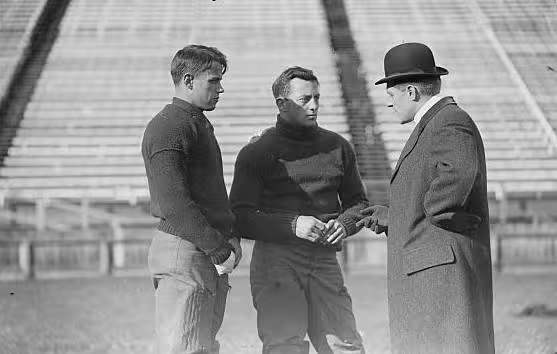
John Reed Kilpatrick was born on June 15, 1889, in New York City, New York. A natural athlete with a commanding presence, he went on to build a legacy as one of the most fierce, intelligent, and unyielding ends of football’s early modern era.
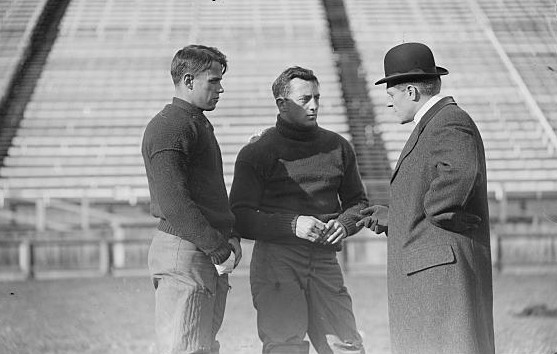
College Career
Kilpatrick attended Yale University, where he played end for the Bulldogs from 1908 to 1910. Standing out during an era dominated by physically grueling trench warfare, he quickly established himself as a premier defender and an exceptional receiver. In his three years on the varsity squad, Kilpatrick never experienced a single loss, helping guide Yale through one of its most dominant stretches in history. His combination of speed, reliable hands, and ferocious tackling earned him back-to-back Consensus All-American honors in 1909 and 1910. Historians and teammates alike frequently noted that Kilpatrick practically revolutionized the end position by transforming it from a static blocking role into a dynamic, downfield threat.
Road to the Pro Game
Unlike the modern era where college stars transition straight into professional leagues like the NFL, the professional football landscape did not exist in a structured form when Kilpatrick graduated from Yale in 1911. Consequently, Kilpatrick did not play for standard professional teams. Instead, his direct involvement with the gridiron transitioned into coaching and military service. He served with distinction in the U.S. Army during both the Pancho Villa Expedition and World War II, eventually rising to the rank of Brigadier General.
Though he never suited up for a professional franchise, Kilpatrick returned to the sports world in 1933 as the president of Madison Square Garden. In this corporate executive role, he heavily influenced the growth of professional sports in New York, proving that his administrative acumen matched his legendary athletic drive.
Football Legacy
Kilpatrick’s legacy is rooted in his status as an early gridiron pioneer. He was revered for his complete mastery of the game’s fundamentals during an era when safety gear was minimal and the game was exceptionally brutal. His enduring impact on the sport culminated in 1955 when he was formally inducted into the College Football Hall of Fame.
Accolades, Awards, and Career Stats
Because official individual statistics like receptions, receiving yards, and tackles were not systematically tracked or archived during the early 1900s, Kilpatrick’s impact is measured by his team’s historic record and his individual honors.
- Career Record: 26–0–2 at Yale University
- Consensus All-American: 1909, 1910
- Team Achievements: Member of the undefeated 1909 Yale national championship team (10–0)
- Major Honors: Inducted into the College Football Hall of Fame (Class of 1955)