Earl “Tuffy” Abell overpowers opponents with a fierce combination of lightning speed and bruising power. In the early era of the gridiron, this legendary ironman dominated the trenches as the ultimate two-way tackle for Colgate University. Whether destroying plays in the backfield or dropping back to kick game-winning field goals, Abell weaponized his massive frame to rewrite the standards of line play. Step back into the pioneer years of college football to discover the story of the Hall of Fame warrior who set the foundation for Maroon dominance.
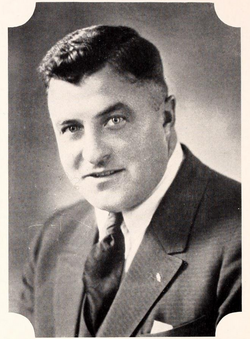
Football Bio
May 29, 1892 – Portage, Wisconsin – Colgate University’s two-way tackle from 1912 through the 1915 season, Earl Abell was born.
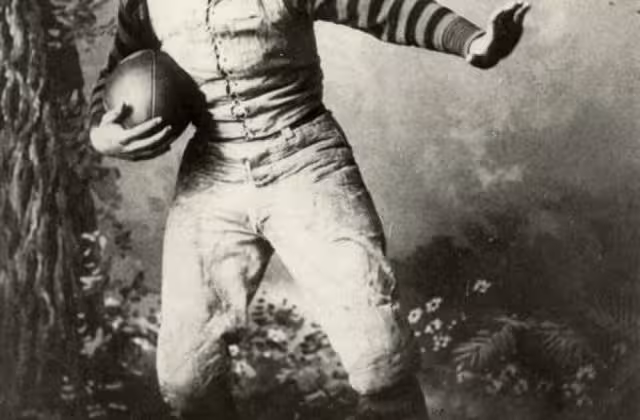
The National Football Foundation has a nice bio on Abell, which says he has a very appropriate nickname, “Tuffy.” He had a very built frame, as he was big at 5 feet 11 inches tall and clocked in at 204 pounds.
Built like a brick outhouse, Tuffy’s broad shoulders and thick neck made him well-suited to play the hard-nosed, bruising brand of football known in the Pioneer years of the game. The NFF piece goes on to say that Ellery Huntington, a teammate on the 1913 team, remembered Abell as being “remarkably fast. He broke through like a streak to spill the play before it formed. Abell was fast enough to play end.”
“Tuffy” was as versatile as he was huge, often handling Colgate’s kicking and punting chores. He once dropped-kicked a field goal from the 41-yard line in a 1915 game against Yale. The 1915 team shut out five opponents and scored 107 points against R.P.I. The Maroon finished with five victories in six games, and Tuffy earned All-America recognition. During Earl’s playing career, Colgate won 21, lost six, and tied two. The College Football Hall of Fame proudly placed a display in honor of Earl Tuffy Abell in their legendary museum in 1973.
Conclusion
Earl “Tuffy” Abell leaves a lasting legacy as a true pioneer of physical, multi-dimensional football. He shattered the stereotype of the slow, stationary lineman by utilizing world-class closing speed that terrorized opposing backfields. By anchoring one of the most dominant defensive stretches in Colgate history and showing off an elite kicking leg, Abell proved that true legends excel in every phase of the game. His 1973 induction into the College Football Hall of Fame permanently seals his status as one of the greatest interior forces from football’s foundational era.
Accolades and Football Accomplishments
- College Football Hall of Fame: Inducted in 1973.
- First-Team All-American: Named an All-America tackle by Walter Camp in 1915.
- Colgate Team Captain: Guided the legendary 1915 Maroon squad.
- Defensive Dominance: Anchored a 1915 defense that secured 5 shutouts in 6 games.
- Colgate Athletics Hall of Honor: Inducted in 1979.
- Elite Special Teams: Acted as the primary punter and kicker, famously converting a 41-yard drop-kick field goal against Yale in 1915.
- Career Gridiron Record: Completed his collegiate playing career with a stellar 21-6-2 record.
- Colgate Head Coach: Returned to lead his alma mater as head football coach for the 1928 season.
- Collegiate Coaching Legacy: Served as the head coach for VMI, Sewanee, Mississippi A&M, and the University of Virginia.